Prelims: Current events of national and international importance| Environment
Why in News?
A study published in Ecology and Evolution found that the dung beetle Onthophagus orpheus strongly prefers dog dung over cow dung.
Issue – This preference may negatively affect offspring survival, highlighting an emerging risk from accumulation of domestic dog waste in urban areas.
Dung beetles are important detritivores that feed on mammalian faeces.
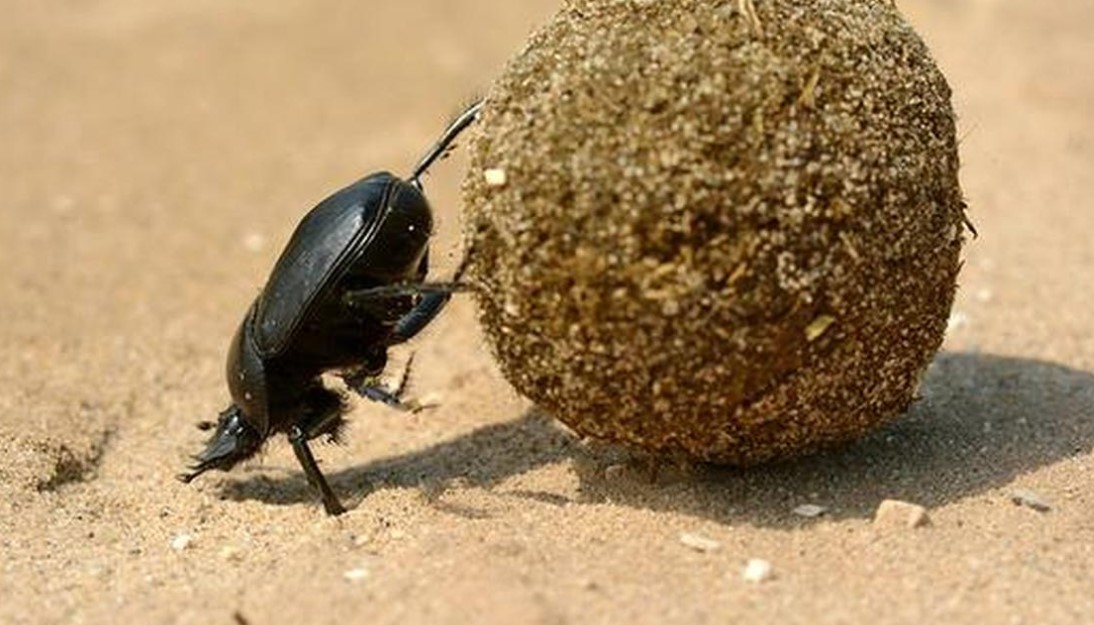
They roll dung into balls and bury them in soil, where the dung serves as food for developing offspring.
This activity helps in:
Nutrient recycling
Soil enrichment
Seed dispersal and burial
Supporting plant growth
Study Findings
Onthophagus Orpheus preferred Dog dung over cow dung and larger brood balls were made using dog dung.
Eggs developed faster in dog dung. Offspring (Progeny) emerging from dog dung were larger.
Major concern – Egg mortality was higher in dog dung.
Thus, there was a mismatch between adult preference and offspring survival.
Dog dung harm – A possible explanation is the presence of residues of antiparasitic medicines administered to domestic dogs.
These chemicals may accumulate in dog faeces and potentially harm larvae and pupae of dung-dwelling insects.
The study notes that this mechanism requires further investigation.
Ecological Importance – Dung beetles rapidly remove dung from the surface.
Their tunnelling and burial activities improve nutrient cycling and soil processes.
They therefore act as important ecosystem engineers.