0.2811
7667766266
x

Deep Sea Mining

iasparliament Logo
December 11, 2025

Prelims: Current events of national and international importance | Science

Why in News?

A recent study on deep-sea mining reveals significant biodiversity loss, with sharp declines in marine species following test operations.

  • Deep Sea Mining – It is the process of retrieving mineral deposits from the ocean floor, hundreds or even thousands of meters below its surface (at depths greater than 200 meters).
  • Targeted Minerals – Like copper, cobalt, nickel, aluminium, manganese, zinc, silver, gold and rare earth elements are extracted from rocks called "polymetallic nodules”.
  • Key Mining Environments
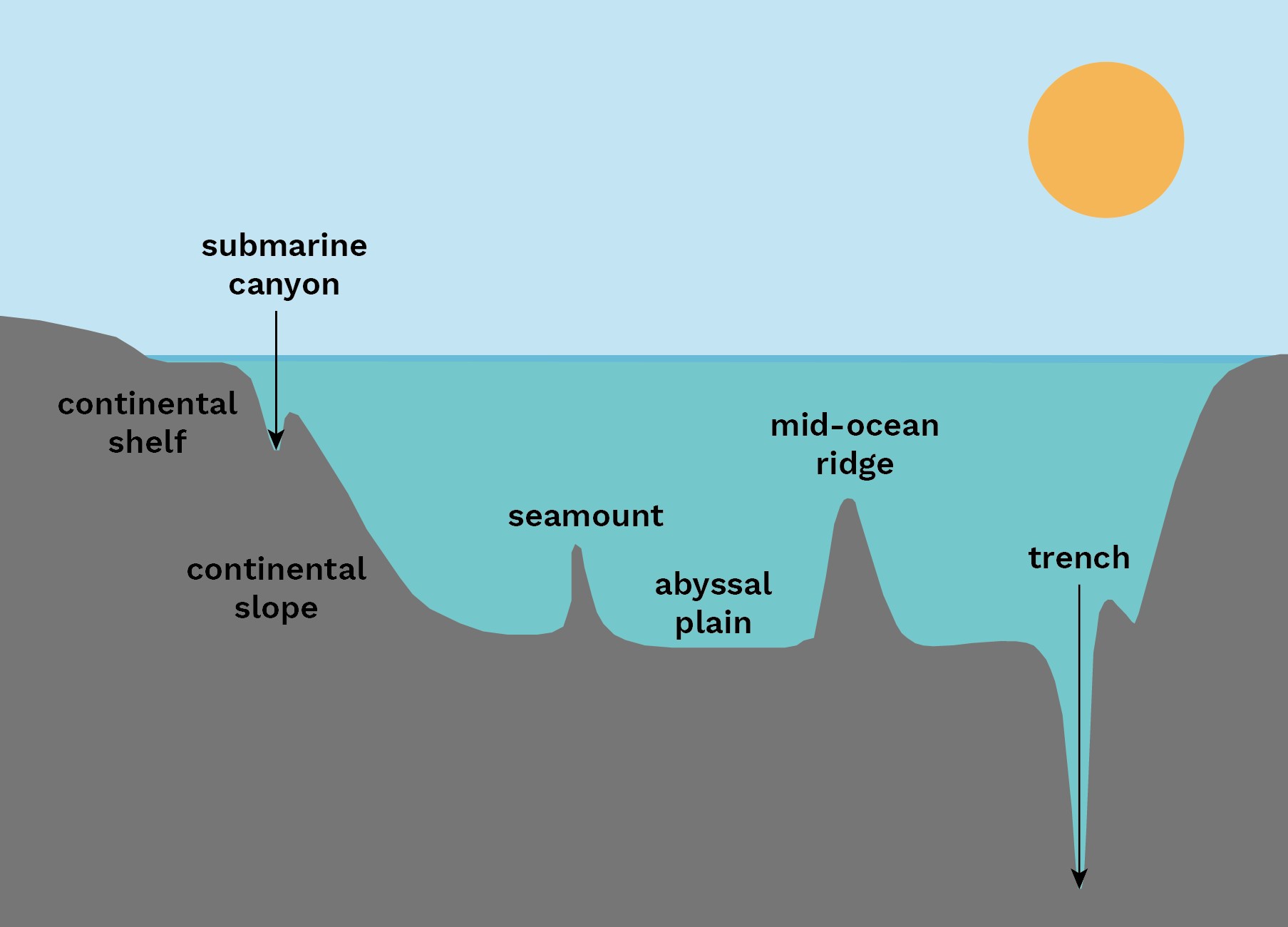
    • Polymetallic Nodules – Scattered across abyssal plains.
    • Cobalt-rich crusts – Found on seamounts.
    • Hydrothermal vents – Biologically rich but fragile ecosystems.
  • Abyssal plains - The huge flat bottoms of the deep ocean. Covered by fine-grained sediment like clay and silt, abyssal plains are also peppered with “abyssal hills” and underwater mountains known as seamounts.
  • Seamounts-A Mountain, usually formed of volcanoes, rising from the seafloor but not reaching above the surface of the water.

Abyssal Plain and Seamount

  • Current Status – Despite decades of interest, no country or company has successfully launched sustained commercial deep-sea mining.
  • Attempts by firms such as Nautilus Minerals (Papua New Guinea project) and Loke Marine Minerals collapsed financially, highlighting the high costs and risks involved.
  • Global Governance – International Seabed Authority (ISA) regulates mining in international waters under UNCLOS.
  • Benefits – Deep-sea mining minerals are  essential for the green transition (renewables, batteries, smartphones).
  • Threat – Research suggests that it could cause irreversible species loss and ecosystem degradation lasting generations.
  • India’s Role – India launched the Deep Ocean Mission (2021) to explore and develop technologies for sustainable ocean resource use, with a budget of Rs.4,077 crore over 5 years.

To know about Samudrayaan Mission, Click here

Quick Fact

Key findings of the study

  • A large-scale test in the Clarion–Clipperton Zone (CCZ) of the Pacific Ocean recovered over 3,000 tonnes of nodules at a depth of 4,280 m.
  • The CCZ spans 6 million sq km and may hold 21 billion tonnes of nodules, making it the prime target for mining companies.
  • Methodology – Uses a Before-After-Control-Impact design over two years, comparing biodiversity before and after mining.
  • They found natural declines even before mining, but mining accelerated losses dramatically.

Impact on Marine Life

  • 37% decline in macrofaunal density (large invertebrates like worms, crustaceans, molluscs, annelid).
  • 32% reduction in species richness, showing significant biodiversity loss.
  • Researchers documented 788 species from 4,350 specimens, highlighting the immense diversity at risk.
  • Natural declines in species were already observed even before mining began (Nov 2020–Sept 2022).

References

  1. The Hindu | Commercial deep-sea mining is killing marine life
  2. Down to Earth | Commercial deep-sea mining will increase risk to blue whales, dolphins
  3. DSMC | Deep Sea Mining
Login or Register to Post Comments
There are no reviews yet. Be the first one to review.

ARCHIVES

MONTH/YEARWISE ARCHIVES

sidetext
Free UPSC Interview Guidance Programme
sidetext