Why in News?
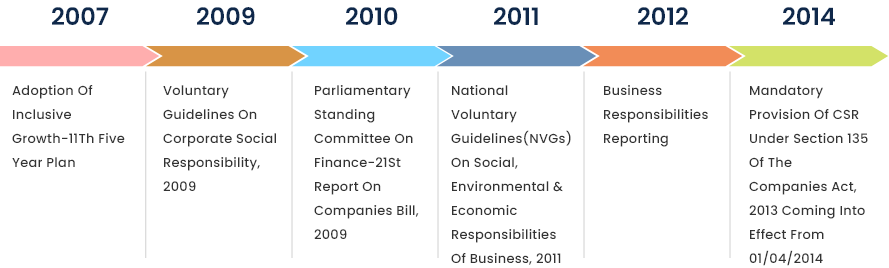
A decade ago, India became the first country to legally mandate Corporate Social Responsibility (CSR).
What is corporate responsibility?
- Corporate Social Responsibility (CSR) – It is a means of corporates contributing directly for the welfare of the society through socio, economic, environmental contributions.
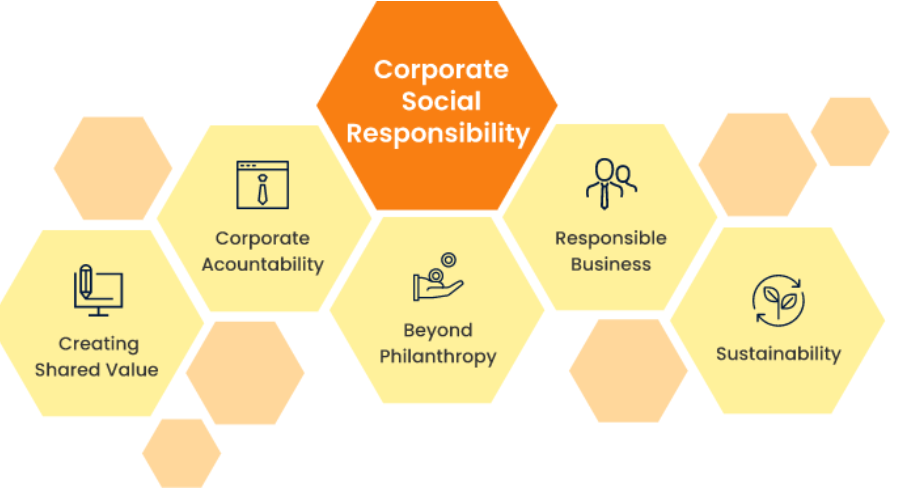
- It involves taking responsibility for the company's impact on society and the environment, going beyond profit-making to contribute positively to the broader community.
- Legal mandate- Section 135 of Companies Act 2013, mandates the eligible companies to spend 2% of the average net profits of the immediately preceding 3 years on CSR activities.
- Applicability- The provisions of CSR applies to every company, its holding company, its subsidiary company and foreign company having in the preceding financial year
- Net worth > 500 crore
- Turnover > 1000 crore
- Net profit > 5 crore
India was the first country to have statutorily mandated CSR for specified companies.
|
List of proposed CSR activities
|
- Schedule VII (Sections 13) mentions activities that can be taken by companies in their Corporate Social Responsibility Policies.
- Eradicating extreme hunger and poverty.
- Promotion of education.
- Promoting gender equality and empowering women.
- Reducing child mortality and improving maternal health.
- Combating human immunodeficiency virus, acquired immune deficiency syndrome, malaria and other diseases.
- Ensuring environmental sustainability.
- Employment enhancing vocational skills.
- Social business projects.
- Slum area development.
- Contribution to the Swachh Bharat Kosh set up by the Central Government for the promotion of sanitation.
- Contribution to the Clean Ganga Fund set up by the Central Government for rejuvenation of river Ganga.
- Contribution to the Prime Minister's National Relief Fund or any other fund set up by the Central Government or the State Governments for socio-economic development.
|
|
Activities Not Falling in the Ambit of CSR
|
- The CSR projects that benefit only the employees of the company and their families.
- One-off events such as marathons / awards / charitable contribution /advertisement / sponsorships of TV programs etc.
- Activities which are not taken up in project mode.
- Expenses incurred by companies for the fulfillment of any Act / Statute of regulations (such as Labour Laws, Land Acquisition Act etc.)
- Contribution of any amount directly or indirectly to any political party.
- Activities undertaken by the company in pursuance of its normal course of business.
|
What are the needs for CSR in Agriculture?
- Role of Agriculture - Agriculture as a sector has a pivotal role in shaping the country’s socio-economic landscape.
- High Human Resource in Agriculture - 47% of the India’s population depends on agriculture for employment and is significantly higher than the global average of 25%.
- Low Economic Contribution - Agriculture accounts for 16.73% of India’s GDP.
- New Concerns - Degradation of the natural resource base, stagnant farmer incomes, and threats caused by climate change are current focus of Indian Agriculture system.
- Shift in Agri Focus - Shift in agriculture towards sustainability and modern agriculture makes a good case for CSR funds from the private sector.
- Inadequate Public Funding - Indian agriculture needs more support as government funds often fall short.
How CSR contributions can be used for Agricultural Sustainability?
- Climate Action and Sustainability - Contribution to climate action and sustainability in the agricultural sector.
23% of companies had “environment and sustainability” as their CSR priority area.
- Infrastructural Development – Development of grain banks, farmer schools, water conservation projects, and energy-efficient irrigation.
- Promoting Organic Farming - Corporations can support organic farming practices by providing resources, training, and certification assistance to farmers.
- Farmer Livelihoods - CSR programs can directly improve farmer livelihoods by providing training, resources, and access to markets.
- Energy-Efficient Irrigation – CSR funds are supporting the development of energy-efficient irrigation systems, which reduce both water and energy consumption.
- Precision Farming - Providing farmers with access to advanced technology and tools like GPS, drones, and IoT devices to enhance productivity and efficiency.
- Supply Chain Sustainability - CSR can enhance sustainability throughout the agricultural supply chain by promoting ethical sourcing practices.
|
Common Areas of CSR and Agriculture
|
- Gender equality
- Agroforestry
- Poverty
- Eradicating hunger and malnutrition
- Technology incubators
- Animal welfare
- Environmental sustainability
- Livelihood enhancement projects
- Conservation of natural resources
- Rural development projects
- Socio-economic inequalities
- Eomen’s empowerment.
|
What are the challenges?
- Inadequate Monitoring – Lack of method to determine the extent of funding going into agri projects and to categorise them based on targeted sectors of CSR activities.
- Insufficient Reporting - Current reporting mechanisms have little to no emphasis on agriculture-related CSR initiatives.
- Tracking Funds - Little chance of tracking the funds spent for agriculture-related initiatives alone.
- Limiting Sectoral Impact Assessments – Most of the listed activities contribute to other sectors and non agri activities.
- Lack of Clear Regulation of Fund Allocation - The listed activities currently emphasise companies understanding if they are eligible rather than explicitly delineating the sector to which their CSR funds can be flowed.
What lies ahead?
- Specify agriculture as a distinct sector in CSR activities is crucial to engender more sustainable growth and effect a just transition.
- Transition the reporting framework based on sectors receiving funds to help streamline and better target the available funds.
- Identify the prevailing sustainability issues vis-à-vis agroecosystems and direct funds according to requirements to help drive tractable changes.
Reference
The Hindu | Tracking lacuna limits CSR’s contributions



