Prelims: Current events of national and international importance | Health & Governance
Why in News?
Recently, WHO has officially declared Ebola outbreak in Uganda & Democratic Republic of Congo (DRC) as Public Health Emergency of International Concern. (PHEIC)
Under International Health Regulations (IHR 2005), PHEIC is defined as a public health risk to other States through the international spread of disease & requires a coordinated international response.
- Reason for such move – Due to Cross- Border Transmission.
- Epicenter of Outbreak - Ituri Province (DRC) bordering Uganda & South Sudan
2026 Outbreak
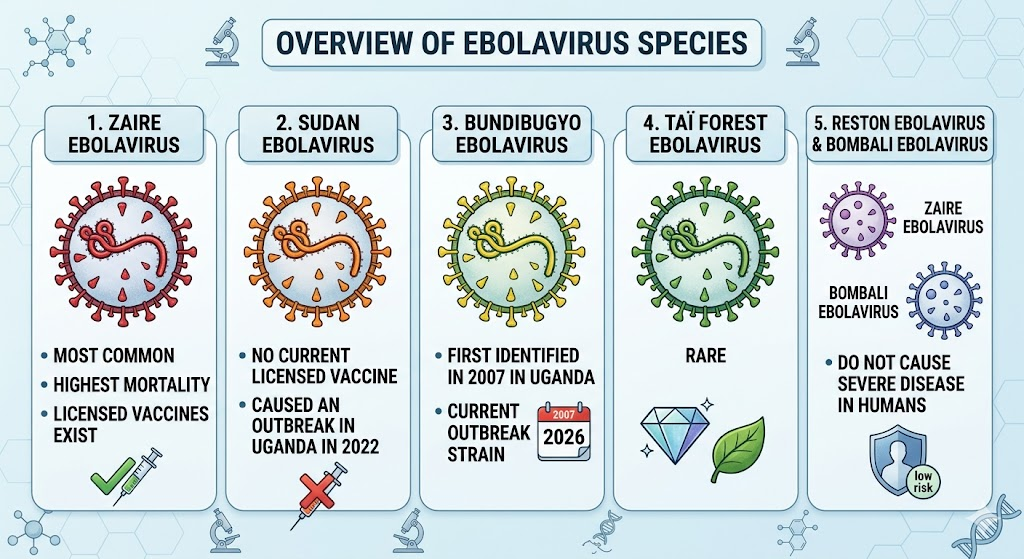
- Responsible variant – Unlike Zaire ebolavirus, this outbreak is caused by rarer Bundibugyo Ebolavirus (BDBV) Strain.
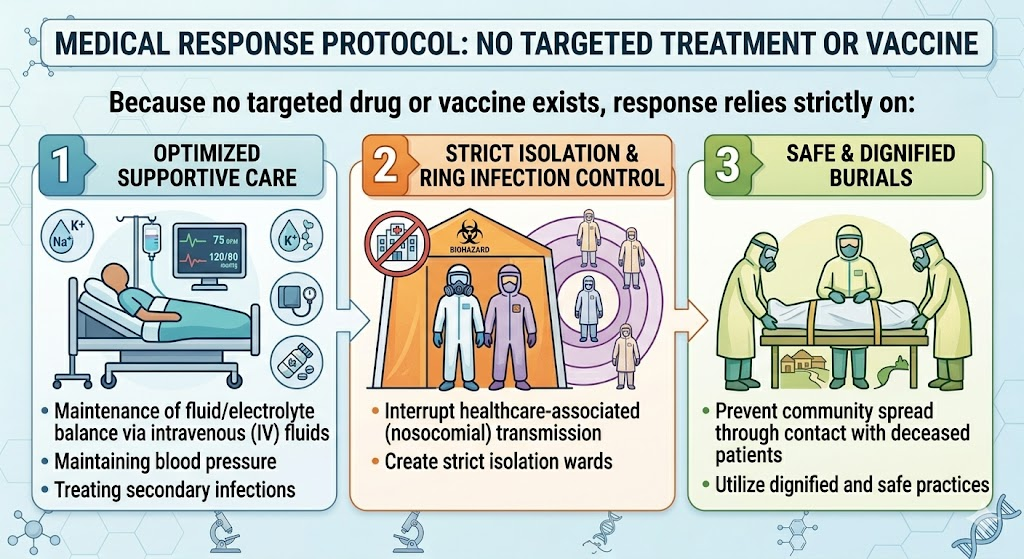
- No Licensed Vaccines or specific therapeutics like - Monoclonal antibodies are available. Existing vaccines like Ervebo can target only Zaire Strain.
- Death rate – BDBV exhibits less fatality rate than Zaire variant.
Ebola Virus Disease (EVD)
- Also known as Ebola haemorrhagic fever,is a fatal illness in human caused by Orthoebalvirus.
- Cause of Transmission – Fruit bats (Pteropodidae Family) Hosts of the virus.
- Transmission –Through human to human close contact with blood, secretions, organs, broken skin, Sweat, saliva, Vomit, urine, semen, needles, Beddings & traditional burial practices of deceased Ebola victim.
- Infected animal’s fluids - like fruit bats, Monkeys, Gorillas & Chimpanzees.
- Nature – Infected people are not contagious until they develop symptoms & incubation period ranges from 2 to 21 days.
- Symptoms – Fever, muscle pain, headache, fatigue & sore throat, Vomiting, diarrhea, rash & malfunctioning of kidney & Liver function.
Treatment Protocol for Bundibugyo Strain
|
Quick Facts
|
- PHEIC is the 2nd -highest level of global health alert. It sits just below a "Pandemic Emergency," which is the highest tier level introduced during structural IHR updates.
|
For Reference : The Hindu | IAS Parliament