Why in News?
The first breeding site of the Blue-Cheeked Bee-eater in peninsular India has been discovered in the saltpans of Aandivilai near the Manakudy Mangroves in Kanniyakumari district.
- Scientific Name - Merops persicus.
- It is a near passerine bird in the bee-eater family, Meropidae.
- It is a passage migrant and winter visitor in India.
- Appearance – It is a richly colored, slender bird.
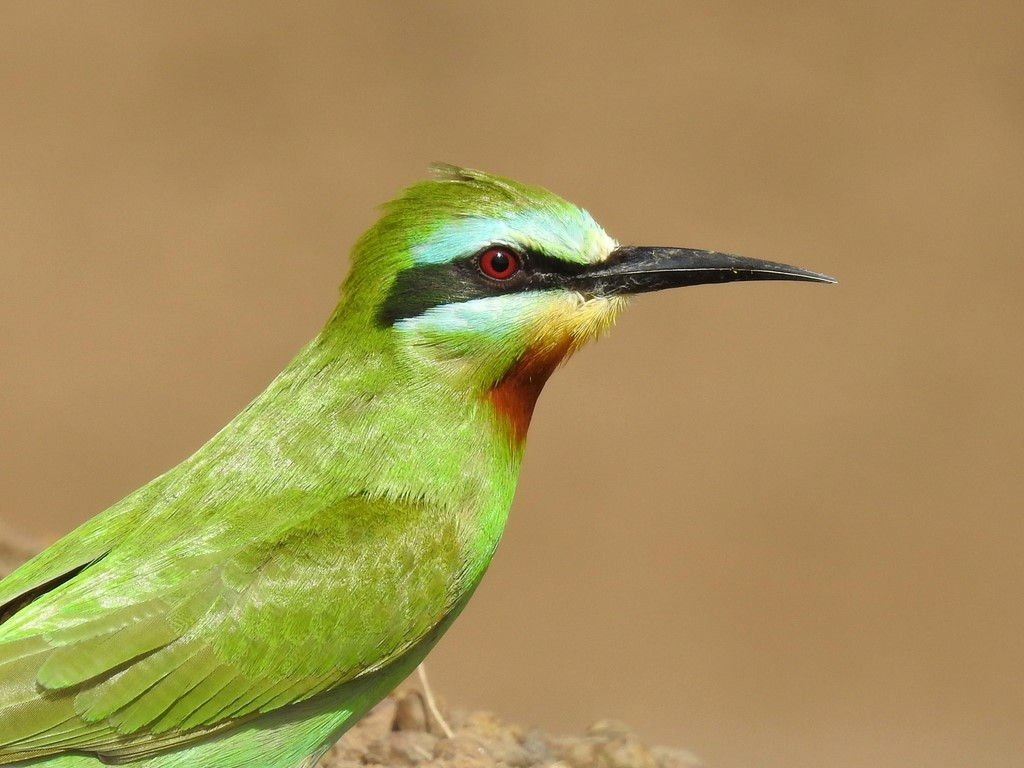
- It is predominantly green, its face has blue sides with a black eye stripe, and a yellow and brown throat, the beak is black.
- Habitat - Found in open areas as well as forests from lowlands up into middle elevations.
- Distribution – It breeds across Northern Africa and the Middle East, from eastern Turkey to Kazakhstan and India.
- Occasionally, this bird appears as a rare vagrant north of its usual range, particularly in Italy and Greece.
- Behaviour – It may choose to nest solitarily or in small, loose colonies of up to ten individuals. It is also known to share colonies with European bee-eaters.
- Breeding Regions – Nesting sites are often located in sandy banks, embankments, or low cliffs, and occasionally on the shores of the Caspian Sea.
- Its breeding was primarily recorded in regions such as Nile Delta, Pakistan, and Iran while its wintering grounds include parts of Africa.
- Diet – Feed on insects preferably dragonflies.
- Threats – Habitat destruction, from developmental activities, and anthropogenic pressures.
- Conservation status
Reference
BIRDA | Blue-cheeked Bee-eater



