Why in news?
On World Autism Day (April 2), there should be focus not only on raising awareness of the illness but also on the importance of providing a positive and supportive environment.
What is Autism Spectrum Disorder (ASD)?
Autism affects 18 million people in India. ASD affects approximately 1% to 1.5% of children aged 2 to 9 years.
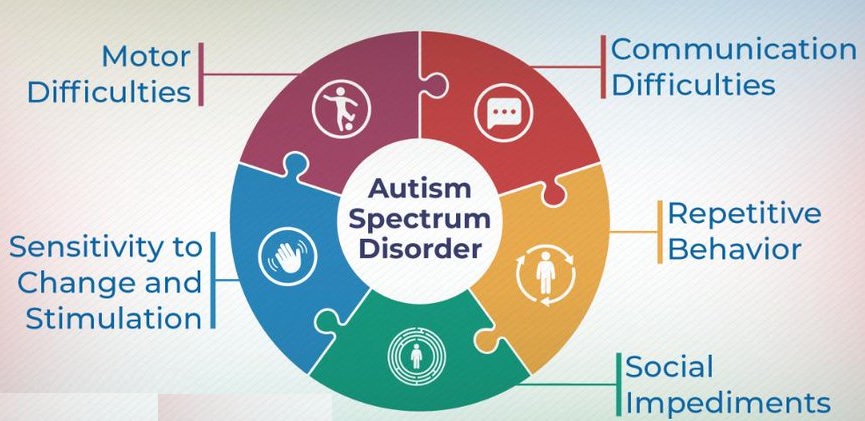
- About - Autism spectrum disorders (ASD) are a collection of disorders defined by issues such as social interaction and communication difficulties.
- People with ASD may behave, communicate, interact, and learn in ways that are different from most other people.
- Cause – It is a developmental disability caused by differences in the brain.
- It has environmental and genetic causes.
- Fragile X Syndrome (FXS) is the leading inherited cause of autism in 4% of the global population.
- Transmission -It is transmitted genetically for some people.
- Symptom -People with ASD often have problems with social communication, interaction and restricted or repetitive behaviors.
- People with ASD may also have different ways of learning, moving, or paying attention.
- Diagnosis -There is no medical test such as blood test to diagnose the disorder.
- ASD can sometimes be detected at 18 months of age or younger.
- Treatment -There is no cure for autism.
- Treatments for ASD seek to reduce symptoms that interfere with daily functioning and quality of life.
- Treatment plans usually involve multiple professionals and are catered to the individual.
What are the challenges?
- Low awareness
- Lack of basic services
- Poor diagnosis
- No national programme on autism
- Lack of systematic estimates
- Lack of central medical registry
- Cultural differences in who gets a clinical diagnosis of autism
- No medical insurance coverage for autism
- Variances in the availability of psychiatrists (less than 10,000 psychiatrists are available in India)
What measures can be taken?
- Need for an all-India programme – A national programme needs 3 essential components - assessment, intervention, and awareness.
- Non-specialists -Non-specialist workforce (Accredited Social Health Activist /Anganwadi workers, parents/caregivers) and appropriate digital technology can be used to widen the reach.
- Early intervention - Simple behavioral interventions that parents/caregivers can be trained on that can have a positive impact.
- Creation of linkage -Researchers, clinicians, service providers can be linked to the end-users in the autism community in India.
- Public awareness -Can serve to reduce stigma associated with autism and related conditions.
- Private sector - Partnership with the private sector would also be vital to take survey and support the victims.
References
- The Hindu | Autism
- Economic Times |Status of Autism in India



