Prelims: Current events of national and international importance | Species
Why in news?
Researchers have described a new species of electric ray, named the Arabian Black Electric Ray.
- Scientific name – Tetronarce ramanamurthyi
- Identified by – The new fish was identified by an international team of researchers from the Zoological Survey of India (ZSI), San Jose State University, USA, South African Institute for Aquatic Biodiversity, South Africa, and California Academy of Sciences.
- Discovered Location – Discovered in the deep waters of the southeastern Arabian Sea in the northern Indian Ocean.
- Named After – The species is named in honour of M. V. Ramana Murthy, marine scientist, ocean engineer, Mission Director of India's Deep Ocean Mission, and Director of the National Centre for Coastal Research (NCCR), recognizing his contributions to marine and ocean research.
- Family – It belongs to the family Torpedinidae (electric rays), which can generate electric shocks for defence and prey capture.
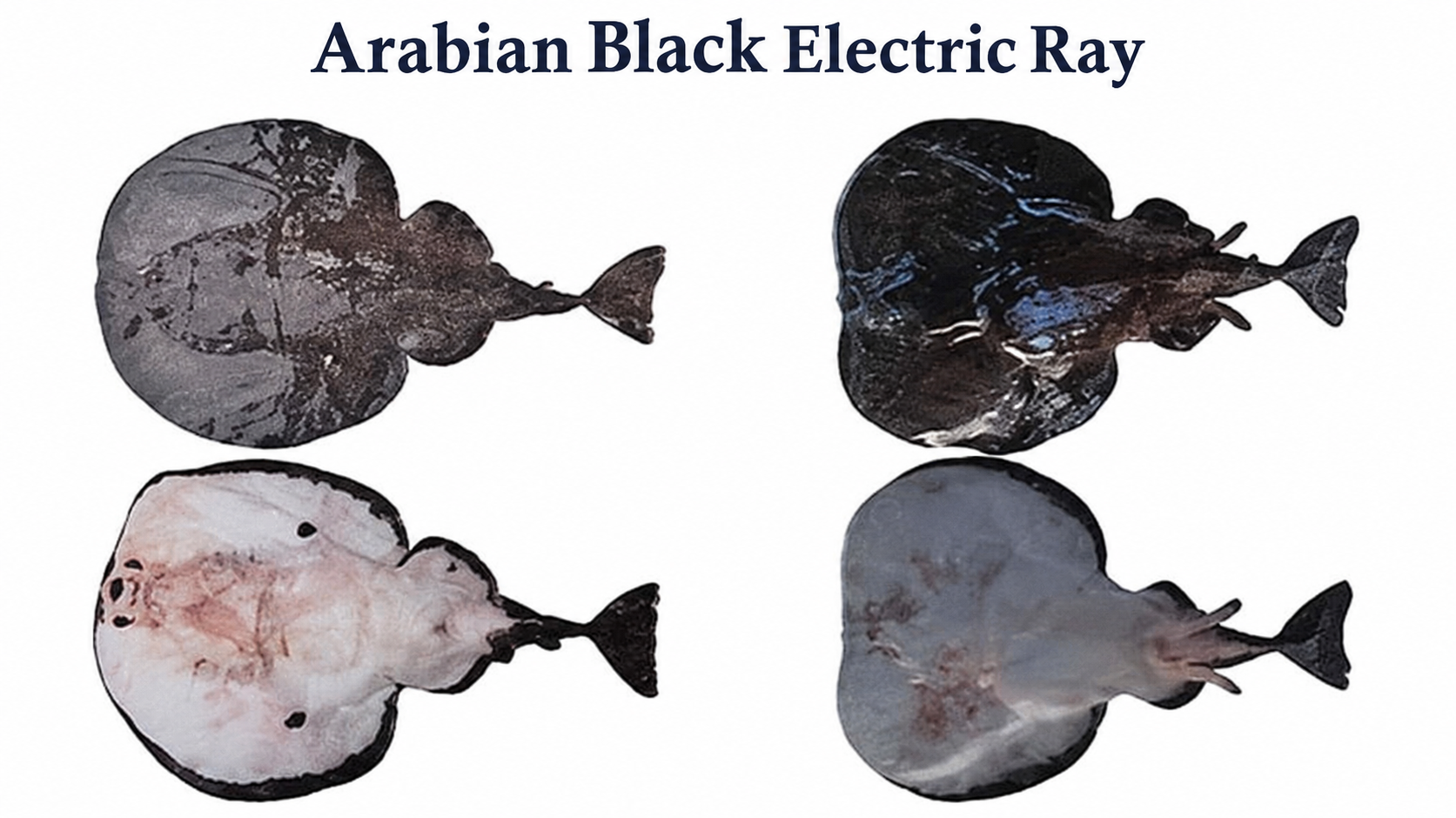
- Appearance & Features – It has a uniform dark bluish-black to dark brown upper body and a whitish underside.
- Morphological analysis of the specimens revealed unique body proportions, including a disc wider than it is long, relatively large spiracles and endolymphatic pores, a distinctive mouth-to-nostril ratio, and smaller kidney-shaped electric organs.
- Genetic testing using mitochondrial DNA (COI and ND2 genes) confirmed that it forms an independent evolutionary lineage well-separated from all other known electric ray species globally.
- Discovery Details – The rays were accidentally caught as bycatch in deep-sea trawl fisheries targeting red shrimps at depths ranging from 400 to 700 meters.
- The samples were obtained during fish-landing surveys at Sakthikulangara Fishing Harbour, Kerala.
- Significance – The discovery marks the first confirmed record of the genus Tetronarce in the northern Indian Ocean.
- Highlights how much biological diversity remains hidden in the Indian Ocean's deep-sea ecosystems.
- More importantly, it emphasises the need to monitor commercial fishing bycatch to document and protect vulnerable marine life.
Reference
Research Matters | Meet the Arabian Black Electric Ray



