Why in News?
Recent study shows how discarded PET bottles can exacerbate the global menace of antibiotic resistance.
- AR Gene transfer – Antibiotic resistance gene transfer across the species.
Antibiotic Resistance (AR) also known as Antimicrobial Resistance (AMR) occurs when bacteria develop defenses against the antibiotics designed to kill them.
Nanoplastics are a type of microplastic, ranging from 1 nanometre (10-9m) to 1 μm (10-6m).
- Nanaoplastics in AR gene transfer – Polyethylene Terephthalate Bottle-Derived Nano-plastics (PBNPs) facilitate the cross-species gene transfer from E-coli to Lactobacillus acidophilus.
- It is done through a process called horizontal gene transfer (HGT).
E. coli and Lactobacillus acidophilus are a significant bacteria found in human gut microbiota. Protecting beneficial gut bacteria is crucial for immune support, digestion, and disease prevention.
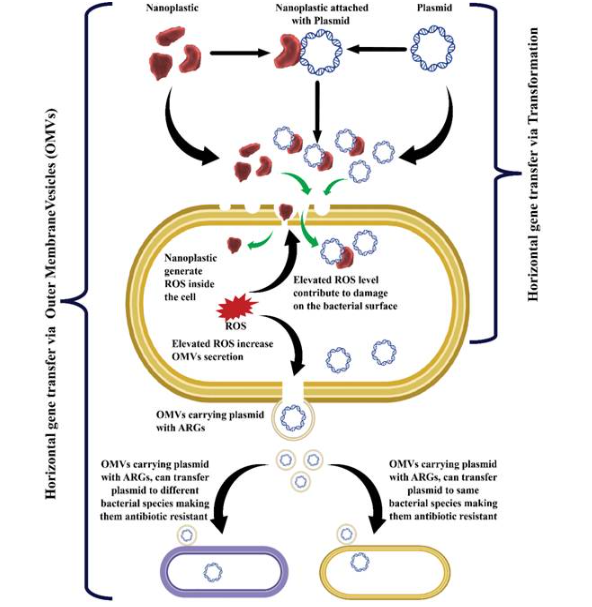
- 2 novel Mechanism – PBNPs facilitate AR gene transfer by
- Direct transformation pathway
- OMV-induced transfer pathway
- Direct transformation pathway – PBNPs act as physical carriers, transporting AR plasmids across bacterial membranes and promoting direct gene transfer between bacteria.
- OMV-induced transfer pathway – PBNPs induce oxidative stress and damage to bacterial surfaces, which activates the stress response genes and triggers an increase in OMV secretion.
- The OMV loaded with genes AR, becomes a potent vector for gene transfer across bacterial species.
- Health impacts – Lactobacillus acidophilus could act as reservoirs for AR genes, potentially transferring them to pathogenic bacteria during the course of infections.
Reference
The Hindu Business Line| Nano-plastics Contribution to AMR



