Mains: GS II – International Issues
Why in News?
A sovereign, independent, viable and contiguous Palestinian state alongside Israel is essential for establishing durable peace and stability in West Asia.
What is the background?
- Conflict in West Asia – West Asia has remained one of the world’s most conflict-prone regions, marked by the Israel-Palestine conflict, wars in Gaza, tensions between Israel and Iran, and the activities of non-state actors such as Hezbollah and the Houthis.
- While these conflicts have multiple political, strategic and historical dimensions, the unresolved Palestinian question remains a central source of regional instability.
- The Core of the Conflict – The creation of Israel in 1948 transformed the political landscape of West Asia.
- The issue of Palestinian statehood, however, remained unresolved.
- The Balfour Declaration of 1917 – British policies during the Mandate period, and the subsequent partition of Palestine created competing national aspirations among Jews and Arabs.
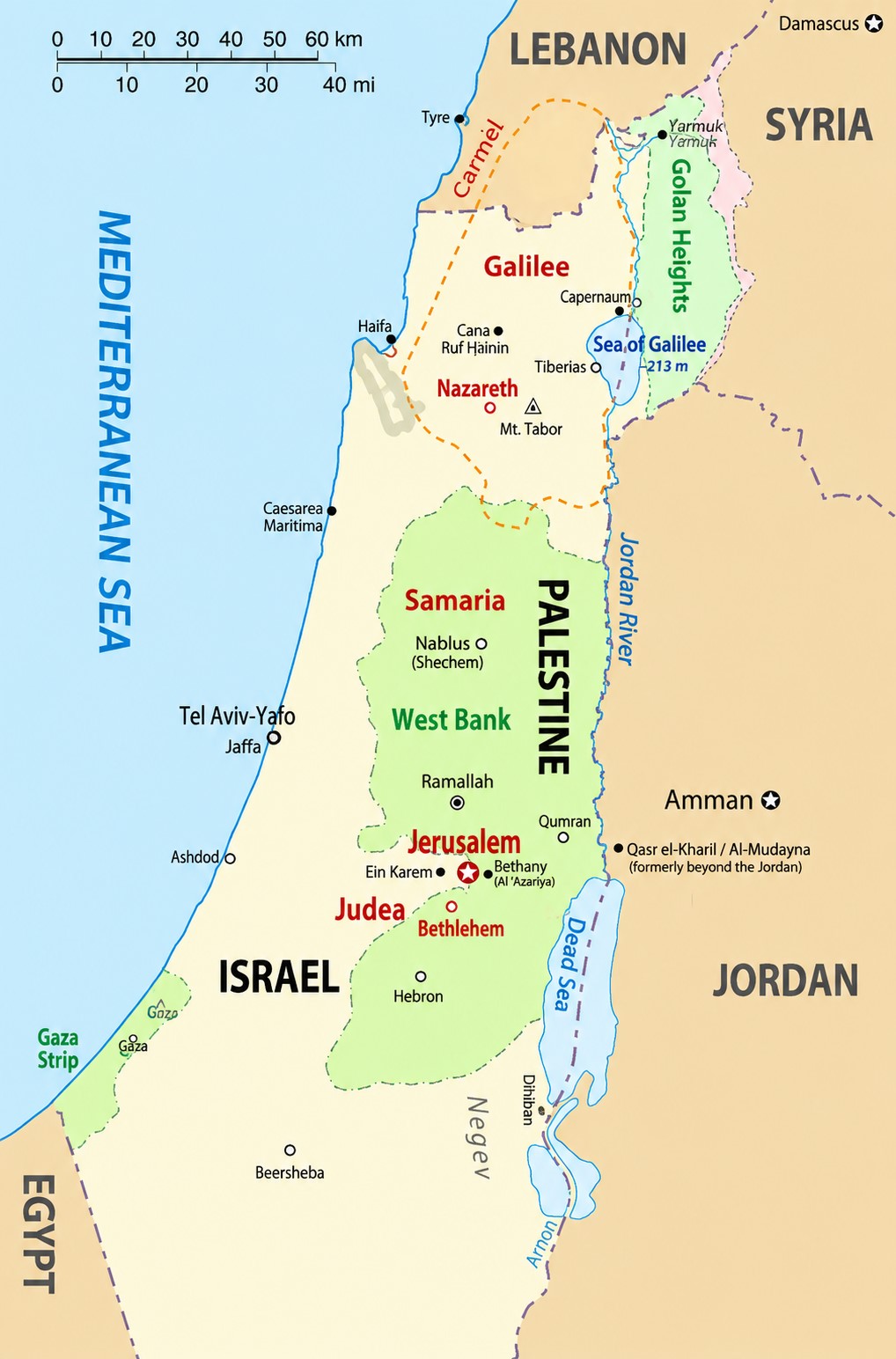
- The UN Partition Plan of 1947 – It envisaged separate Jewish and Arab states, but the plan was not implemented as intended.
- The subsequent Arab-Israeli wars, occupation of Palestinian territories and expansion of Israeli settlements further complicated the possibility of a negotiated settlement.
- While Palestinians have rejected several proposals over the decades, it is equally important to recognise that negotiations have occurred in a context of unequal power, displacement, occupation and competing security concerns.
- The failure of past initiatives should therefore not be interpreted as proof that Palestinian statehood is impossible.
Why Palestinian statehood matters for regional peace?
- Promoting Regional Stability – The Palestinian issue has acquired a significance that extends far beyond the immediate Israeli-Palestinian conflict.
- It influences the policies of Iran, Arab countries and various non-state actors.
- Iran's hostility towards Israel has been closely connected with the Palestinian question, particularly since the Islamic Revolution of 1979.
- Similarly, Hezbollah's support for the Palestinian cause reflects ideological, political and strategic considerations.
- Hamas, despite being a Sunni organisation, has also received support from Iran and Hezbollah, demonstrating that the Palestinian question can transcend the Sunni-Shia divide.
- A credible and irreversible political pathway towards Palestinian statehood could therefore reduce the political justification and popular appeal of several armed groups. It could also create conditions for improved relations between Israel and its Arab neighbours.
- The Humanitarian Dimension – The Hamas attacks of October 7, 2023, in which Israeli civilians were deliberately targeted, intensified Israel's security concerns and dramatically reduced domestic support for Palestinian statehood in parts of Israeli society.
- Israel's subsequent military campaign in Gaza, however, caused enormous civilian suffering and destruction.
- The cycle of attack, retaliation, displacement and radicalisation has made a political settlement increasingly difficult.
- The destruction of Gaza has also severely damaged the economic and institutional foundations necessary for a future Palestinian state.
- Thus, security for Israel and self-determination for Palestinians should not be viewed as mutually exclusive objectives.
- Israel's security and Palestinian statehood must become complementary pillars of a regional peace architecture.
- The Missing Link of Mediation – The experience of the Oslo Accords of 1993 demonstrates the importance of third-party mediation.
- The negotiations, facilitated through Norway's good offices, resulted in mutual recognition between Israel and the Palestine Liberation Organization (PLO) and led to the establishment of the Palestinian Authority.
- Although Oslo did not ultimately produce a permanent peace agreement, it demonstrated that direct negotiations can make progress when supported by credible external facilitation.
- The United States remains one of the few actors possessing sufficient influence over Israel while also retaining substantial diplomatic leverage in the Arab world.
- However, American mediation must be perceived as balanced and focused on a viable political settlement rather than merely conflict management.
- The United Nations also has an important role to play by providing international legitimacy, humanitarian assistance and a framework for negotiations.
- A broader international coalition involving the U.S., European countries, Arab states and the UN could help create guarantees for both Israeli security and Palestinian statehood.
What are the challenges to a two-state solution?
- Continued settlement expansion and territorial fragmentation threaten the geographical viability of a Palestinian state.
- Political divisions between the Palestinian Authority and Hamas weaken Palestinian representation.
- Israeli security concerns have intensified following the October 2023 attacks.
- Extremist political positions on both sides continue to undermine compromise.
- Moreover, the status of Jerusalem, refugees, borders, settlements, security arrangements and water resources remains unresolved.
- These issues require sustained negotiations rather than unilateral actions.
What could be done?
- Immediate cessation of hostilities – Protection of civilians and sustained humanitarian assistance must remain the first priority.
- Reconstruction of Gaza – Reconstruction should be linked with transparent governance, international assistance and institutional reforms.
- Palestinian political reform – The Palestinian Authority must be strengthened, democratised and made capable of delivering effective governance.
- Israeli security guarantees – A future Palestinian state should include arrangements preventing its territory from being used for attacks against Israel.
- Settlement freeze and territorial continuity – Expansion of settlements that undermines the territorial viability of Palestine should cease.
- Negotiated final-status settlement – Borders, Jerusalem, refugees and security arrangements should be addressed through sustained negotiations.
- Regional integration – Arab countries can support reconstruction, economic development and diplomatic normalisation in parallel with progress towards Palestinian statehood.
What is India's role?
- India has historically maintained a balanced position, supporting both Palestinian self-determination and Israel's security.
- India can use its strong relations with Israel, the Arab world and the Palestinian Authority to encourage dialogue and humanitarian cooperation.
- India can also contribute through development assistance, capacity building, digital public infrastructure, healthcare and education.
- Its long-standing commitment to a negotiated two-state solution provides a credible basis for constructive diplomacy.
What lies ahead?
- Peace in West Asia cannot be achieved merely through military deterrence or temporary ceasefires.
- The region requires a political settlement that addresses the legitimate aspirations and security concerns of all its peoples.
- A viable Palestinian state living peacefully alongside Israel is therefore not simply a Palestinian objective; it is a regional and international peace imperative.
- Palestinian statehood alone will not eliminate every conflict in West Asia, nor will it automatically transform Iran-Israel relations.
- Nevertheless, without resolving the Palestinian question, the region is likely to remain trapped in a cycle of violence, radicalisation and instability.
- Ultimately, peace requires political courage.
- Leaders on all sides must recognise that military victory cannot substitute for a sustainable political settlement.
- A two-state solution, supported by credible international guarantees, regional cooperation and mutual recognition, remains the most realistic pathway towards lasting peace in West Asia.
Reference
The Hindu| Palestine State



