0.1106
7667766266
x

100th year of Union Public Service Commission

iasparliament Logo
October 03, 2026

Prelims: Current events of national and international importance | Polity

Why in News?

A 2-day national centenary celebration, titled Shatabdi Samaroh – Manthan, was organized at Bharat Mandapam, New Delhi (September 30 – October 1, 2026), to commemorate the 100th year of UPSC.

Key Highlights of the event

  • During the event, the Prime Minister released
    • A UPSC Centenary Commemorative Coin.
    • A Commemorative Postage Stamp.
    • A compilation book titled "100 Landmark Judgements—Shaping the Policies of UPSC and Public Service Commissions in India".

Core Principles for the Next Century

  • Three Pillars - During the Manthan sessions, the Commission framed its future operational roadmap around 3 pillars:
    • Trust- Upholding non-partisan integrity, constitutional neutrality, and meritocracy in civil recruitment.
    • Transparency- Standardized grievance redressal systems, biometric authentication, and digital evaluation workflows.
    • Technology- Advanced AI-driven logistics, paperless administrative promotion committees, and digital infrastructure suited for Viksit Bharat.

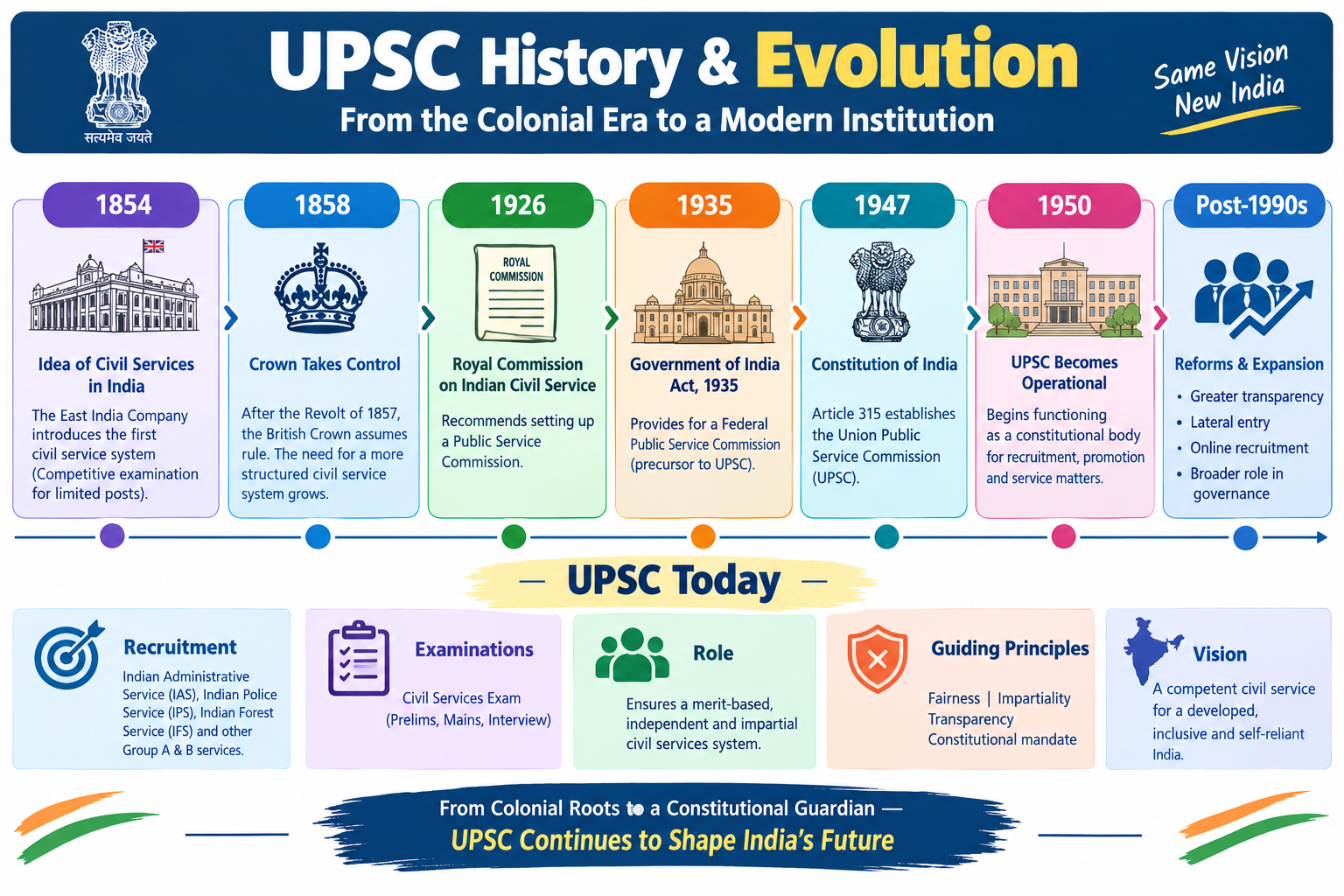
Historical Evolution

  • Lee Commission (1924) – Recommended the immediate establishment of a statutory public service commission to eliminate political influence in civil service recruitment.
  • Formed following recommendations from the Lee Commission under the Government of India Act 1919.
  • Establishment (October 1, 1926) - Set up under the Public Service Commission (Functions) Rules, 1926, with Sir Ross Barker as its first Chairman and four members.
  • Federal Public Service Commission (1937) - Reconstituted under the Government of India Act, 1935 with expanded responsibilities.
  • Constitutional Transition (January 26, 1950) - Renamed the Union Public Service Commission (UPSC) under Article 315 of the Indian Constitution as an independent constitutional body.

100 Years of UPSC

Constitutional Safeguards

Article

Key Constitutional Mandate

Powers Provided

Article 315

Establishment of PSCs

Mandates Public Service Commissions for the Union and individual States.

Article 316

Appointment & Tenure

Appointed by the President; 6-year tenure or until age 65.

Article 317

Security of Tenure

Removal only by Presidential order following a Supreme Court inquiry.

Article 319

Employment Prohibition

Chairmen/Members are ineligible for future government employment to prevent bias.

Article 320

Core Functions

Conducts competitive examinations and is consulted on recruitment, promotions, and disciplinary matters.

Article 322

Financial Independence

Expenses and salaries are charged on the Consolidated Fund of India (non-votable).

Article 323

Annual Reporting

Requires an annual report to the President; non-acceptance of advice requires explanation to Parliament.

Reference

PM India | PM’s address at the Centenary Celebrations of UPSC

There are no reviews yet. Be the first one to review.

ARCHIVES

sidetext