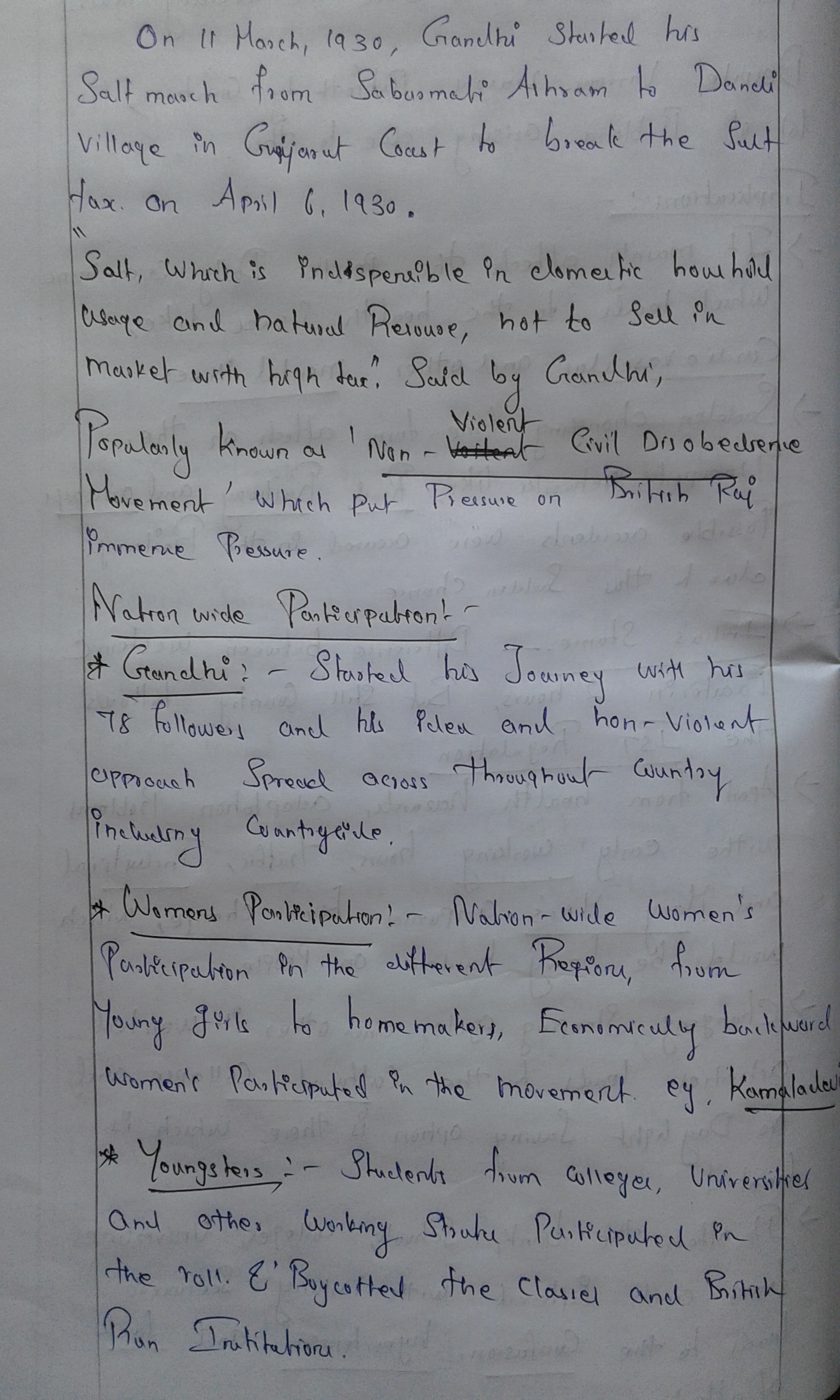
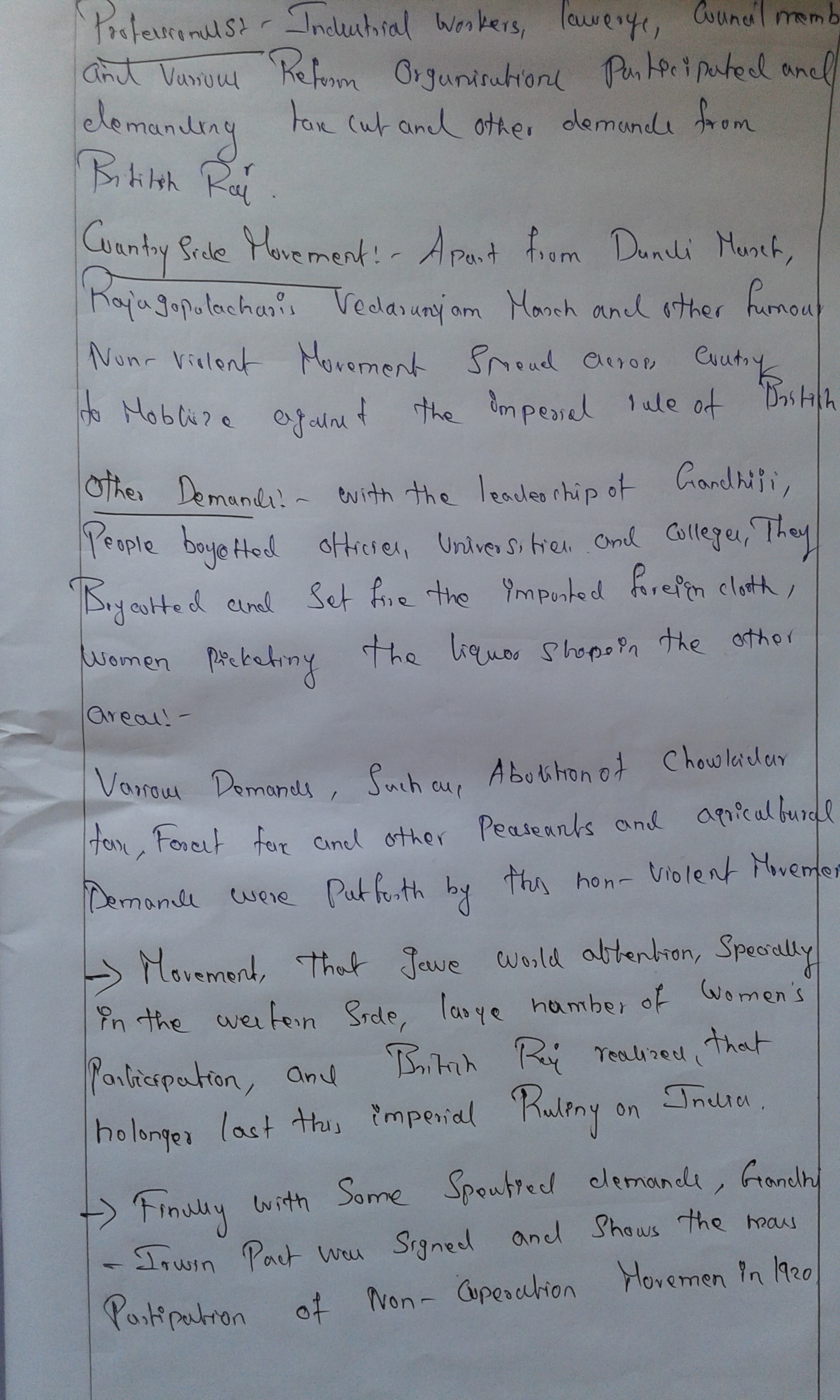
The Salt march, a protest against the coercive salt tax imposed by the British, was the most significant organised challenge to British authority. Explain (200 Words)
Refer - Indian Express
Enrich the answer from other sources, if the question demands.

IAS Parliament 8 years
KEY POINTS
Salient features of Salt March
· Gandhiji’s picking on the salt monopoly was another illustration of Gandhiji’s tactical wisdom. For in every Indian household, salt was indispensable.
· Yet people were forbidden from making salt even for domestic use, compelling them to buy it from shops at a high price. The state monopoly over salt was deeply unpopular; by making it his target, Gandhiji hoped to mobilise a wider discontent against British rule.
· Rules and laws enforced by British were breached, resulting in production of salt along the coast through evaporation of salt water, almost directly challenging British authority.
· Parallel salt marches were being conducted in other parts of the country. Example: Salt March was conducted from Calicut to Payyanur in Kerala.
· This event that first brought Mahatma Gandhi to world attention. The march was widely covered by the European and American press.
· It was the first nationalist activity in which women participated in large numbers. The socialist activist Kamaladevi Chattopadhyay had persuaded Gandhiji not to restrict the protests to men alone.
· The Salt March which forced upon the British the realisation that their Raj would not last forever, and that they would have to devolve some power to the Indians.

Raj 8 years
Kindly Review. Thanks!!

IAS Parliament 8 years
Good answer. Try to include breaking of laws,
manufacturing of salt in coastal villages.
Keep Writing.
Raj 8 years