Prelims: Current events of national and international importance | Environment
Why in News?
The freshwater swamps of the Western Ghats, particularly the ancient Myristica swamps are facing severe habitat fragmentation and are on the cusp of extinction due to climate change.
- The swamps are dominated by ancient tree species of the family Myristicaceae (primitive flowering plants related to wild nutmeg), primarily Gymnacranthera canarica and Myristica fatua.
- Specialized Root Morphology
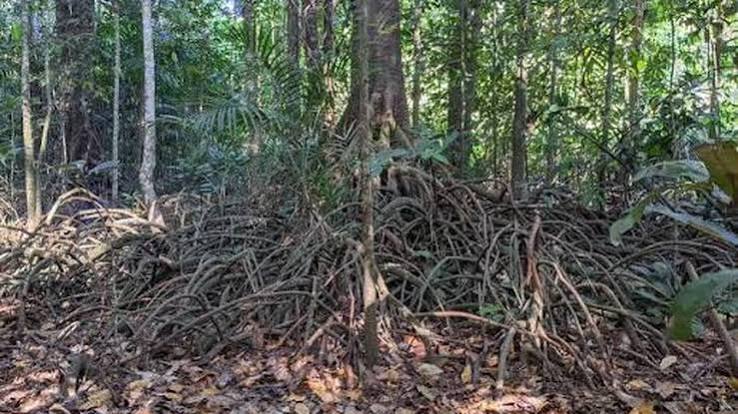
- Pneumatophores (Breathing Roots) - Inverted U-shaped or knee-like roots projecting above waterlogged soil to facilitate gas exchange (O2/CO2) in anaerobic conditions.
- Stilt / Prop Roots - Aerial roots sprouting from the lower trunk into unstable, soft mud, providing mechanical support against water currents.
- Pagoda Branching Architecture - Swamp trees exhibit tiered, horizontal whorls of branches radiating from a central trunk, optimizing sunlight capture beneath dense canopy layers.
- Biodiversity Haven- Supports over 600 faunal species, including rare endemic amphibians, reptiles (such as the Malabar pit viper and Gunther’s supple skink), endemic freshwater fishes, and rare medicinal flora.
- Fragmented Habitats - Once widespread along the Western Ghats these ancient freshwater swamps are now restricted to small, isolated patches like Shendurney, Kulathupuzha, and Anchal.
- Hydrological "Sponge" Function - Freshwater swamps act as natural landscape sponges, holding floodwaters during monsoon surges.
- It gradually releases water into forest streams during lean summer months to maintain perennial flow and groundwater recharge.
- High Carbon Sequestration - The swamps exhibit significantly higher biomass density and carbon storage capacity than adjacent non-swamp tropical evergreen forests, making them vital terrestrial carbon sinks.
- Agricultural Encroachment - Over recent decades, vast expanses of these low-lying swamp valleys have been drained and converted into paddy fields, cash crop plantations (areca nut, rubber, coffee, tea, teak), or lost to commercial infrastructure.
- Climate Vulnerability –
- Shorter monsoon seasons,
- Sudden flash floods, and
- Extended summer dry spells severely disrupt seed germination and seedling survival rates, pushing swamp-specialist species toward localized extinction.
Reference
The Hindu | Rare freshwater swamps in the Western Ghats



