Why in news?
A recent study published stated that the prevalence and morbidity of NCD in India has been increasing in the past decade.
What is non-communicable disease (NCD)?
- Non-communicable disease (NCD) are chronic diseases that are not caused by infectious agents and doesn’t spread from person to person.
- These diseases are long-lasting, progress slowly and often require prolonged treatment.
- Global concern – They are a major cause of death and disability worldwide, accounting for approximately 74% of all deaths globally.
- It results in 86% premature deaths (died before reaching 70 years of age) in low- and middle-income countries.
- Low middle income countries contributes 77% of all NCD cases.
|
Status of NCDs in India
|
- NCD prevalence has tripled since 1995, with increasing burden in both urban and rural areas
- Rising Burden – NCDs account for over 60% of deaths in India.
- Common NCDs – Hypertension, diabetes and cancer are leading contributors.
- Premature Deaths – About 55% of NCD deaths occur before the age of 70, disproportionately affecting working-age populations.
- Regional Disparities – Higher prevalence in urban areas, but rural regions are increasingly affected.
- Kerala has reported the highest prevalence of non-communicable diseases of 177 per thousand individuals followed by Pondicherry, Andhra Pradesh, Goa, Tamil Nadu and Punjab.
- The north-eastern States have reported the lowest prevalence of non-communicable diseases.
- According to WHO’s report, deaths caused by NCDs in India are:
- Cardio vascular – 22.66 lakhs.
- Chronic respiratory diseases – 11.46 lakhs.
- Cancer – 9.20 lakhs.
- Diabetes – 3.49 lakhs.
|
What are the Risk factors for NCDS?
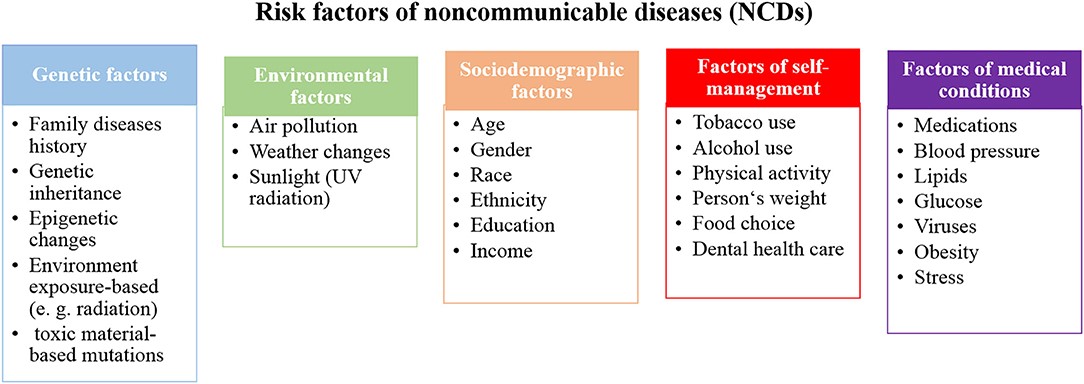
- A risk factor is a condition that increases the possibility of developing a non-communicable disease. The more risk factors one has, the greater the chance of getting a particular disease.
- Lifestyle choices – Poor diet, lack of physical activity and tobacco or alcohol use.
- The Lancet Global Health found that nearly 50% Indian adults insufficiently physically active.
- Genetic factors – Family history or genetic predisposition to certain diseases.
- Environmental factors – Exposure to pollution, unsafe drinking water and workplace hazards.
- Ageing – Increased risk due to natural wear and tear of body systems over time.
- Environmental factors – Air pollution is the major contributor to NCDs that accounts for 5.7 million deaths globally.
What are the types of non-communicable diseases?
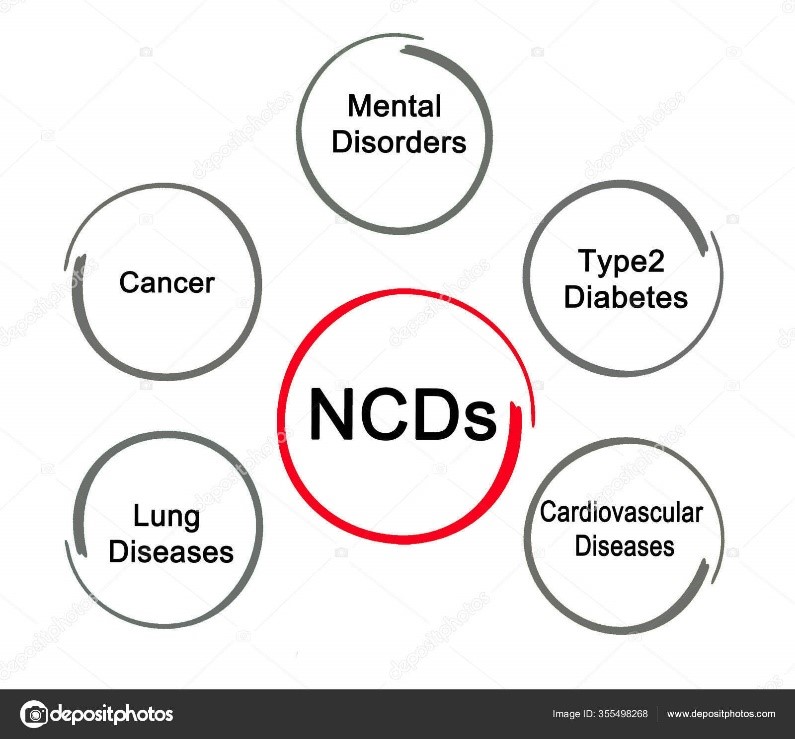
- Cardiovascular diseases (CVDs) – Includes heart attacks, strokes and hypertension.
- Cancer – Is an uncontrolled cell growth in specific tissues or organs contributing 9.3 million cases annually.
- Chronic respiratory diseases – Examples include asthma and chronic obstructive pulmonary disease (COPD).
- Diabetes (type-2) – A metabolic disorder resulting in high blood sugar levels.
- Mental health disorders – Conditions such as depression and anxiety, increasingly recognized as NCDs.
What are the effects of NCDs?
- Increased health burden – Urban communities face a triple health burden during health crises due to hazardous work environments, limited healthcare access, and financial vulnerability.
- Financial instability – Catastrophic out-of-pocket on healthcare expenditures jeopardize family livelihoods and financial stability.
- Marginalized communities often lack health insurance, compounding financial stress.
- Impact on Vulnerable Populations – Informal workers, including sanitation workers, gig workers and migrants are disproportionately affected due to lack of hygiene, nutrition and contract protections.
- Social and economic marginalization of these vulnerable people exacerbates the impact on health outcomes.
- Generational health impacts – Limited access to preventive care contributes to worsening health conditions in marginalized families often persist across generations, creating a cycle of vulnerability.
- Inaccessible health care – Public health systems, designed to support the lowest 40% of the population, are often inaccessible to urban marginal.
- Growing NCD cases causes overburden on health systems that inturn fail to cater effectively.
- Widening inequality – Slum-dwelling populations and other marginalized groups face unequal access to health care highlights systemic issues in urban planning and governance.
- Economic productivity loss – Illnesses like diabetes and cardiovascular diseases reduce workforce efficiency and productivity.
- Untreated or poorly managed NCDs contribute to absenteeism and long-term incapacity among urban workers.
|
Government Measures in India
|
- National Programme for Prevention and Control of NCDs (NP-NCD) – Focuses on awareness, prevention, and affordable treatment.
- Ayushman Bharat – Provides financial support to following initiatives under the Pradhan Mantri Jan Arogya Yojana (PMJAY).
- Setting up of State Cancer Institutes (SCI) and Tertiary Care Centers (TCCC) in different parts of the country to strengthen cancer facilities scheme.
- PM Swasthya Suraksha Yojana – To setup oncology department in in news AIMS and upgrade the others.
- Health and Wellness Centers (HWCs) – To offer screening and management of common NCDs.
- Tobacco control initiatives – Campaigns like the National Tobacco Control Programme (NTCP) and increased taxes on tobacco products to curb tobacco product.
- Fit India Movement – Promotes physical activity and healthy lifestyles.
- POSHAN Abhiyaan – To combat malnutrition and promote healthy eating habits.
- Integrated Disease Surveillance Programme – Which offers regular health check-ups and digital data collection.
- Mobile Medical Units (MMUs) & Telemedicine are implemented with National Health Mission support to improve healthcare access particularly in rural areas.
|
What are the measures to address NCD?
- Strengthen primary health care – Improve access to publicly run primary health care, especially for urban marginalized communities.
- Leverage technology – Implement real-time health monitoring using digital tools for conditions like hypertension and diabetes.
- Use screening for population-level evidence and individual awareness.
- Promote community-based solutions – Create health awareness and education among public to coordinate and work in communities with ASHA workers.
- Develop community-led NCD surveillance systems for marginalized urban settlements.
ASHAs are trained to work as an interface between the community and the public health system.
- Engage all stake holders – Engage employers, municipalities, traffic systems, schools and health systems in dialogue to address interconnected health determinants.
- Create solutions for healthy cities through collaboration with urban local bodies and experts.
- Improve Primary Health Centers – In rural areas by increased participation and enhanced accountability for provision of better facilities to the patients in the public health facilities.
- Address Social Determinants of Health – Tackle issues related to workplace safety, housing, family connections, and community health infrastructure.
- Recognize that health outcomes are deeply tied to social identities, employment and migration status.
- Policy-level interventions – Scale up state-level action plans for better access to primary health care.
- Emphasize preventive measures to avoid catastrophic out-of-pocket (OOP) healthcare expenses.
References
- The Hindu |India’s and its Non-Communicable Disease Burden
- The Hindu |Prevalence Of NCDS Tripled
- WHO |Non Communicable Diseases



