Intranasal vaccine
Recently Indian Immunologicals Ltd (IIL) in collaboration with Griffith University has developed a live-attenuated needle-free intranasal booster vaccine targeting SARS-CoV-2.
- Intranasal Vaccines – These are vaccines that are administered through nasal pathways.
- Features of Intranasal Vaccine- The nasal route has excellent potential for vaccination due to the organized immune systems of the nasal mucosa.
- Non-invasive, Needle-free.
- Ease of administration – does not require trained health care workers.
- Elimination of needle-associated risks (injuries and infections).
- High compliance.
- Scalable manufacturing – able to meet global demand.
- Mucosal Immunity – The intranasal vaccine helps prevent the virus from establishing an infection at its entry point, the nasal passages.
- An intranasal vaccine stimulates a broad immune response of neutralizing IgG, mucosal IgA, and T cell responses.
- Localized Immunization - Immune responses at the site of infection in the nasal mucosa helps in blocking both infection and transmission of COVID-19.
- Immunity Period - This localised immune response could offer protection for up to a year with just one dose.
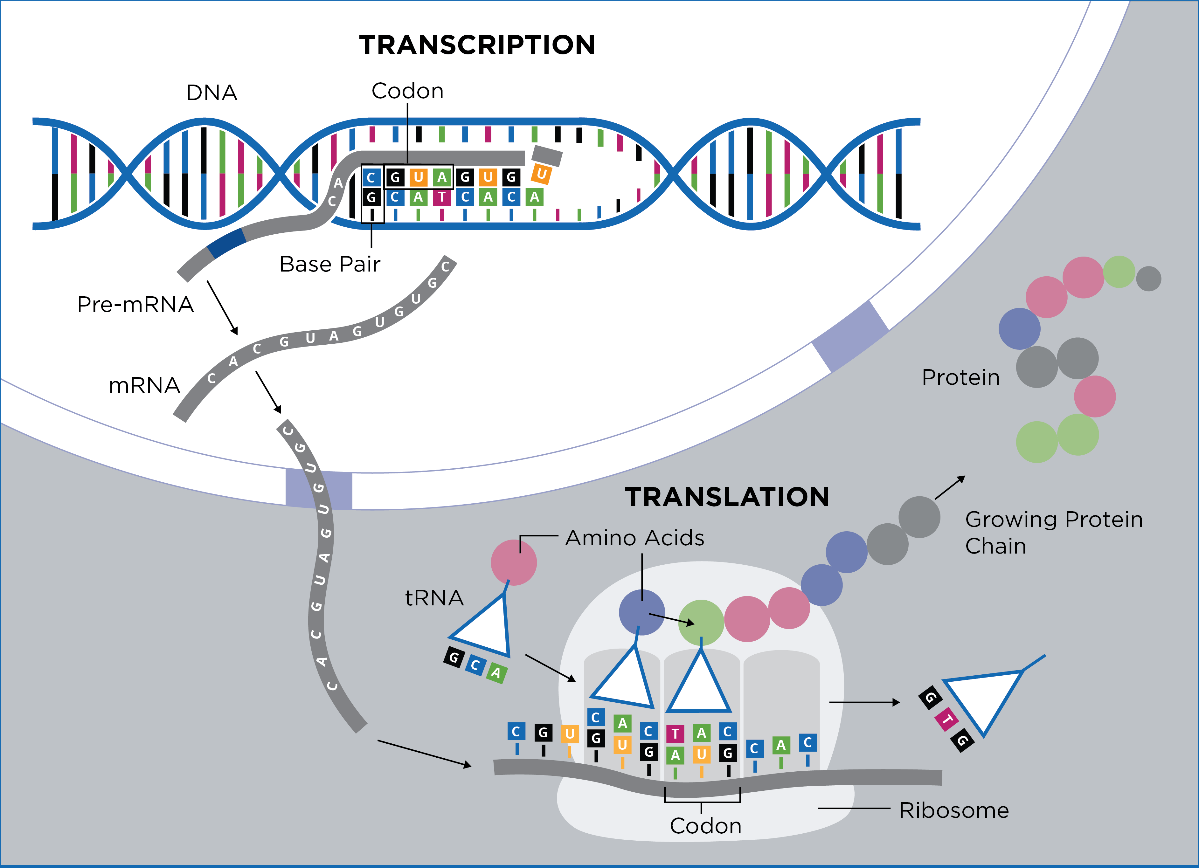
- IIL’s Vaccine - It is a live-attenuated booster vaccine that utilises codon deoptimization technology.
- Codon deoptimization technology – This method involves modifying the virus in such a way that it mimics a natural infection without causing harm.
- Features - It involves decreasing the frequency of underrepresented codon pairs (genetic determinants for amino acids) without changing the amino acid sequences.
- It is an efficient virus attenuation strategy, where the degree of attenuation can be regulated as required.
- It is extremely safe and takes less time than the conventional way of attenuating viruses which usually takes several years.
References
- Indian Express | Newly-developed needle-free Covid vaccine
- The Hindu | Indian Immunologicals Ltd Intranasal Vaccine
Digital Bus initiative
The Digital Bus initiative has so far empowered young adults in remote areas with over three lakh beneficiaries.
- Digital Bus – These are mobile classrooms that bring IT courses, assessment, and certification, as well as access to the world of information and knowledge, to students in remote areas.
- It is a joint venture between the National Digital India Mission and the NIIT Foundation.
- Digital India – It was launched in 2015 for connecting rural areas with high-speed Internet networks and improving digital literacy.
- NIIT Foundation – It is an Education NGO registered under the Societies Registration Act, 1860 to provide skilling and education to underserved communities.
- Launched – 2017
- Objective
- Reducing the Digital divide for those living in remote areas
- Providing Linkages to Government programs and initiatives
- Enhancing interest-levels in learning
- Introducing the multidisciplinary approach to education
- Encouraging collaborative learning
- Developing interpersonal skills
- Providing awareness on technology amongst rural community
- Providing equal opportunities for rural youth
- Components of the program
- Provide Digital Literacy at the Village Doorstep
- IT Education
- Entrepreneurship Development Program
- Common
- public utility services
- Video conferencing consultation
- Dissemination of Government policies
- Features of the Bus
- Solar-powered
- 5G-enabled with computers and Internet
- Camera/video capabilities
- Preinstalled e-courses.
- Types of Courses
- Using e-mail, the Internet, and applications like MS Office.
- Financial Literacy
- Cyber Security
- Career programme – It offers a career programme to help the beneficiary look for a job in the nearest city of town.
References
- The Hindu | Digital Bus Initiative
- NIIT Foundation | Digital Bus
Munich Agreement
On this day 85 years ago in September 1, 1939, German troops marched into Poland, triggering the beginning of World War II.
- Munich Agreement- It is a settlement reached by Great Britain, France, and Italy with Germany that permitted German annexation of the Sudetenland, in western Czechoslovakia to ensure peace in Europe.
- Signed - September 29-30, 1938.
- Sudetenland – It is the region in the vicinity of the Sudeten Mountain ranges which had a predominately German population and was incorporated into Czechoslovakia in 1918–19.
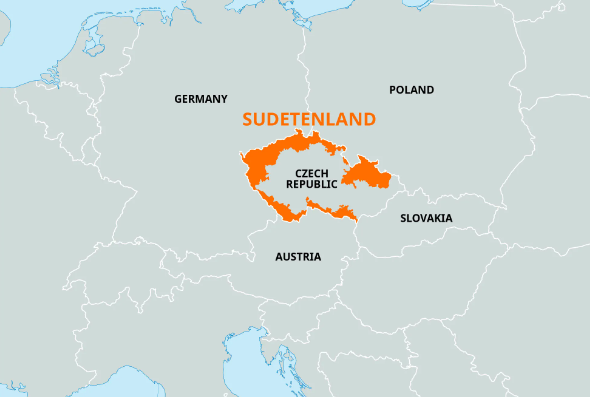
- Sudeten Annexation – Czechoslovakia, though not officially party to the Agreement, was forced to agree to the deal under pressure from Great Britain and France.
- Following the Munich Agreement, German troops occupied these areas between October 1 and October 10, 1938.
- The annexation was part of Hitler's plan to create a "Greater Germany."
- Outbreak of WWII - Six months after the agreement, Hitler violated it by invading the rest of Czechoslovakia on outbreak of World War II
- WWII Outbreak – On September 1, 1939 German troops marched into Poland, triggering the beginning of World War II.
- Great Britain and France, which had assured help to Poland, declared war on Germany and its allies on September 3.
Reference
Indian Express | Munich Agreement
India Post Payment bank
Recently The India Post Payments Bank celebrateed its 7th Foundation Day.
- India Post Payments Bank (IPPB)- It is a public sector payments bank with 100% equity owned by Government of India.
Payment banks are a new type of financial institution that was introduced in 2014 to provide basic banking services to people who are currently unbanked or underbanked.
- Established - September, 2018
- Nodal ministry- Department of Posts, Ministry of Communications
- Objective- To provide every household in India an access to efficient banking services and enable them financially secured and empowered.
- Services provided – IPPB offers various Personal and Merchant banking products and services.
|
DEPOSITS
|
- Savings Account
- Current Account
|
|
MONEY TRANSFER
|
- Simple & Secure
- Instant
- 24x7
|
|
DIRECT BENEFITS TRANSFERS
|
- MGNREGA
- Scholarships
- Social welfare benefits and other Government subsidies
|
|
THIRD PARTY PRODUCTS
|
- Loans
- Insurance
- Digital life certificates
- Investments
- Post Office Savings schemes
|
|
BILL & UTILITY PAYMENTS
|
- Mobile and DTH recharge
- Electricity, water & gas bills
- Donations & insurance premiums
|
|
ENTERPRISE AND MERCHANT PAYMENTS
|
- Postal products
- Digital Payment of e-commerce delivery(CoD)
- Small merchants/kirana stores/unorganized retail
- Offline payments
- Cash Management Services
|
- Aadhaar services – Aadhaar enrolment for children up to 5 years old and mobile number update through Child Enrolment Lite Client (CELC) service.
- Aadhaar-enabled payment systems
- Door Step Banking - It provides paperless, cashless, and present less banking facilities at the doorstep, even in remote areas.
- Postmen and Gramin Dak Sevaks- They are functioning as mobile banks through IPPB, delivering various services at the doorstep.
- It promotes the initiative "Aapka Bank, Aapke Dwar" (Your Bank at Your Doorstep).
- Fincluvation – It is Innovation for Financial Inclusion initiative to invite Fintech Start-up community to co-create solutions for financial inclusion.
- Significance of IPPB- It plays an important role in financial inclusion and Digital India, especially in rural areas.
- It facilitates the delivery of various public welfare schemes of the Central and State Governments to the last mile of society.
- It provides paperless, cashless, and present less banking facilities at the doorstep, even in remote areas.
|
Key Achievements of India Post Payments Bank (IPPB)
|
- Acquired over 9.88 crore customer accounts.
- On-boarded more than 12 lakh merchants.
- Successfully disbursed over Rs.45,000 crore in Direct Benefit Transfers (DBT) to beneficiaries under various government schemes.
- Facilitated mobile number updates for Aadhaar cards for over 7.10 crore customers.
- Enabled Digital Life Certificate services for more than 20 lakh pensioners.
|
References
- PIB | India Post Payments Bank
- Economic Times | 7th Foundation Day of IPPB
Rule 170 of Drugs Act
The Supreme Court of India has stayed a notification issued by the Ministry of AYUSH that removed Rule 170 from the Drugs and Cosmetics Rules, 1945.
- Rule 170 - It was issued in 2018 under the Drugs and Cosmetics Act to govern the manufacture, storage, and sale of medicines in India.
- Advertisement regulation – It specifically provides for controlling inappropriate advertisements of Ayurvedic, Siddha and Unani medicines.
- Provision of the Rules
- Unique Identification Number (UIN) - It requires manufacturers to obtain approval and a UIN from the state licensing authority before advertising their products.
- Mandate- The manufacturers must provide textual references, rationale, safety, effectiveness, and quality evidence for their products.
- Rejection - The advertisements can be rejected if they lack contact details, contain vulgar content, promote sexual enhancement products, use celebrity endorsements, make misleading claims.
- Recent changes-The AYUSH ministry issued a notification on July, 2024, directing state licensing authorities not to take action under Rule 170.
- In May 2023, Ayurvedic, Siddha and Unani Drugs Technical Advisory (ASUDTAB) recommended the omission of Rule 170.
|
Ayurvedic, Siddha and Unani Drugs Technical Advisory Board (ASUDTAB)
|
- ASUDTAB is an expert body that advises on actions related to the regulation of quality control and standardization of of Ayurvedic, Siddha, and Unani drugs (AYUSH Drugs).
- It was established under the provisions of the Drugs and Cosmetics Act, 1940.
|
Reference
Indian Express | Rule 170 of Drugs Act



