|
One Liners 06-09-2026
|
|
History, Art and Culture
|
|
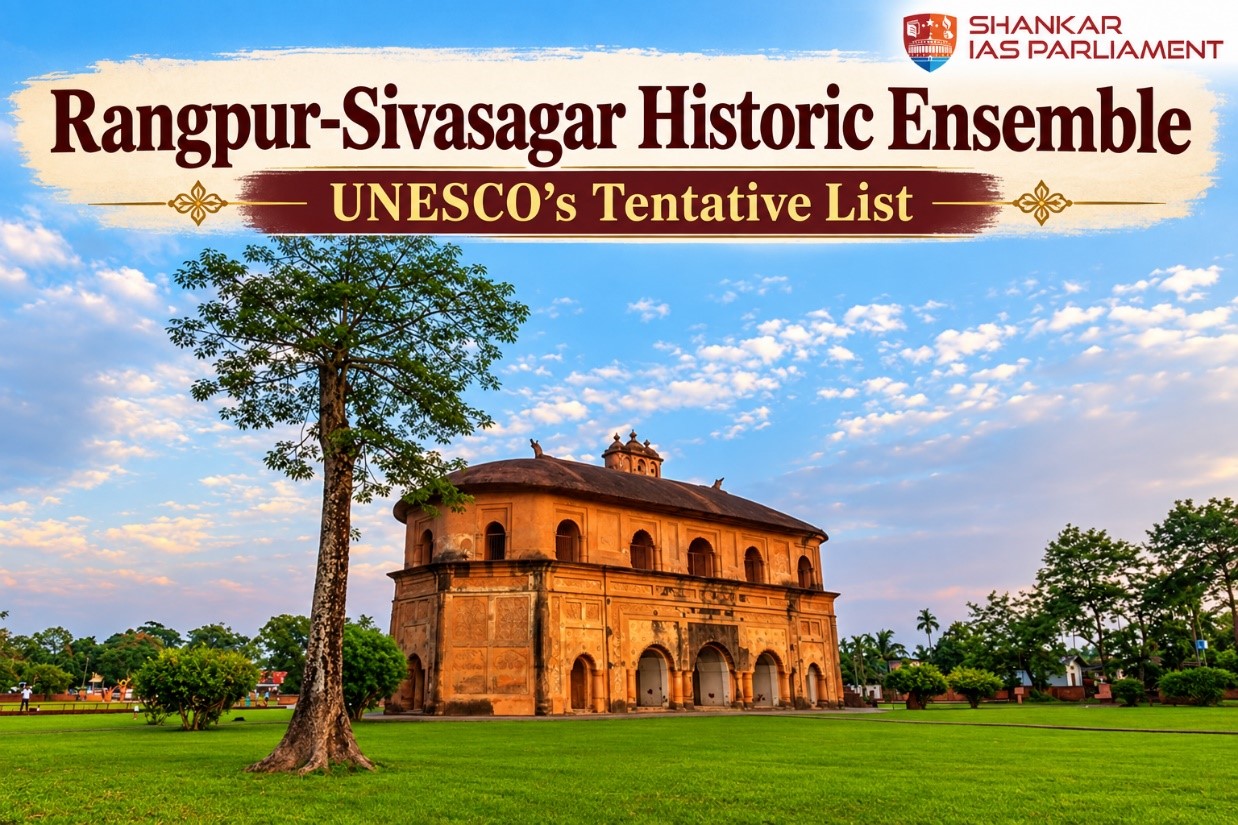
Rangpur-Sivasagar Historic Ensemble
Ahom’s capital Rangpur-Sivasagar ensemble proposed for UNESCO’s Tentative List of World Heritage Sites tag.
- Rangpur-Sivasagar Historic Ensemble of Assam – It is the political and ceremonial centre of the Ahom kingdom.
- Ahoms – Ruled the Brahmaputra Valley for six centuries, preserving its finest temples, palaces, tanks, and engineering marvels.
- It comprises several important remnants of the Ahom era, including the iconic Rang Ghar, Asia's oldest surviving amphitheatre, Talatal Ghar, and the large Joysagar, Gaurisagar and Sivasagar tanks.
- 2 Criterion
- (iii)-bearing a unique or at least exceptional testimony to a cultural tradition or to a civilisation which is living or which has disappeared-and criterion
- (iv)-being an outstanding example of a type of building, architectural or technological ensemble or landscape which illustrates (a) significant stage(s) in human history.
Other Indian properties added to Tentative List
- Colonial Penal Settlement of the Andaman Islands,
- Nicobarese Cultural Continuity in the Central Group of Nicobar Islands, and
- The Painted Haveli Towns of Shekhawati.
Moidams - the Mound-Burial System of the Ahom Dynasty – Inscribed in UNESCO’s World Heritage List, 2024 - Assam's first cultural property to receive the distinction.
|
|
Geography
|
|
High-hazard glacial lakes, Sikkim
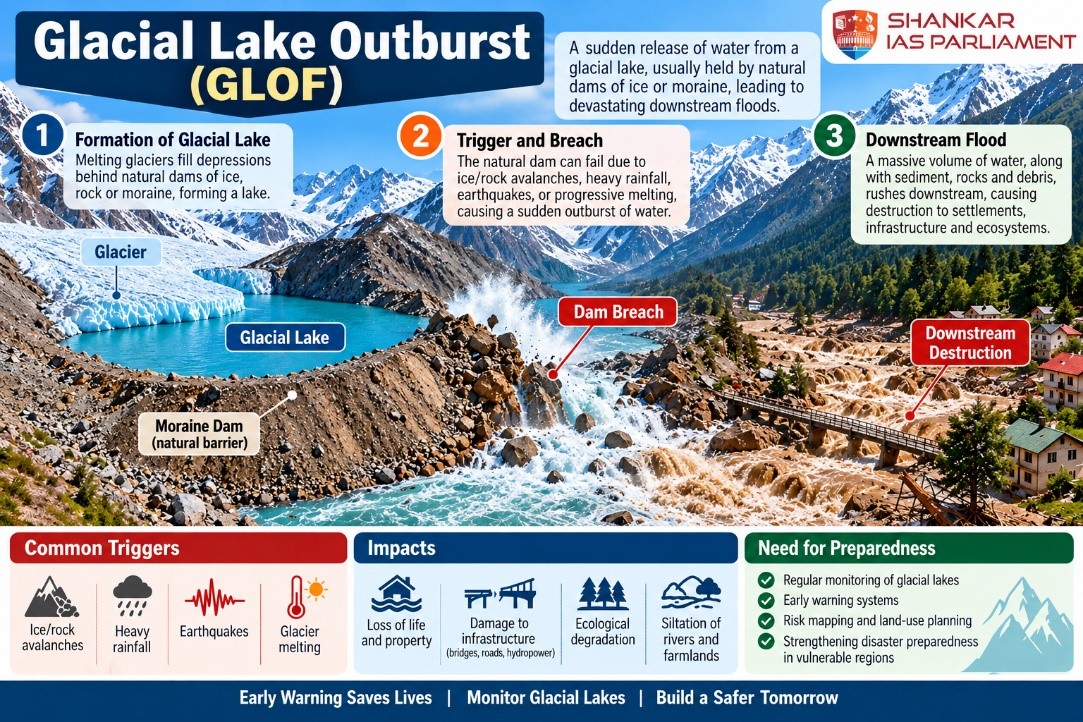
The workshop on Glacial Lake Outburst Flood (GLOF) Risk Mitigation was held recently in Sikkim.
- Aim – To bridge the gap between scientific research and public awareness while supporting Sikkim's development of India's first dedicated GLOF Risk Mitigation Protocol.
- Focus – Strengthening public understanding of GLOF risks and ensuring that verified, science-based information reaches the public.
- Findings – 40 high-hazard glacial lakes identified by the National Disaster Management Authority (NDMA), in coordination with the Government of Sikkim.
- Of these 40, 16 are in Category A (highest risk), two in Category B (high risk) and nine in Category C (moderate to low risk), while 13 remain unclassified.
- Complex Glacial Lakes – Includes Shako Chho Lake, South Lhonak Lake, North Lhonak Lake, Changsang Lake, Khangchung Chho (Tso), Gurudongmar Lake Complex.
- Glacial lakes – These are formed by the melting of glaciers and accumulation of meltwater in depressions on or near the glacier's surface.
- GLOFs – They occur when these lakes suddenly burst open due to factors such as excessive water accumulation or triggers like earthquakes.
|
|
Polity & Governance
|
|
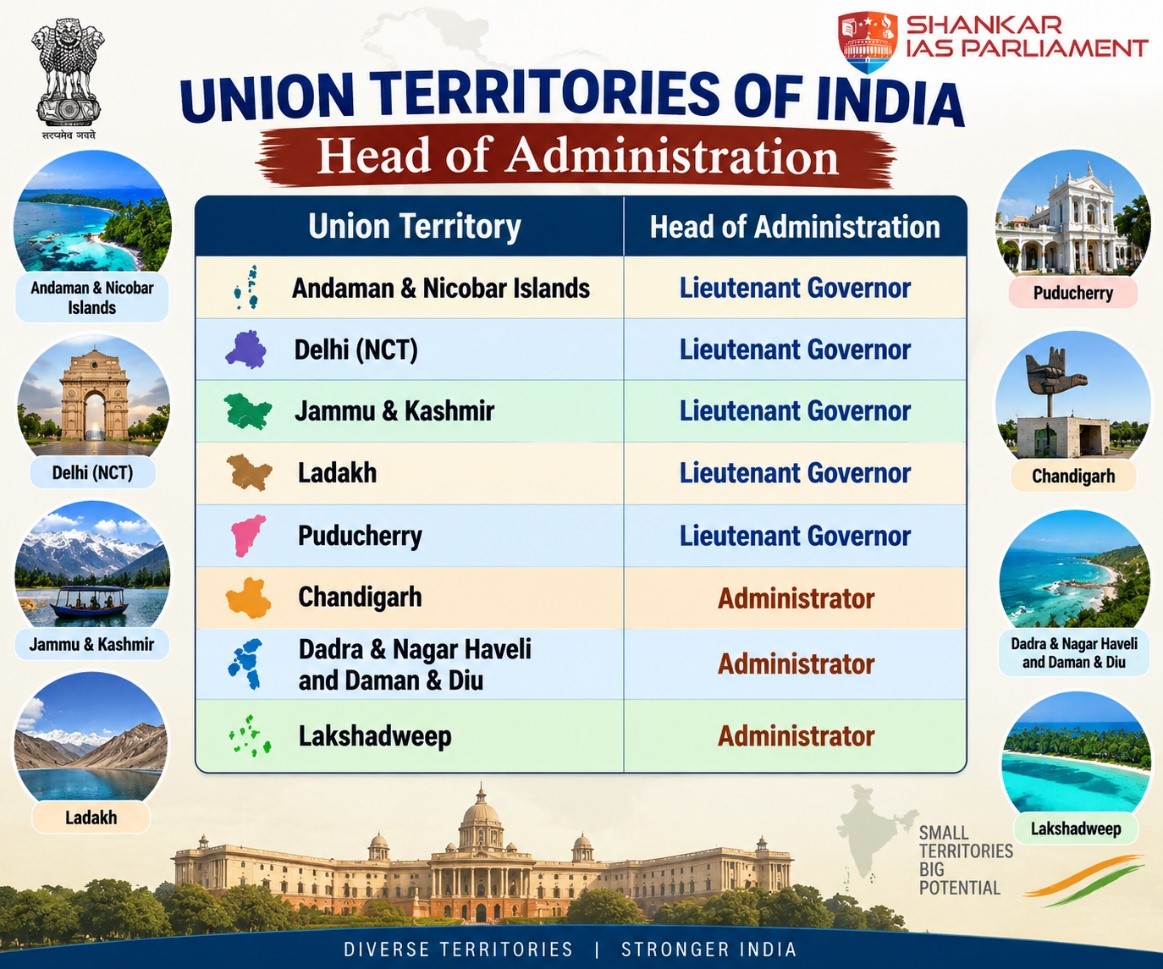
Lt Governor of Andaman and Nicobar Islands
BJP Rajya Sabha MP Dinesh Sharma was appointed Lt Governor of the Andaman and Nicobar Islands, the Rashtrapati Bhavan said.
- Article 239 – Every Union Territory (UT) is administered by the President through an administrator appointed by him/her, commonly designated as the Lieutenant Governor (Lt. Governor).
- Delhi – Special provisions under Article 239AA; the LG has a constitutionally significant role in relation to the elected government.
- Puducherry – Has an elected Legislative Assembly and Council of Ministers under Article 239A, while the LG represents the Union.
|
|
Zonal Council
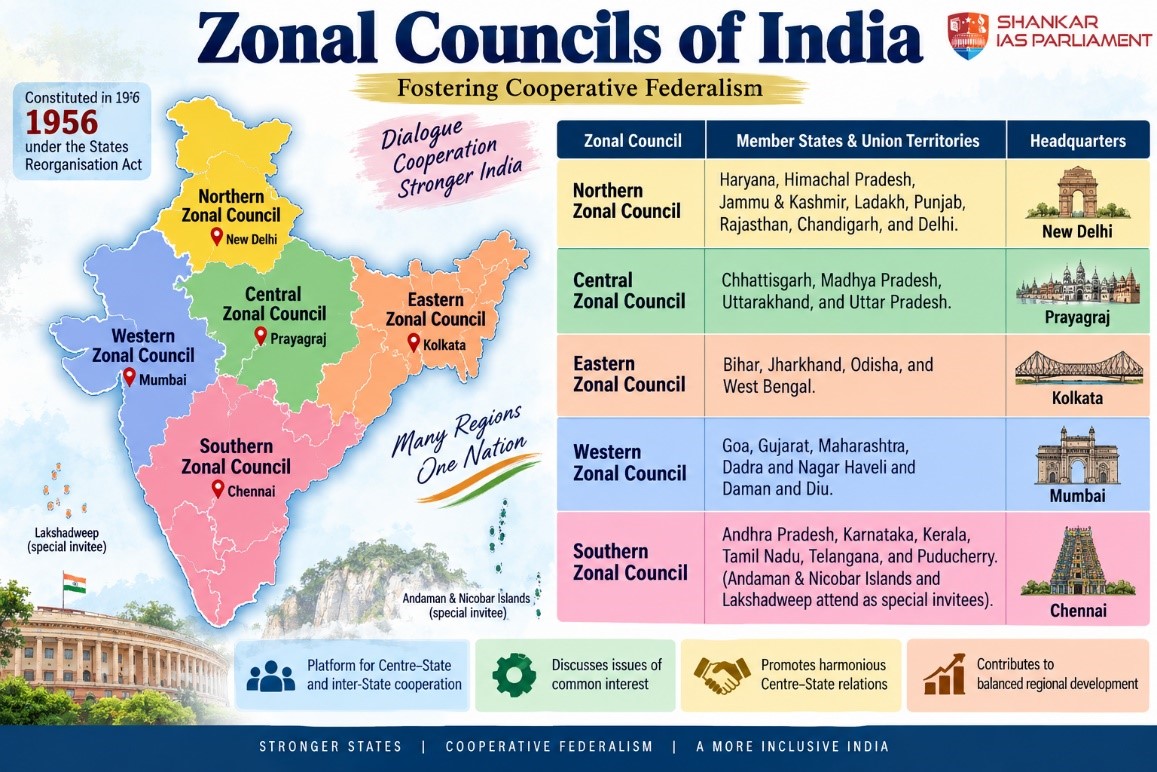
Recently, the 28th meeting of the Western Zonal Council was held in Goa under the chairmanship of the Union Home Minister.
- Zonal Councils – These are statutory advisory bodies in India established under the sections 15 to 22 of the States Reorganisation Act, 1956.
- Objective – To promote regional cooperation, inter-state coordination, and cooperative federalism.
Composition
- Chairman – Union Home Minister - ex-officio Chairman of all five Zonal Councils.
- Vice-Chairman – Chief Ministers of the member states within the zone on a rotational basis, holding office for one year at a time.
- Members – Chief Minister and two other ministers nominated by the Governor from each state, along with two representatives from each Union Territory in the zone.
- Advisors – Representatives from NITI Aayog, Chief Secretaries and Development Commissioners of the participating states - specialised technical advisors.
|
|
International Relations and Issues
|
|
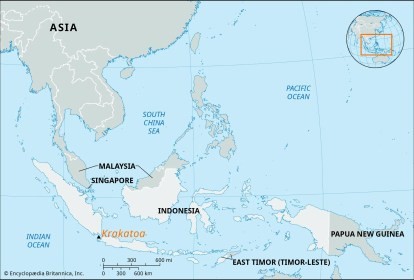
Anak Krakatoa
Anak Krakatau in Indonesia began erupting recently stayed seismically active.
- Anak Krakatau – It is a volcanic island in Indonesia, located 150km from Jakarta.
- Anak Krakatau means “Child of Krakatau”.
- Origin – Anak Krakatau first emerged in the late 1920s from the caldera formed by the explosive volcanic 1883 eruption.
- Major hazards – Lava flows, ashfall, incandescent rocks, pyroclastic hazards.
|
|
Vostok Oil project
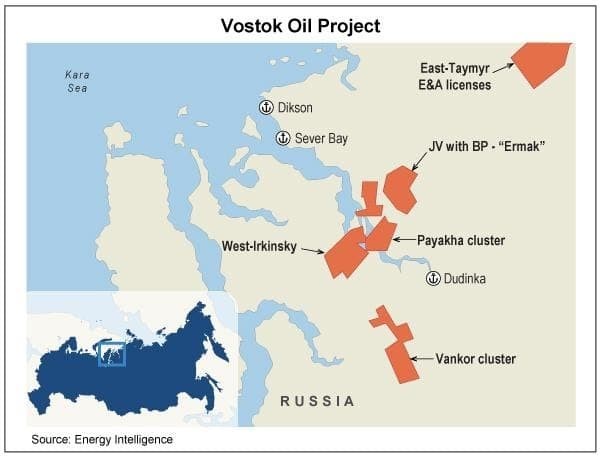
Russian President Putin described the launch of the Vostok Oil project as a major milestone.
- Vostok Oil project – It is Russia’s flagship Arctic oil development led by state-backed company Rosneft.
- Location – Taimyr Peninsula & Krasnoyarsk Territory, Arctic Russia.
- Production target – 7 billion tonnes of high-quality, low-sulphur crude oil.
- Pipeline Infrastructure – 770 km long, connects fields to Sever Bay terminal, a complex engineering feat buried 50m deep under the bed of the Yenisei River.
- Sever Bay Port (Bukhta Sever) – World’s northernmost oil port.
|
|
Kharg Island
Recently, the US military struck three Iranian tankers in retaliation for missile attacks.
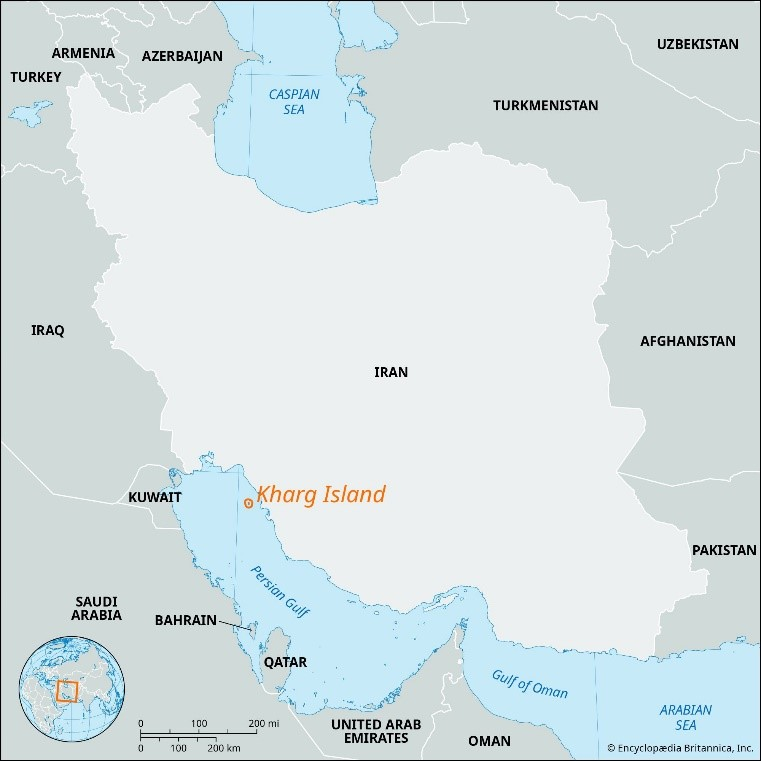
- Location – It is located 28 km off Bushehr province of Iran in the northern Persian Gulf & northwest of the Strait of Hormuz.
- It is a strategic coral island in the northern Persian Gulf, located 28 km off Bushehr province of Iran & situated close to the Strait of Hormuz.
- It is known as the "beating heart" of Iran's energy empire.
- Geography – Kharg is a rocky limestone and coral island, roughly 8 km long and 4 km wide, unique in the Persian Gulf for having its own natural freshwater supply.
- Significance – Often described as Iran's "oil lifeline" or "crown jewel," it serves as the terminal for roughly 90% of Iran's crude oil exports.
- Historical Context – This island contains significant historical sites, including an Achaemenid-era cuneiform inscription, rock-cut tombs, and the ruins of a 7th-century Christian monastery.
|
|
Economy
|
|
Direct Tax Buoyancy
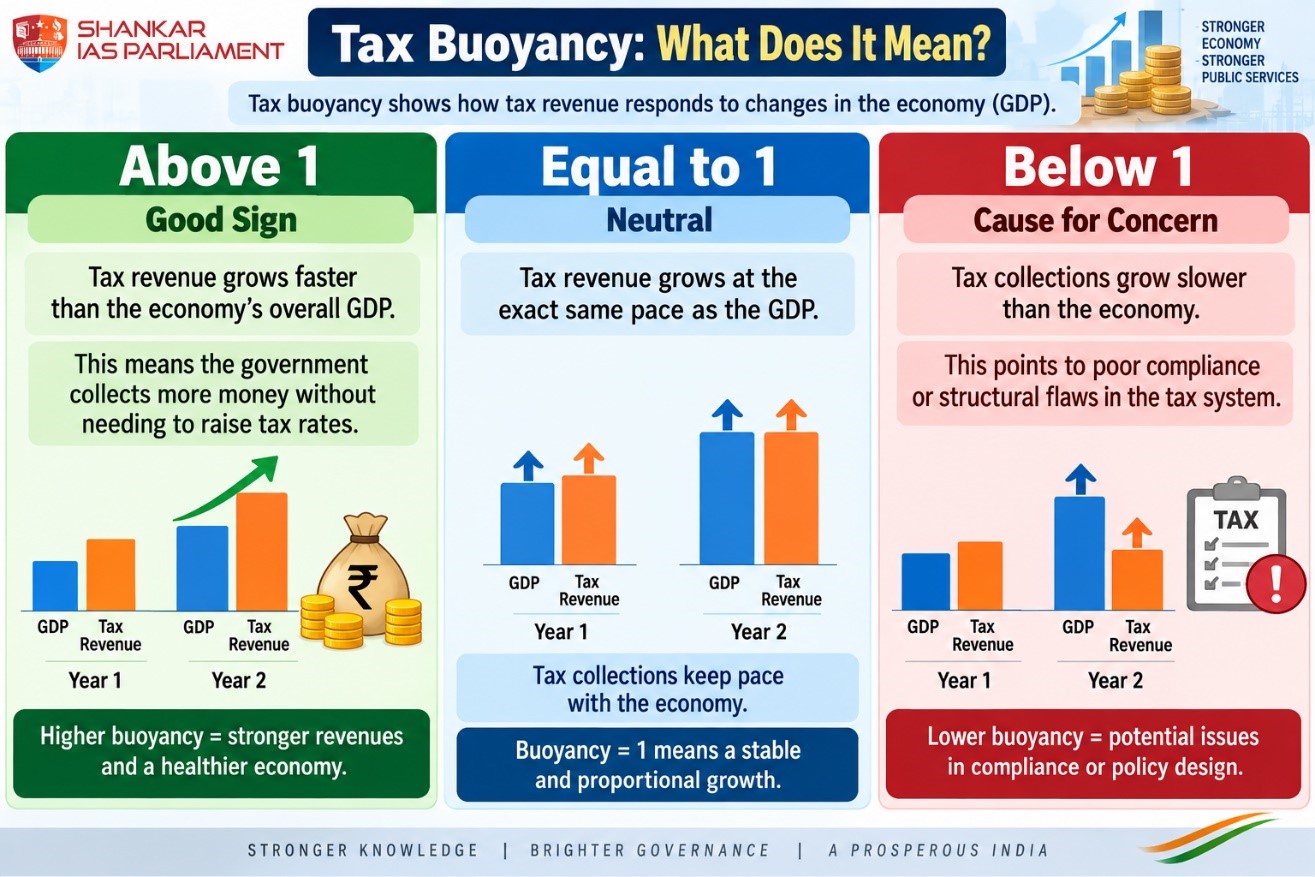
- Tax buoyancy – It measures the growth in tax revenue as compared to growth in GDP, showing responsiveness of tax revenues to changes in overall economic activity.
- Direct Tax Buoyancy – It is a fiscal ratio that measures how much direct tax revenue grows compared to the change in a country's nominal GDP.
- India’s Direct Tax Buoyancy Trend – In 2022–23 (1.27), 2023–24 (1.48 - peak) and 2024–25 (1.39 - still above 1), it shows sustained growth in collections despite moderation.
- Impact on Economy – The Gross tax-to-GDP ratio has improved from 10% (2019–20) to 11.2% (2026–27 Budget estimate).
|
|
Environment
|
|
Successful sites for Vulture reintroduction
In 2026, the vulture breeding programme in India completed 25 years.
- Conservation for 3 Gyps species
- Oriental white-backed vulture (Gyps bengalensis),
- Slender-billed vulture (Gyps tenuirostris), and
- Long-billed vulture (Gyps indicus).
- Released by the Bombay Natural History Society (BNHS) since 2020 - so far, 128 vultures have been released in the last 6 years.
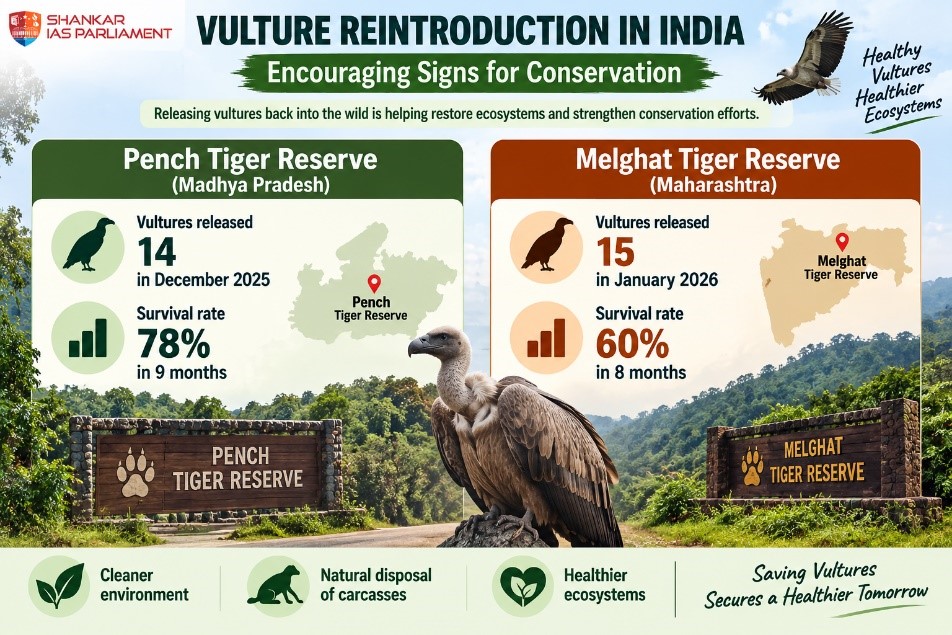
- JCBC Pinjore – 1st vulture conservation centre, located in Pinjore, Haryana – became a role model of successful vulture conservation in entire Asia.
|
|
Science
|
|
Eight-Letter Genetic Alphabet
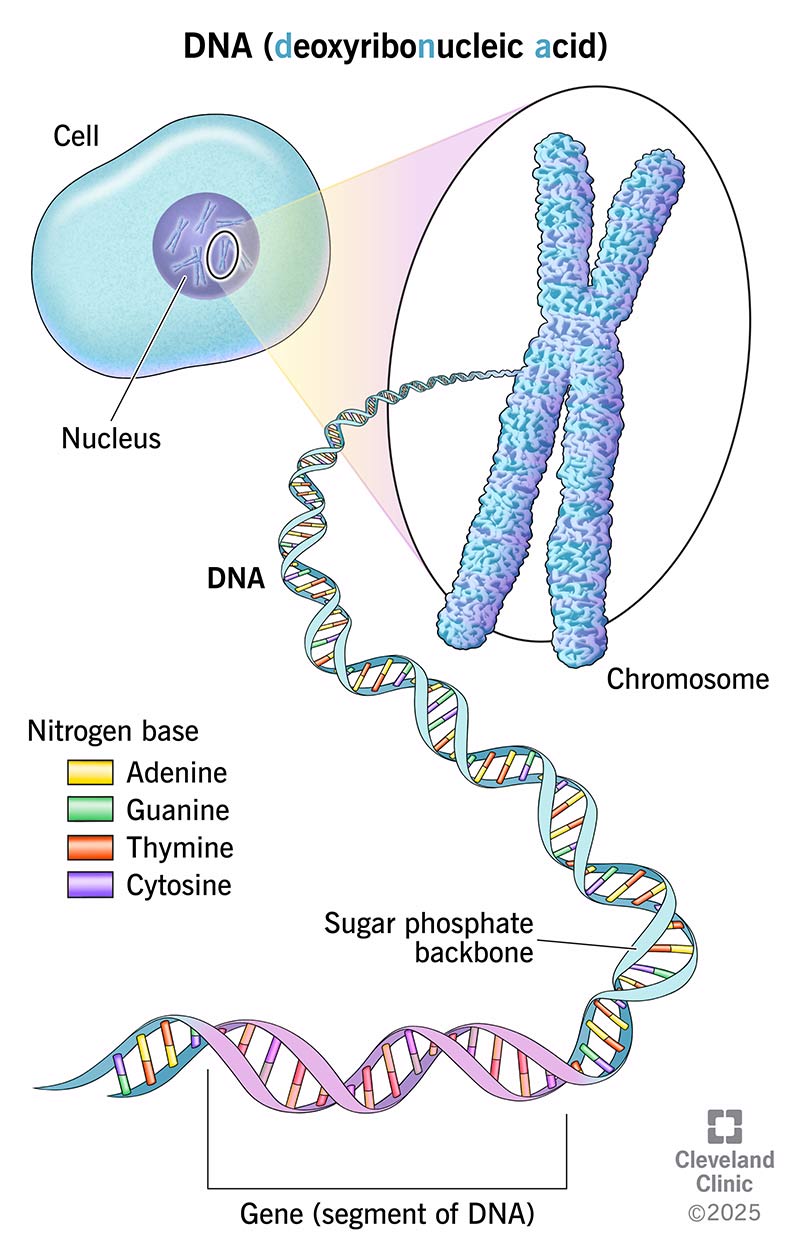
Researchers at the University of California San Diego have shown that RNA polymerase can accurately recognise DNA containing eight genetic letters instead of four.
- RNA polymerase – It is a core enzyme that builds RNA strands from a DNA template during the process of transcription.
- Natural DNA – Uses 4 bases of the genetic alphabet – adenine, thymine, cytosine and guanine.
- Synthetic DNA – Researchers added two extra base pairs, expanding the alphabet to 8.
- Example
- Hachimoji DNA – A system based on eight genetic letters; the name comes from Japanese words meaning “eight” and “letter”, introduces 4 synthetic nucleotide bases:
- P (pairs with Z)
- B (pairs with S)
- Unexpected discovery – Natural enzymes can handle synthetic DNA without major modifications, meaning life’s machinery is more flexible than previously thought.
- Potential applications – Include new medicines, diagnostics (precise disease detection), and synthetic biology.
|



