|
One Liners 06-08-2026
|
|
Polity & Governance
|
|
‘One Nation, One Fertilizer (ONOF)' Initiative
The government recently said that ONOF Initiative Strengthens Fertilizer Availability.

- Implemented under – Pradhan Mantri Bhartiya Janurvarak Pariyojana (PMBJP)
- Nodal ministry – Ministry of Chemicals and Fertilizers.
- It has secured adequate fertilizer availability across India during the ongoing Kharif 2026 cropping season.
- The government has eliminated local brand confusion, checked black marketing, and minimized inefficient crisscross rail logistics across states.
- By marketing all subsidized fertilizers—Urea, DAP, MOP, and NPKS—under the single uniform brand name "BHARAT".
|
|
Central Vigilance Commission
Vigilance Commissioner A S Rajeev assumed charge as the acting Central Vigilance Commissioner (CVC)
- The Central Vigilance Commission (CVC) is India's apex anti-corruption body established in 1964.
- It operates independently of executive control to monitor vigilance administration within central government organizations, public sector undertakings, banks, and other federal authorities.
- Establishment – Formed in 1964 based on the recommendations of the Santhanam Committee, later granted statutory status through the CVC Act of 2003.
- Composition – Central Vigilance Commissioner (Chairperson) and up to 2 Vigilance Commissioners (Members).
- Appointment – Appointed by the President of India on the recommendation of a high-powered committee led by –
- Prime Minister
- Home Minister
- Leader of the Opposition in the Lok Sabha.
- Tenure – 4 years or until the member turns 65 years of age, whichever comes first.
|
|
India's first AI and innovation city – 'Arivagam'
Tamil Nadu announced India’s first dedicated artificial intelligence and innovation city, named ‘Arivagam’,
- Features –
- AI University
- Skill Development Center
- Multi-domain innovation incubators to support deep-tech and AI start-ups.
- Modern, self-contained residential and mixed-use spaces integrated within the district.
|
|
International Relations and Issues
|
|
Indian Pharmacopoeia Commission (IPC)
Indian Pharmacopoeia Commission (IPC) was recognized by the WHO South-East Asia Regulatory Network (SEARN) as the Regional Centre of Excellence in Pharmacovigilance and Technical Centre in Quality of Medicines.
- IPC is a national coordination centre for monitoring and collecting adverse drug reaction (ADR) data across the country.
- Headquartered in – Ghaziabad, Uttar Pradesh.
- Nodal ministry – Ministry of Health and Family Welfare.
South-East Asia Regulatory Network (SEARN)
- SEARN is a volunteer association of National Regulatory Authorities (NRAs) of South-East Asia responsible for the regulation of medical products.
- Formed in – 2016
- Established by – World Health Organization (WHO) South-East Asia Regional Office (SEARO).
- Member countries – Bangladesh, Bhutan, the Democratic People's Republic of Korea, India, Maldives, Myanmar, Nepal, Sri Lanka, Thailand and Timor-Leste.
- Vision – To support timely access to affordable medical products of assured quality, safety and efficacy in all countries of the South-East Asia region and beyond.
- Mission – To develop and strengthen regulatory collaboration, convergence and reliance in the South-East Asia region.
|
|
Environment
|
|
Dhauladhar Wildlife Sanctuary
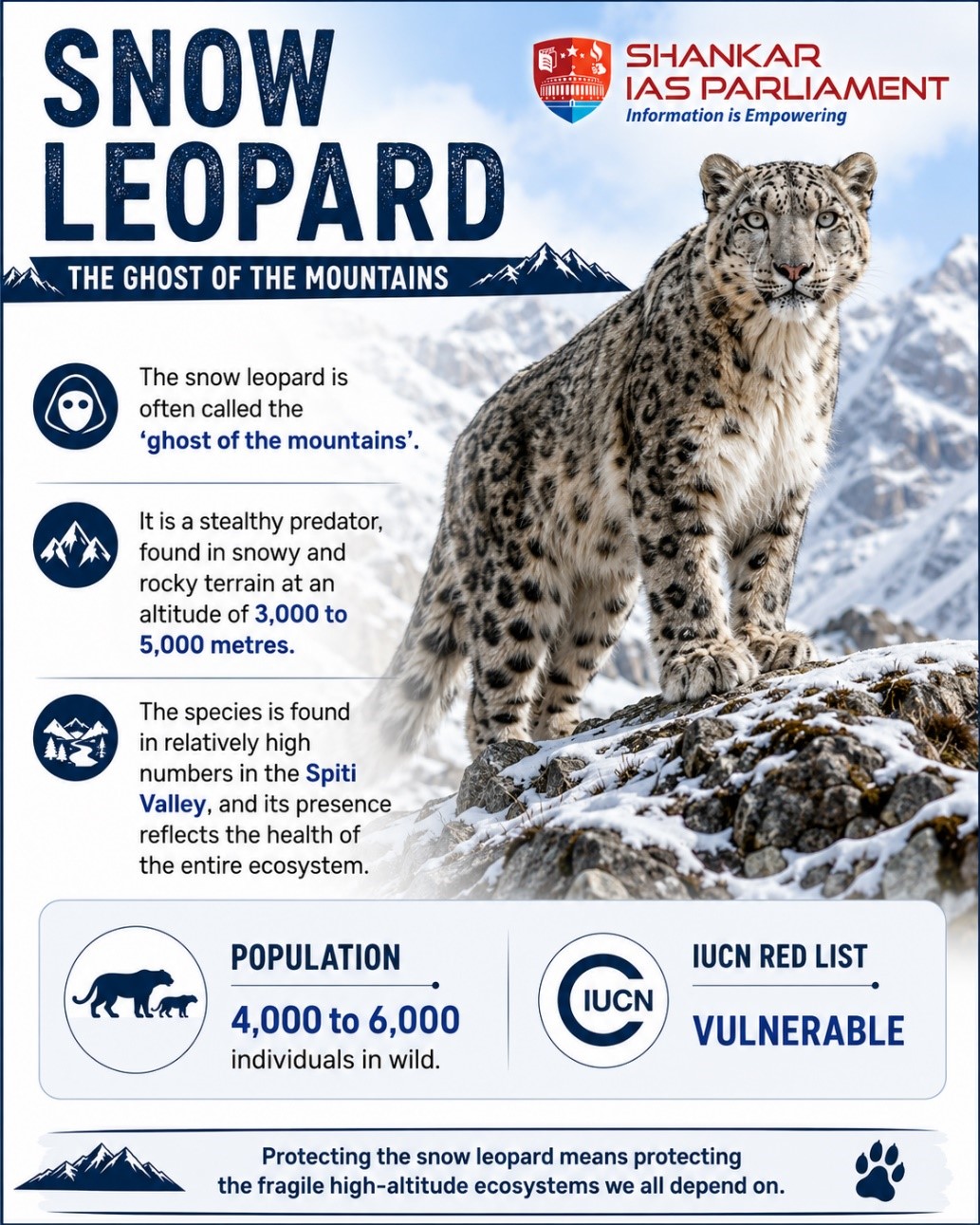
First time snow leopard found inside the Dhauladhar Wildlife Sanctuary in Himachal Pradesh recently.
- Location – Himachal Pradesh's Kangra district.
- Flora –
- Dominated by deodar cedar, pine, spruce, and mixed conifers.
- Features broadleaved oak, rhododendron, and open alpine meadows above the tree line.
- Fauna –
- Coexistence of the snow leopard, common Indian leopard, Asiatic black bear, and Himalayan brown bear.
- Alpine musk deer, Himalayan tahr, serow, and goral.
|
|
East Africa’s snow peaks Melting
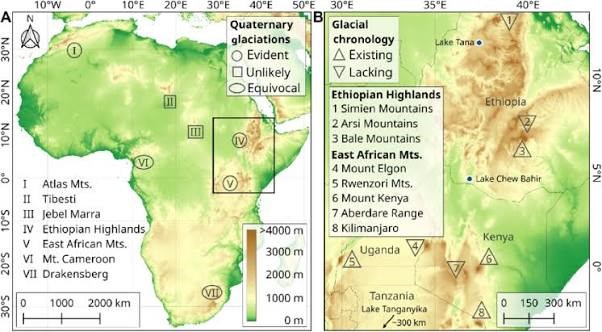
- East Africa’s remaining mountain glaciers on Mount Kenya, Kilimanjaro, and the Rwenzori Mountains are vanishing rapidly.
- Over the past century, the region has lost over 90% of its glacial ice due to declining snowfall linked to Indian Ocean temperature shifts.
- Their melting will not significantly impact regional freshwater supplies due to direct evaporation (sublimation) rather than producing major river runoff.
- East Africa’s true water towers are its forests.
- Impacts –
- Cultural loss – as Mount Kenya's traditional association with white feathers.
- Natural climate records are erased permanently once melted.
- High-altitude microorganisms and fragile alpine zones face local extinction
- Travel and local economies tied to viewing East Africa’s rare equatorial snow-capped summits will suffer.
|
|
Concerns over Forest Rights Plans
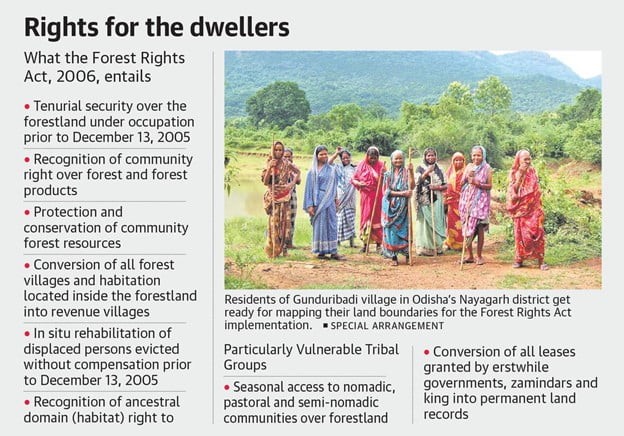
The Centre's communication on the Forest Rights Act (FRA), 2006 has raised concerns over weakening Gram Sabha powers.
- Government focus on Community Forest Resource Management Plans (CFRMPs) to align with Forest Department Working Plans.
- It aims to converge forestry funds and improve forest management.
- Concerns –
- It may dilute the statutory authority of Gram Sabhas over community forests.
- It could shift control from communities to the Forest Department.
- Experts' View – The rules are inconsistent with the FRA, 2006, which gives Gram Sabhas primary authority over Community Forest Resources.
|
|
Darwin’s Theory on Carnivorous Plant
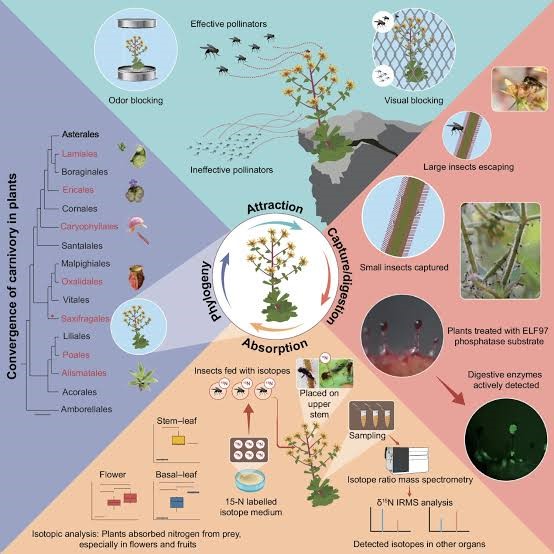
- In a study published in Nature Communications, researchers confirmed Charles Darwin's 1875 hypothesis on Saxifraga candelabrum.
- Saxifraga candelabrum is a true carnivorous plant, marking the first verified meat-eating species in the Saxifragaceae family.
- Nearly 150 years ago, Darwin suspected that certain species within the Saxifraga genus were insect eaters due to their sticky, hair-like structures.
|
|
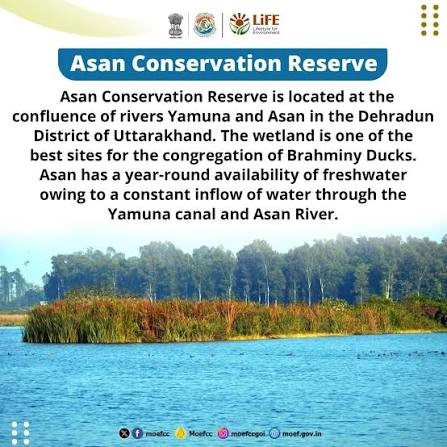
10 Km Radius Buffer for Mining For All Wetland Reserves
Supreme Court clarified that a 10-km mining ban and restriction buffer around the Asan wetland conservation reserve in Uttarakhand applies nationwide.
- Background – Ruling emerged during a hearing involving Himachal Pradesh
- SC observations – No mining work can happen within a 10-km radius of notified wetland conservation reserves without prior clearance from the Ministry of Environment, Forest and Climate Change or the National Board for Wildlife.
- Shared terrains and fragile ecologies require uniform protective standards
- Exceptions are only permitted if an expert committee or official verification proves a specific wetland reserve does not impact or extend into the contested region.
|



