Prelims: Current events of national and international importance | Art & Culture
Why in News?
Recently, Tamil Brahmi inscriptions found in Egypt’s Valley of the Kings reveal ancient Indian–Roman trade and cultural links.
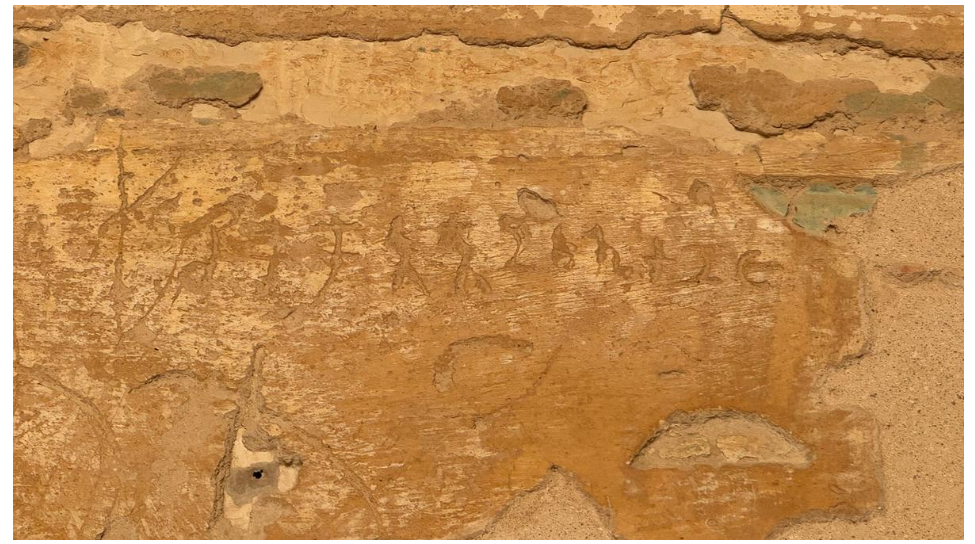
- Location – Found in six tombs of the Theban Necropolis (Nile Valley, Egypt).
- Key Discovery – Script – Around 30 inscriptions were newly discovered.
- Language – Tamil Brahmi, Prakrit and Sanskrit.
- Chronology – Dated to 1st–3rd Century CE.
- Origin of Visitors – Indians from north-western, western and southern regions of the subcontinent, with visitors from Tamilagam forming the majority.
- Nature of Inscriptions – Names and short graffiti carved on walls, corridors and entrances.
- Followed the Greek tradition of leaving names in tombs.
- Spatial Spread – Evidence of Indians travelling beyond Red Sea ports into the Nile Valley.
- Names Identified – Cikai Koṟṟaṉ – Repeated 8 times across 5 tombs.
- Cikai – Linked to Sanskrit śikhā (tuft/crown).
- Koṟṟaṉ – From Tamil koṟṟam (victory/slaying); linked to goddess Koṟṟavai.
- Kopāṉ – “Kopāṉ came and saw”; name found in Ammankovilpatti, Tamil Nadu.
- Other Names – Cātaṉ and Kiraṉ.
- Historical Linkages – Appears in Sangam corpus (Chera king Piṭtāṅkoṟṟaṉ).
- Similar inscriptions at Pugalur (2nd–3rd Century CE).
- Significance – Trade Linkages – Confirms Indo-Roman maritime trade involving Tamil merchants.
- Cultural Continuity – Links of overseas names to the Sangam corpus and domestic inscriptions.
- Diaspora – Evidence of Tamil long-distance mobility and overseas presence.
Reference
TH | New Tamil Brahmi inscriptions in Egypt’s Valley



