Prelims: Current events of national and international importance | Science & Technology
Why in News?
Recently, a supercomputer simulation of ice formation has given evidence of the paradoxical phenomenon of water.
- Mpemba Effect – It is a phenomenon in which a hotter sample of water may freeze faster than a colder one, under certain conditions.
- Nomenclature – The effect is named after Erasto Mpemba, who rediscovered the phenomenon.
- It dates back to an early reference by Aristotle in the Meteorological.
- Research done by –
- Jawaharlal Nehru Centre for Advanced Scientific Research (JNCASR).
- JNCASR is an autonomous institute of the Department of Science and Technology (DST).
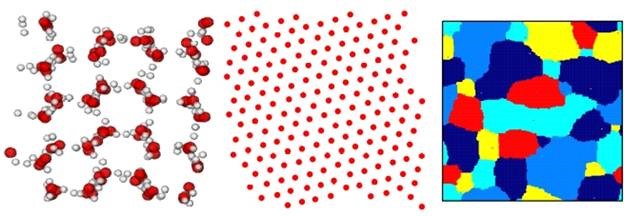
- Recent Simulation– It has used supercomputers to develop the first simulation of ice formation proving the Mpemba effect of water.
- It also demonstrating that it can appear during fluid-to-solid transitions in systems other than water.
- They have explained that when water cools, it can get stuck in intermediate states of short-lived molecular arrangements before true ice begins to grow.
- Different starting temperatures get stuck for varied lengths of time.
- Hotter water can sometimes choose a quicker path to nucleation, the birth of ice, bypassing the delays that colder water suffers.
- New insights - Out-of-equilibrium phenomena, like material relaxation due to sudden temperature changes, can inspire new approaches in thermal management for next-generation electronics and improved cooling strategies.
- Significance – It is the first-ever supercomputer-based simulation of ice formation.
Reference
PIB | Supercomputer simulation on Mpemba effect



