Prelims: Current events national and International importance | Science and Technology
Why in News?
A study published in The Planetary Science Journal (October 2026) found more than 10,000 young faults on the Moon, linked to its gradual cooling and contraction.
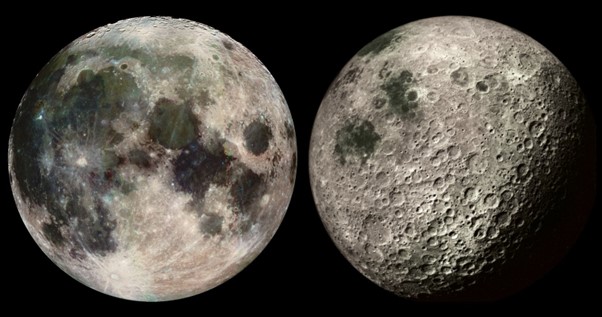
- Moon’s Contraction – The Moon’s radius has shrunk by about 45 metres over the past 400 million years due to internal cooling.
- Rate of Shrinking – The Moon is estimated to shrink by 6–11 cm per million years.
- Lobate Scarps – These are small, cliff-like landforms formed by compressional forces that cause the lunar crust to wrinkle and break.
- Moonquakes – Slippage along lunar faults can generate moonquakes, which may occur across the Moon’s surface.
- Difference from Earth – Unlike Earth, where most seismic activity occurs near tectonic plate boundaries, the Moon has a single-plate structure, allowing faults and moonquakes to occur across its surface.
- Scientific Mission – NASA’s Lunar Reconnaissance Orbiter Camera (LROC) provides images used to study lunar surface features and faults.
- Mission Relevance – Lunar faults and moonquakes are important considerations for the safety and planning of future lunar missions, including the Artemis programme.
The giant-impact hypothesis suggests that the Moon formed from debris ejected following a massive collision between the early Earth and another celestial body.
Reference
NDTV| Shrinking Moon and Lunar Faults



