Why in News?
Recently, several workers have been trapped for more than 12 hours in a rat-hole mine after it was flooded with water in Dima Hasao district, Assam.
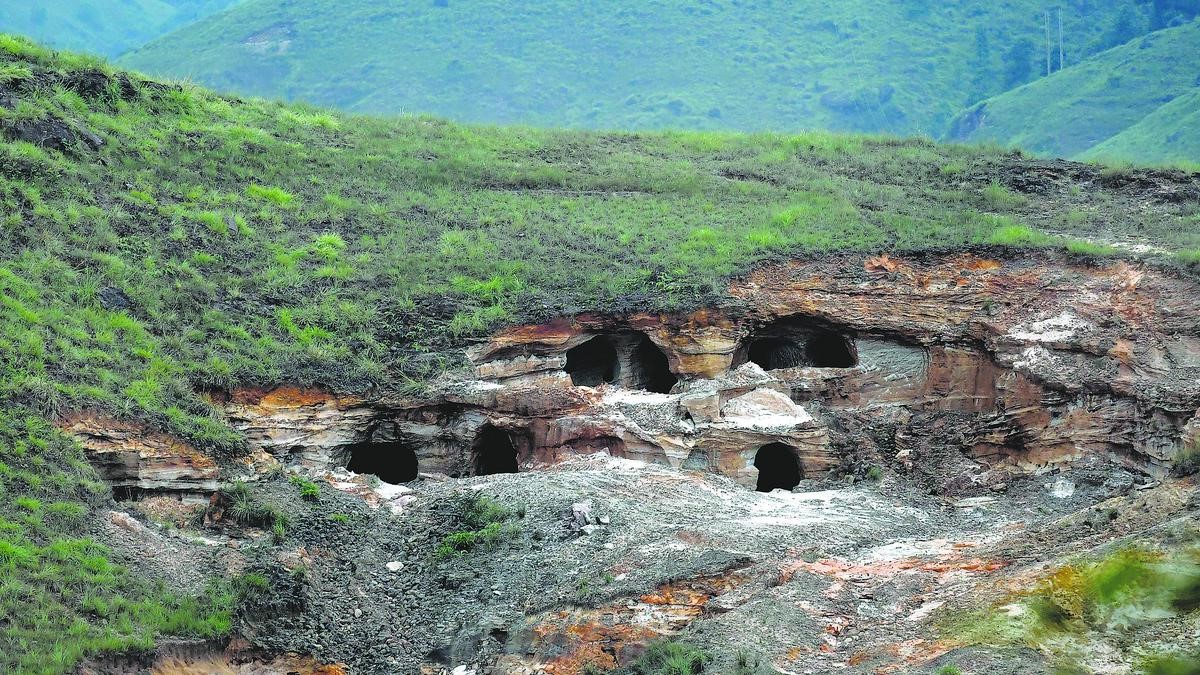
- Rat-hole mining – It is a method of extracting coal from narrow and horizontal seams.
- The term “rat hole” refers to the narrow pits dug into the ground, typically just large enough for 1 person to descend and extract coal.
- It is prevalent in Meghalaya.
- Process – Once the pits are dug, miners use ropes or bamboo ladders to reach the coal seams.
- The coal is then manually extracted using primitive tools such as pickaxes, shovels and baskets.
|
Types of Rat-Hole mining
|
|
Side cutting
|
Box cutting
|
|
Narrow tunnels are dug on the hill slopes and workers go inside until they find the coal seam.
|
A rectangular opening is made.
|
|
Size – Very thin, less than 2 m in most cases.
|
Size – Varying from 10-100 sqm and through that a vertical pit is dug, 100-400 feet deep.
|
- Issues – The mines are typically unregulated and lacking safety measures such as proper ventilation, structural support or safety gear for the workers.
- The mining process cause land degradation, deforestation and water pollution.
- Unregulated mining lead to water with high concentrations of sulphates, iron, and toxic heavy metals, low dissolved oxygen, and high biochemical oxygen demand.
The two rivers, Lukha and Myntdu, became too acidic to sustain aquatic life because of unregulated mining in Meghalaya.
- Its hazardous working conditions, environmental damage and numerous accidents leading to injuries and fatalities.
- Ban – The National Green Tribunal (NGT) banned the practice in 2014 and retained the ban in 2015.
Reference
The Indian Express| Rat Hole Mining trapped workers in Assam
Related News Article
Rat Hole Mining to rescue trapped workers in Uttarakhand



