0.1124
7667766266
x

Rethinking the Chemical ‘Arms Race’ Against Fungi

iasparliament Logo
September 18, 2026

Prelims: Current events of national and international importance | Science & Technology

Why in News?

A Nature Communications study found Indian Candida auris isolates showing genetic mechanisms driving antifungal drug resistance.
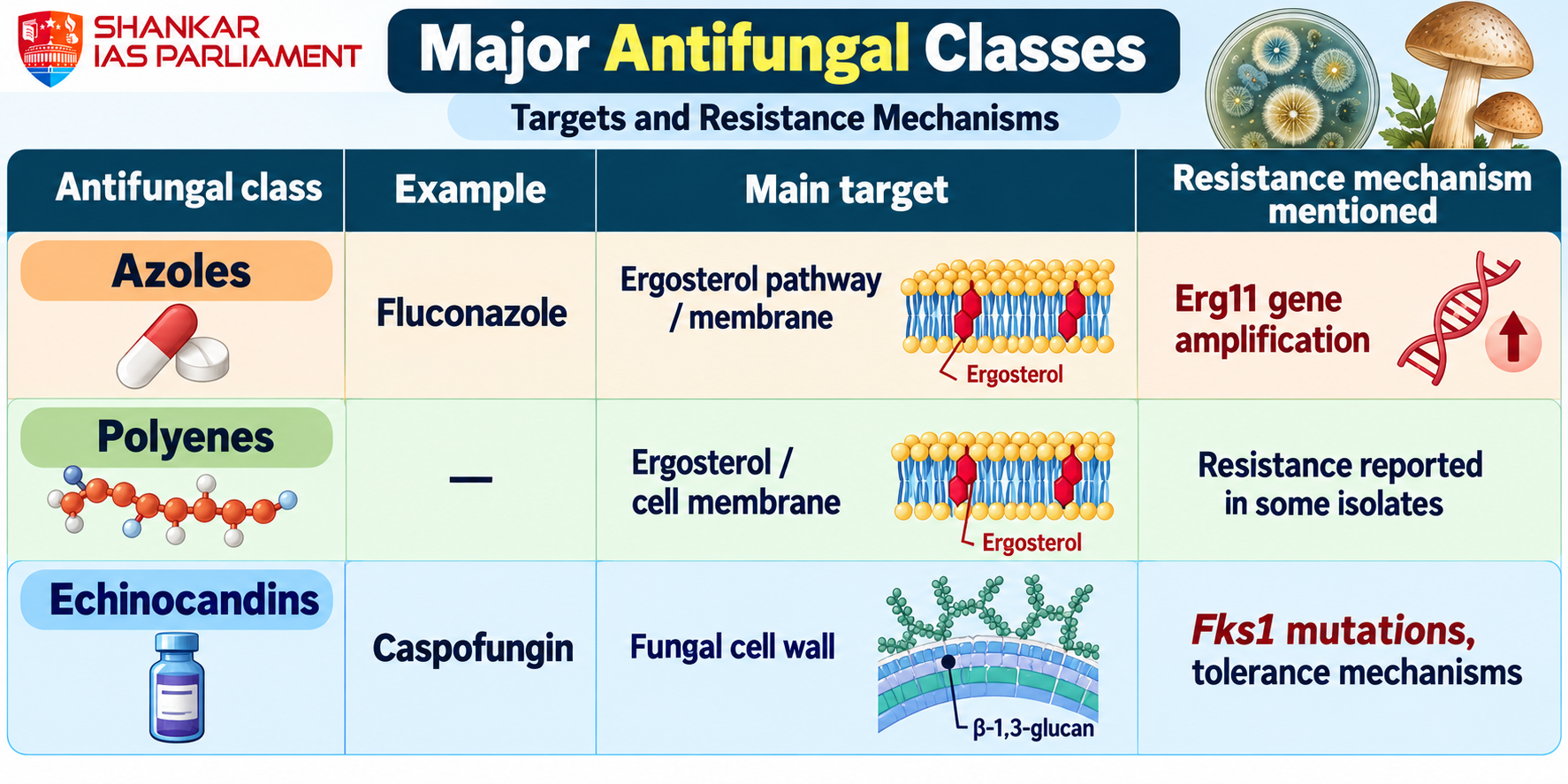
  • Key finding – Fungal pathogens can evade antifungals through gene mutations, gene amplification and cellular compensatory mechanisms, highlighting the growing challenge of antifungal resistance.

fungai antifungal resistance upsc 2026

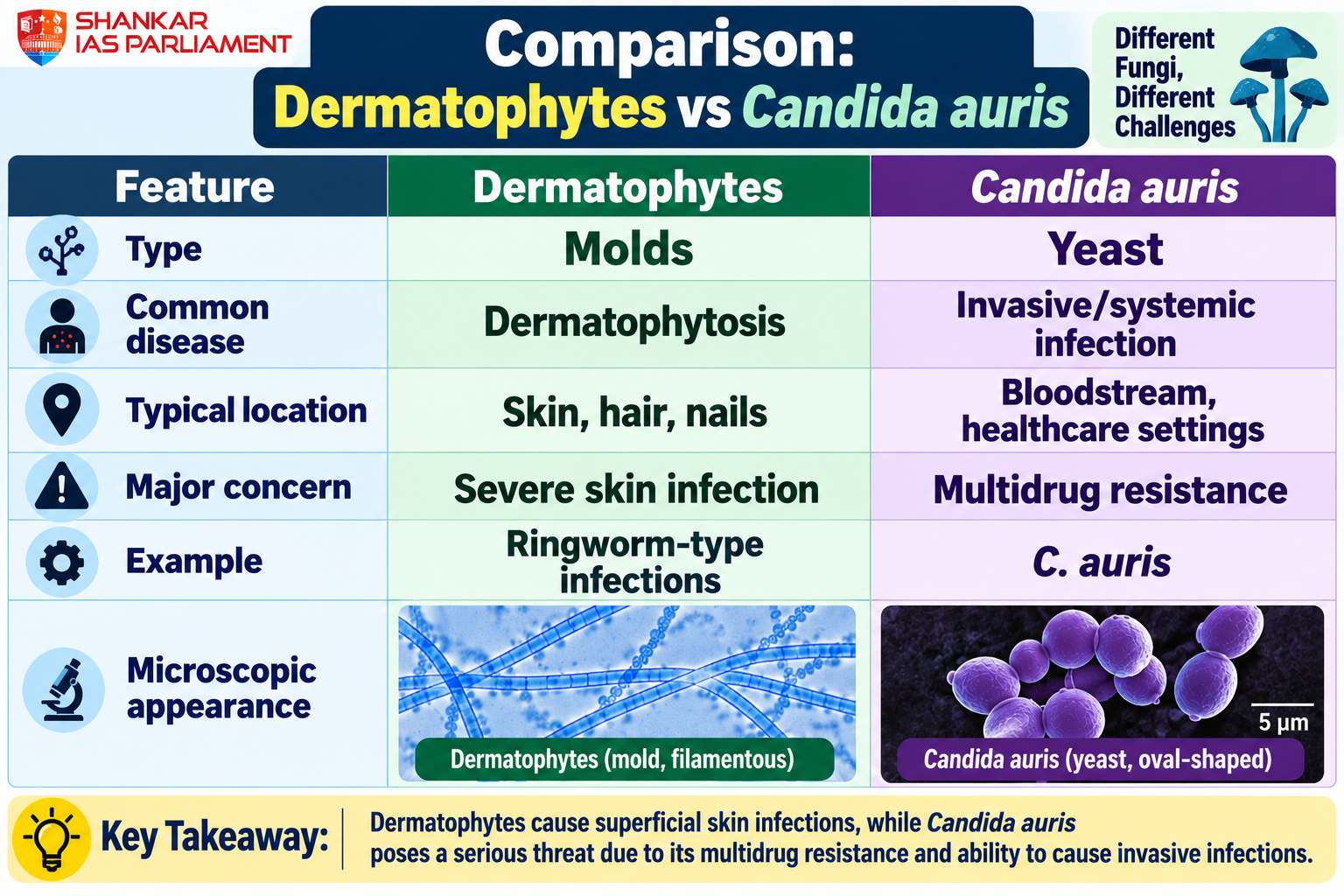
  • Candida auris (C. auris) – It is an emerging yeast species that exhibits multidrug resistance.
  • First reported in – 2009, Japan.
  • This pathogen is capable of causing invasive bloodstream infections.
  • C. auris poses a significant risk in hospital and intensive care unit (ICU) settings.
  • Identification and treatment of C. auris can be challenging.
  • Reported mortality rates among infected patients range from 30% to 40%.
  • In contrast to many superficial fungal infections, C. auris is capable of causing systemic or invasive disease.

Fungi

  • Fungi (singular fungus) are eukaryotic, non-phototrophic living organisms with rigid cell walls that belong to the fungi kingdom.
  • Fungi are neither plants nor animals, and belong to their own distinct kingdom, the fungi kingdom.
  • 3 main types of fungi
  • Fungi are divided into many different types, including molds, mushrooms, rusts, smuts, mildews and yeast. Of these, the three main types of fungi are mushrooms, molds and yeasts.
classification of fungai upsc 2026
  • Fungi typically thrive in warm and moist environments; however, the human body temperature of approximately 37°C has historically provided protection against many fungal species.

Fungal infection–mammalian selection hypothesis

Global warming leads to the selection of heat-tolerant fungi, which subsequently develop an increased ability to survive at mammalian body temperatures, thereby raising the potential for human infection.

Conventional Approach: Evolutionary Arms Race

  • The typical cycle involves a drug targeting the fungus, which then evolves resistance.
  • This leads to the development of stronger drugs, followed by further resistance.
  • This results in a continuous escalation that resembles an evolutionary arms race.

Proposed Alternative Strategy

  • The proposed approach shifts the focus to less critical pathways rather than targeting essential survival molecules.
  • Aim – To reduce fungal pathogenicity instead of eliminating the fungus entirely.
  • Advantage – It applies lower selection pressure, which may slow the evolution of resistance.

Reference

The Hindu | Rethinking the Chemical ‘Arms Race’ Against Fungi

There are no reviews yet. Be the first one to review.

ARCHIVES

sidetext