Prelims: Current events of national and international importance | Biodiversity
Why in News?
Recently, Officials have confirmed the sighting of rare caracals in the Shahgarh region of Rajasthan’s Jaisalmer, near the India‑Pakistan border, through camera traps and radio‑collaring.
- Common Name – Caracal (locally known as Padang).
- Scientific Name – Caracal caracal.
- Family – Felidae.
- Kingdom – Animalia.
- Habitat – They inhabit savannas, semi-deserts, scrublands, and arid woodlands.
- Distribution – Plains of Africa, the Middle East, and central and southern Asia.
- India – North western India (Rajasthan and Gujarat).
Caracal population now reduced to 50 individuals in India, more than 95% loss due to habitat loss and retaliatory killings. (Wildlife Institute of India (WII).
- Morphology
- Coat – A solid reddish-tan or sandy-brown (rufous) coat that provides stealth in arid scrublands and semi-deserts.
- Ear Tufts – Their most iconic feature is 4.5–5 cm (1.8–2 in) long, black ear tufts (pencil ears).
- Lifespan – Up to 19 years
- Weight – 8-14 kg
- Length – 62-82 cm
- Shoulder Height – 40-50cm
- Tail Length – 23-32 cm short
- Litter Size – 1 - 6 kittens.
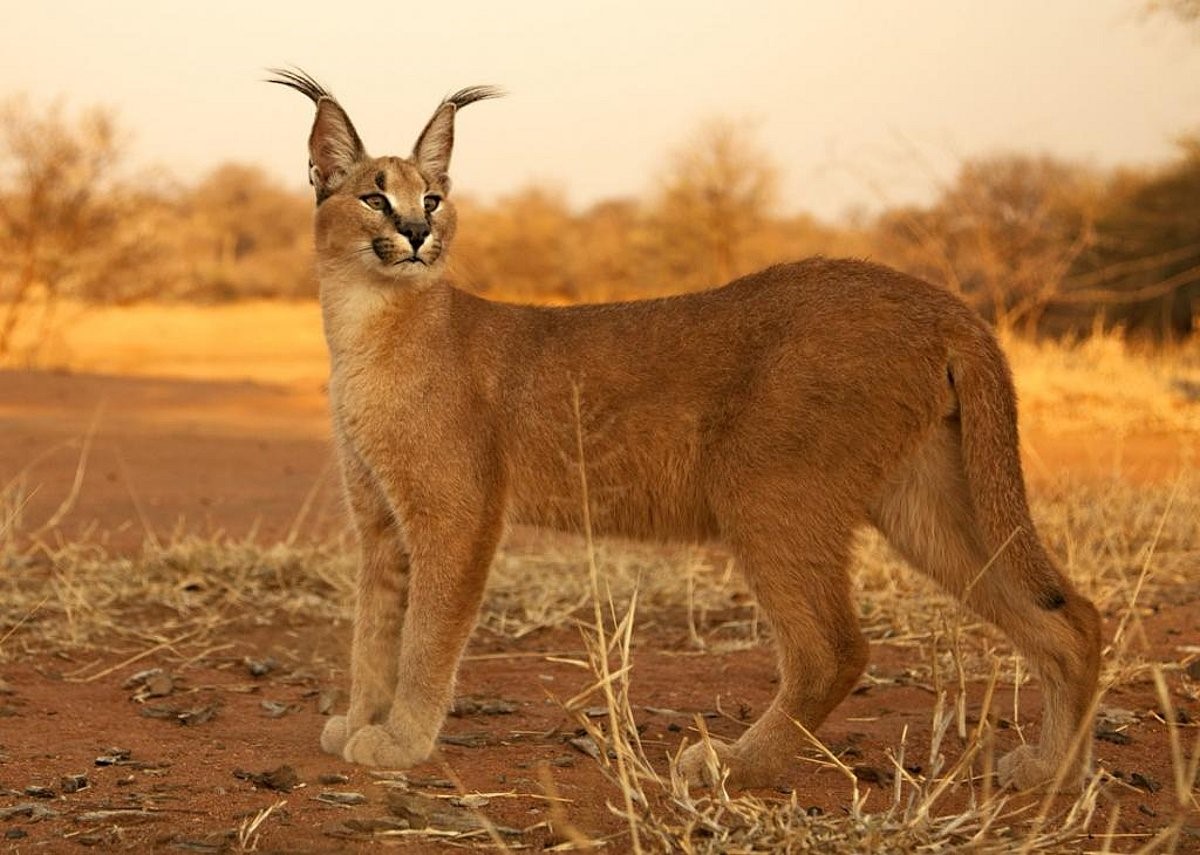
- Behaviour – It is generally solitary, highly secretive predators primarily active at night (nocturnal).
- Diet – Carnivorous.
Conservation Measures
- Scientific Monitoring
- Camera traps (motion Sensing Cameras) – Weatherproof PIR (Passive Infrared) Sensor camera traps capture images instantly when animals with distinct heat signatures move across the sensor.
- Radio‑collaring – It is a wildlife tracking method where a soft neck collar with a tiny radio transmitter sends signals to help scientists monitor an animal’s movement and behaviour.
- Pilot Projects – Wildlife Trust of India involving local communities in conservation efforts and reduce human-wildlife conflict.
- Habitat Protection – Identifying critical refuge zones in Thar Desert.
- Community Participation – Goat Bank model by WII compensates livestock loss with goats.
- Problem – Caracals sometimes prey on villagers’ goats.
- Solution – Affected families receive replacement goats from a community‑managed “goat bank” instead of harming the predator.
- Sustainability – Families later return a kid goat to the bank, keeping the system self‑replenishing and conflict‑free.
|
Conservation Status
|
|
Wildlife (Protection) Act, 1972
|
Schedule I species (highest protection).
|
|
IUCN Red List
|
Least Concerned.
|
|
Cites
|
Appendix I (Asian population including India)
Appendix II (African populations)
|
Reference



