Prelims: Current events of national and international importance | Environment
Why in News?
Researchers have discovered a new subterranean caecilian species, named Gegeneophis chandgadi, reinforcing the Northern Western Ghats as a critical caecilian biodiversity hotspot and micro-endemic zone.
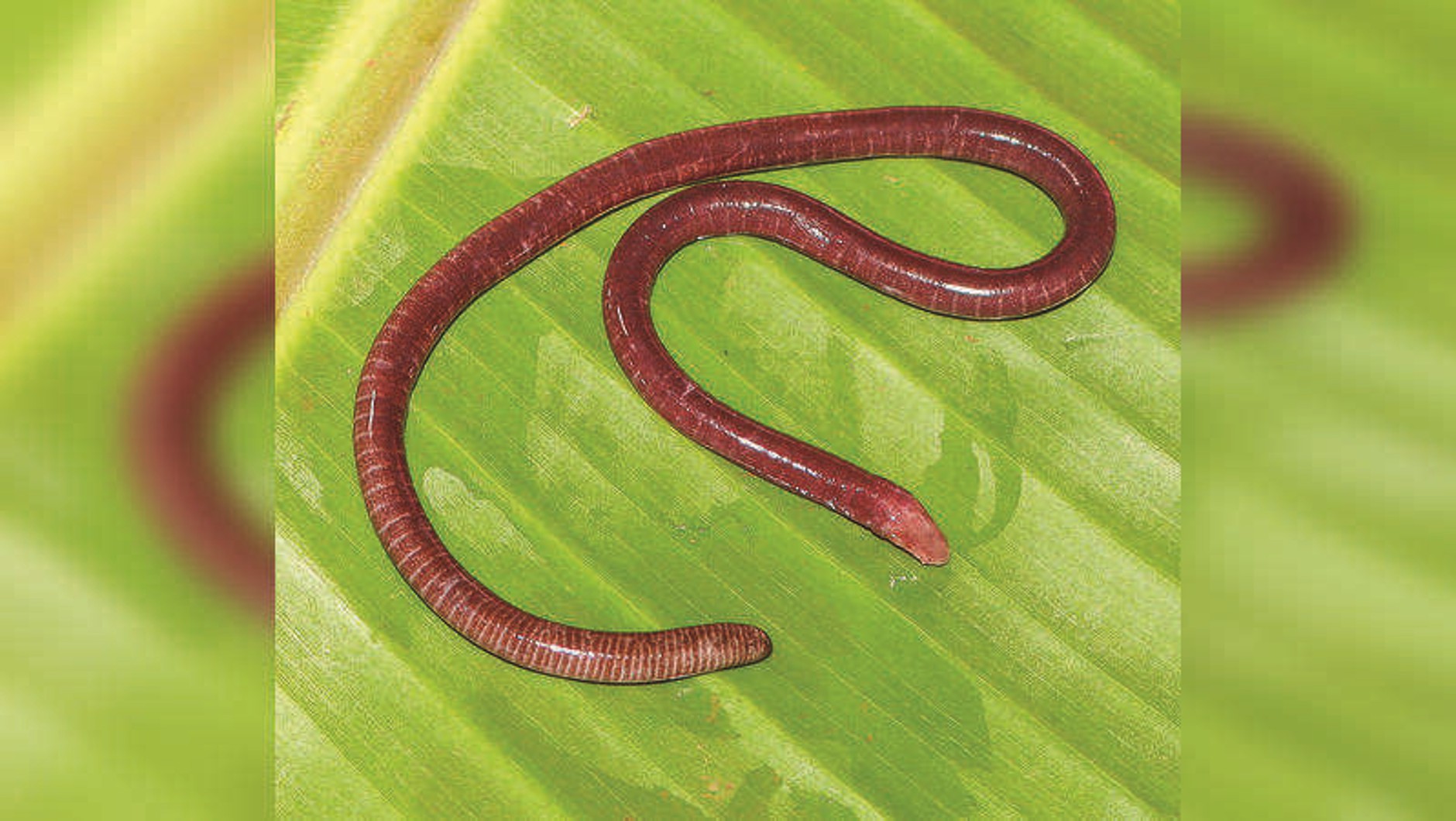
Gegeneophis chandgadi
- Taxonomic Position- Belongs to the family Grandisoniidae under the order Gymnophiona (class Amphibia).
- Etymology - Named chandgadi in honor of the Chandgadi dialect of Marathi spoken in the Chandgad region, celebrating local linguistic heritage and community-assisted taxonomy.
- Morphology - A subterranean, limbless, and completely silent amphibian.
- Possesses a cylindrical, pinkish-brown body adapted for burrowing in soil and leaf litter, often misidentified by locals as an earthworm or small snake.
- Habitat - Inhabits non-protected, mixed agricultural and residential landscapes rather than restricted primary forests.
Ecological Significance
- Endemism in the Genus Gegeneophis
- India records 42 caecilian species out of 458 total amphibian species.
- Out of 12 known species in the endemic genus Gegeneophis, 11 are strictly endemic to the Western Ghats, with a high concentration clustered in the transitional belt between Maharashtra, Goa, and Karnataka.
- Mitigating "Silent Extinction"
- Caecilians live predominantly underground, rendering conventional visual biodiversity surveys ineffective.
- Unrecorded species face silent extinction, disappearing due to habitat fragmentation, chemical pesticide use, soil compaction, and rural development before being scientifically documented.
- Value of Traditional Ecological Knowledge (TEK)
- The discovery relied heavily on the traditional environmental familiarity and assistance of local villagers.
- It highlights the vital role of citizen science and indigenous community partnership in biodiversity conservation outside Protected Areas (PAs).
Reference
Times of India | Gegeneophis chandgadi



