0.2929
7667766266
x

Nilgiris Wood Pigeon

iasparliament Logo
March 03, 2026

Prelims: Current events of national and international importance | Conservation

Why in News?

A recent study titled warns that climate change could drastically restrict Nilgiris Wood Pigeon suitable habitat in the Western Ghats by the end of the century.
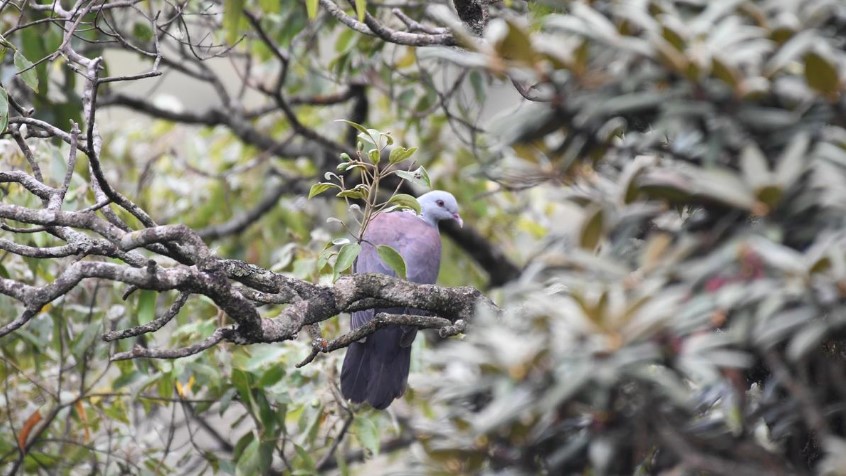
  • Scientific Name – Columba elphinstonii.
  • Family – Columbidae.
  • Habitat – Moist evergreen, semi-evergreen and moist deciduous forests of the Western Ghats.
  • Especially high-elevation “shola” forests, mainly 900–2,250 m and wooded ravines.
  • Distribution – Endemic resident of the Western Ghats.
  • Scarce and patchily distributed at mid- and high elevations.
  • RangeRecorded across hill ranges including the Nilgiris, Anamalai, Biligirirangan hills and adjoining landscapes.
  • Key Identification
    • Head – Bluish-grey head, darker neck and chest.
    • Pattern – Clear black-and-white patch on the back of the neck (most distinctive feature).
    • Body Colour – Dark grey to slate-grey; upper back shows a maroon/chestnut shine.
    • Male vs Female – Male has a lighter grey crown (head), and the female looks duller and browner.
  • Behaviour – It is a non-migratory species that shows local/nomadic movements linked to food availability and climate.
  • Breeding - Breeds mainly from March to July in natural forests.
  • Diet – Primarily feeds on fruits, seeds, flowers, leaf buds and some ground invertebrates.
  • Conservation Status
    • IUCN – Least Concern (LC).
  • Threats – Climate change (projected habitat contraction and upslope shifts), forest loss, degradation and fragmentation.

Nilgiris Wood Pigeon

References

  1. TH | Nilgiri Wood Pigeon
  2. IUCN | Nilgiri Wood Pigeon
Login or Register to Post Comments
There are no reviews yet. Be the first one to review.

ARCHIVES

MONTH/YEARWISE ARCHIVES

sidetext
Free UPSC Interview Guidance Programme
sidetext


