Why in News?
Recently, scientists from the Zoological Survey of India (ZSI), Kolkata have identified a new species of Indo-Burmese pangolin.
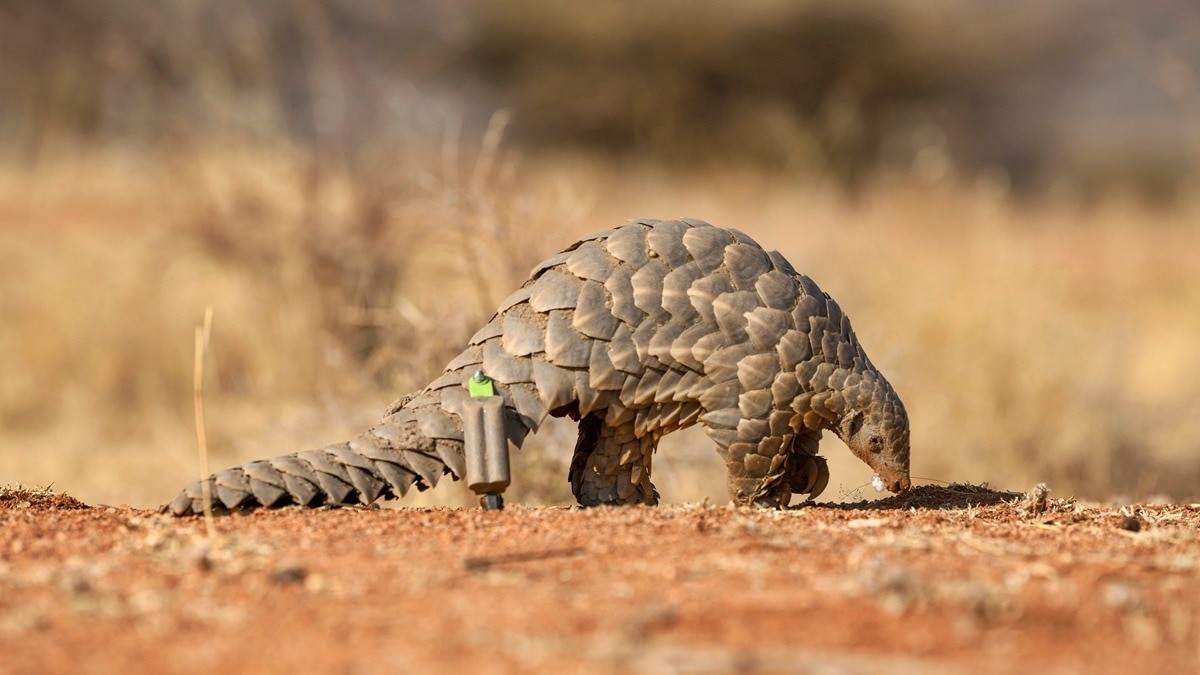
- Pangolins – They are the only mammals wholly-covered in scales and they use those scales to protect themselves from predators in the wild.
- Indo-Burmese pangolin – It is a distinct phylogenetic species of Asian pangolin, diverged from the Chinese pangolin around 3.4 million years ago, during the Pliocene Epoch.
- Scientific name – Manis Indoburmanica.
Phylogenetic species is the smallest set of organisms that share an ancestor and can be distinguished from other such sets.
- Distinct species – It has a genetic distance of 0.038 and a barcode gap of 3.8% which reinforced its status as a distinct species.
- It is influenced by geoclimatic changes in the Indo-Burma region.
Genetic distance is a measure of the genetic divergence between species or between populations within a species, whether the distance measures time from common ancestor or degree of differentiation.
Mitochondrial genomes include mitochondrial DNA are inherited to offspring from their mother.
- Distribution – Nepal, Bhutan and Myanmar.
- In India – Arunachal Pradesh and Assam.
- It is home to 2 species,
- Indian Pangolin – Found across the subcontinent.
- Chinese Pangolin – Found across a larger area in south Asia.
- Bihar, West Bengal and Assam have both species in their States.
- Threats – Pangolins are among the most trafficked wild mammals globally due to poaching and habitat degradation.
- Conservation Status –It hasn’t yet been concluded.
World Pangolin Day is observed every year on February 18.
Reference
The Hindu| Scientists Discovered New Species of Indo-Burmese Pangolin



