Prelims: Current events of national and international importance | Conservation
Why in News?
A juvenile hawksbill turtle stranded on the Tamil Nadu coast was rehabilitated for over two months and released in the Gulf of Mannar.
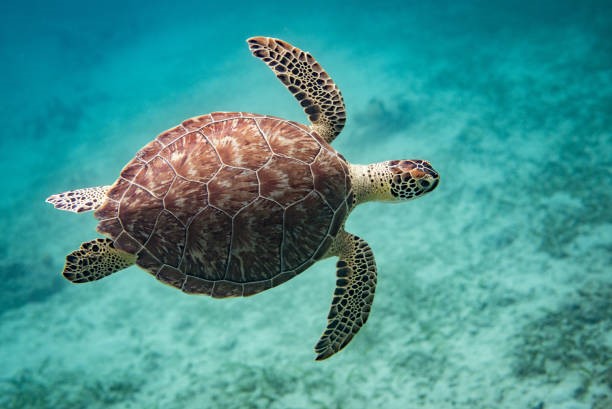
Itis a small to medium-sized marine reptile easily recognized by its narrow, pointed beak resembling that of a bird of prey and its strikingly beautiful, patterned shell.
Common Name – Hawksbill Turtle.
Scientific Name –Eretmochelys imbricata.
Genus –Eretmochelys.
Kingdom –Animalia.
Family –Cheloniidae.
Habitat – Tropical coral reefs and seagrass beds.
Strongly associated with coral reef ecosystems and shallow coastal waters.
Distribution – Tropical and subtropical oceans across the Atlantic, Pacific, and Indian Oceans.
In India - They are found in the Andaman and Nicobar Islands, Lakshadweep, and occasionally near the Gulf of Mannar.
Morphology –
Medium‑sized marine turtle.
Beak – Narrow (Hawk‑like shape).
Carapace – Overlapping serrated scutes (tortoiseshell pattern)only sea turtle species with a truly "imbricate" or overlapping shell pattern.
Weight – 45–70 kg as adults.
Shell lengths – 60–90 cm.
Diet – Spongivorous – Primarily sponges, algae, seagrass, and small invertebrates.
Conservation Status –
IUCN Red List – Critically Endangered.
CITES – Appendix I (trade strictly prohibited).
Wildlife (Protection) Act, 1972 (India) – Schedule I.
Threats – Entanglement in fishing gear, illegal trade for tortoise-shell, coral reef degradation, and climate change affecting nesting beaches together pose severe threats to the survival of hawksbill turtles.