Why in News?
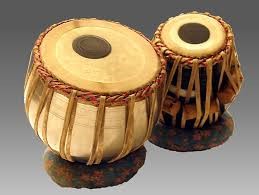
Recently, the death of Ustad Zakir Hussain provided an occasion for the reopening of debates among the origins and evolution of the tabla.
- Word ‘tabla’ – It comes from the Arabic word ‘tabl’ which means Drum.
- Origin – while some trace its origin to Persian Naqarra, Hussain traced the origin story of the tabla through the evolution of the styles of dhrupad and khayal.
Dhrupad, a form of Indian Classical music, its origin can be traced back to the chanting of vedic hymns and mantras. It is a form of the Gandharva Veda, the Vedic science of music, which is a branch of Sama Veda.
- The most common disagreement concerns whether or not the tabla originated in pre-Islamic India.
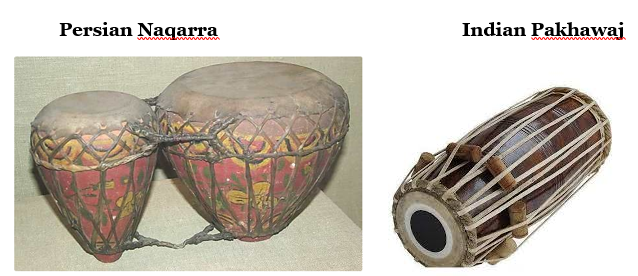
- Evolution – The classical tabla is a relatively recent tradition, most likely beginning sometime in the 1700s.
- It became the main accompaniment instrument for the vocal style known as khyal which helped to raise tabla’s status and popularity.
|
Khayal
|
- It is the most dominant North Indian classical vocal music offers the performer more freedom and a greater scope for improvisation than the older vocal genre ‘Dhrupad’.
- Origin – Khyal emerged during the Mughal period, when Persian music influences blended with local Indian traditions.
- It came into being after the temple traditions of dhrupad & prabandh gayaki were fused with qalbana, the Sufi music (later called qawwali), by the 14th century Sufi saint & musician Amir Khusrau.
|
Amir Khusrau was patronised by Sultan Alauddin Khalji (1296-1316) of Delhi.
- Major developments – It took place during the reign of Emperor Muhammad Shah of Delhi (1719-1748), whose court host the launch of the sitar and maturation of khayal vocalism.
Muhammad Shah was an aesthete, and a great patron of music and the other arts, because of which he was referred to as “Rangeela”, the Colourful.
- Tabla gharanas - they are different from vocal and other instrumental gharanas and rest on 3 broad principles
- The technique.
- The style of composition - Language/ construction/ phraseology of the tabla syllable in various compositions.
- The individual philosophy of the great masters of each school.
- 6 gharanas of tabla – They are known by the places where they evolved.
- Punjab, Purab (also known as the Banaras gharana), Delhi, Ajrara, Lucknow and Farrukhabad.
- Baaj (playing style) –It is more pakhawaj-based for the 1st 2 gharanas.
- Purab’s crisp and clear sounds are very well suited to Kathak.
- Punjab gharana – A mathematical approach, with difficult divisions of beats, is preferred.
- It had offshoots or sub-gharanas such as Talwandi and Naiwala.
Reference
The Indian Express| Evolution of the Tabla and its Various Gharanas



