Why in news?
Under the provisions of the Disturbed Areas Act, Surat property sealed over sale to Muslim woman recently.
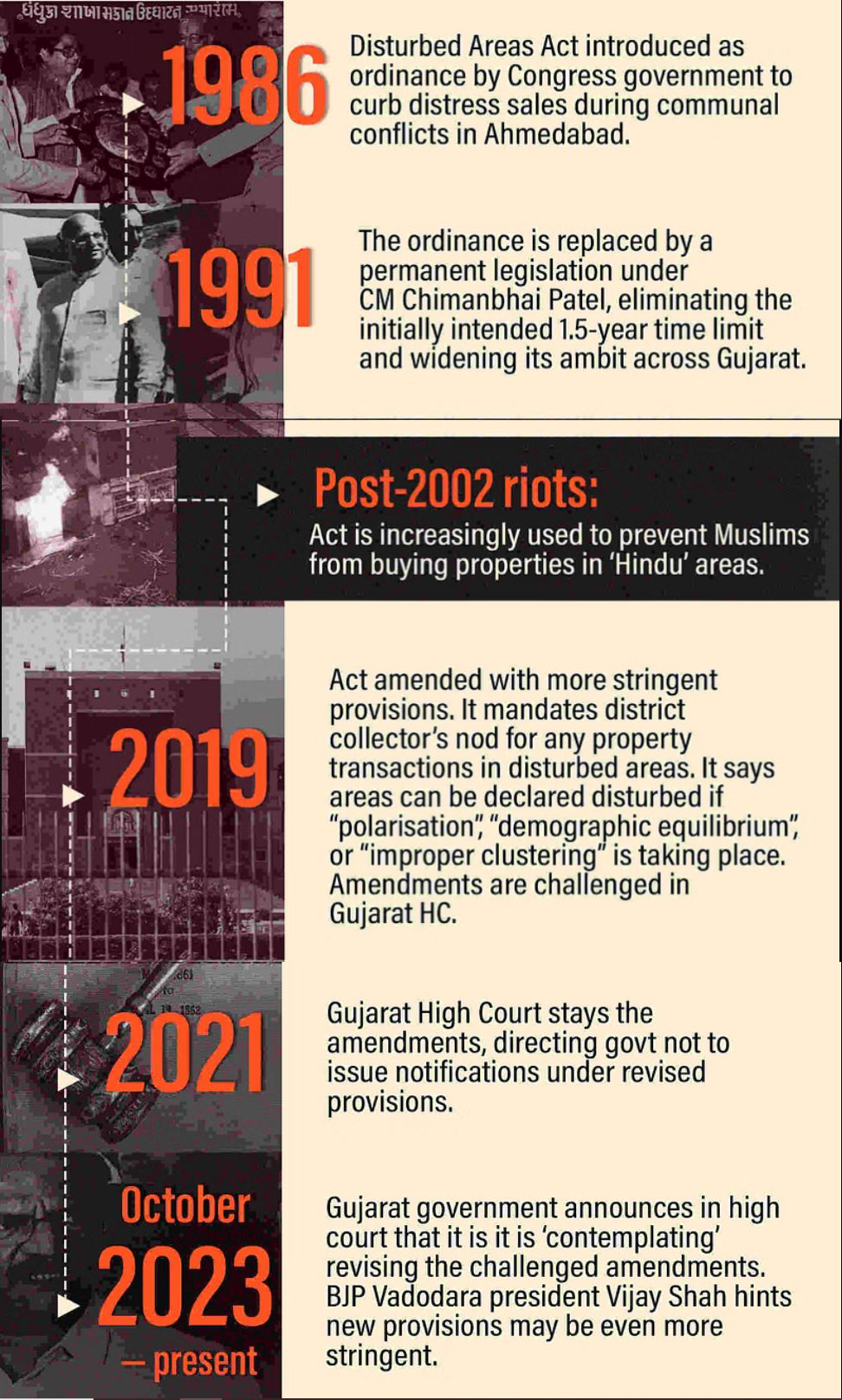
- The Disturbed Areas Act was enacted in the year 1986 and replaced with a new Act in 1991.
- Act’s full name – The Gujarat Prohibition of Transfer of Immovable Property and Provision for Protection of Tenants from Eviction from Premises in Disturbed Areas Act.
- Riot-prone areas – It empowers the government to declare riot-prone areas as ‘disturbed’.
- Collectors Consent – Property sale or transfer in areas where the Act has been imposed requires additional permission from the collector’s office affirming free consent.
- Distress sales – The motive of the Act was to prevent distress sales. It was also to prevent house owners of one community from selling to another in case of social distress.
- Areas are covered under the Act – Several areas in the districts of Ahmedabad, Vadodara, Surat, Anand, Amreli, Bhavnagar, Panchmahals and others remain under the purview of the Act, with newer areas being added.
- The Gujarat government last month extended the application of the Act in existing areas of Anand district for another five years.
- Amendments in 2020 – Gave more power to Collector, government.
- In 2020, the Gujarat government amended certain sections of the Act, giving the Collector more powers.
- Under the Disturbed Areas Act, the district Collector notifies a particular area of a city or town as ‘disturbed’.
- After this, the transfer of immovable property in those areas requires express permission of the Collector.
- The amendments raised the imprisonment for violation from six months to between three and five years.
References
- Indian express - Disturbed Areas Act, 1986
- The Print - Disturbed Areas Act, 1986



