Prelims – Current events of national and international importance| General Science.
Mains (GS III) – Conservation.
Why in News?
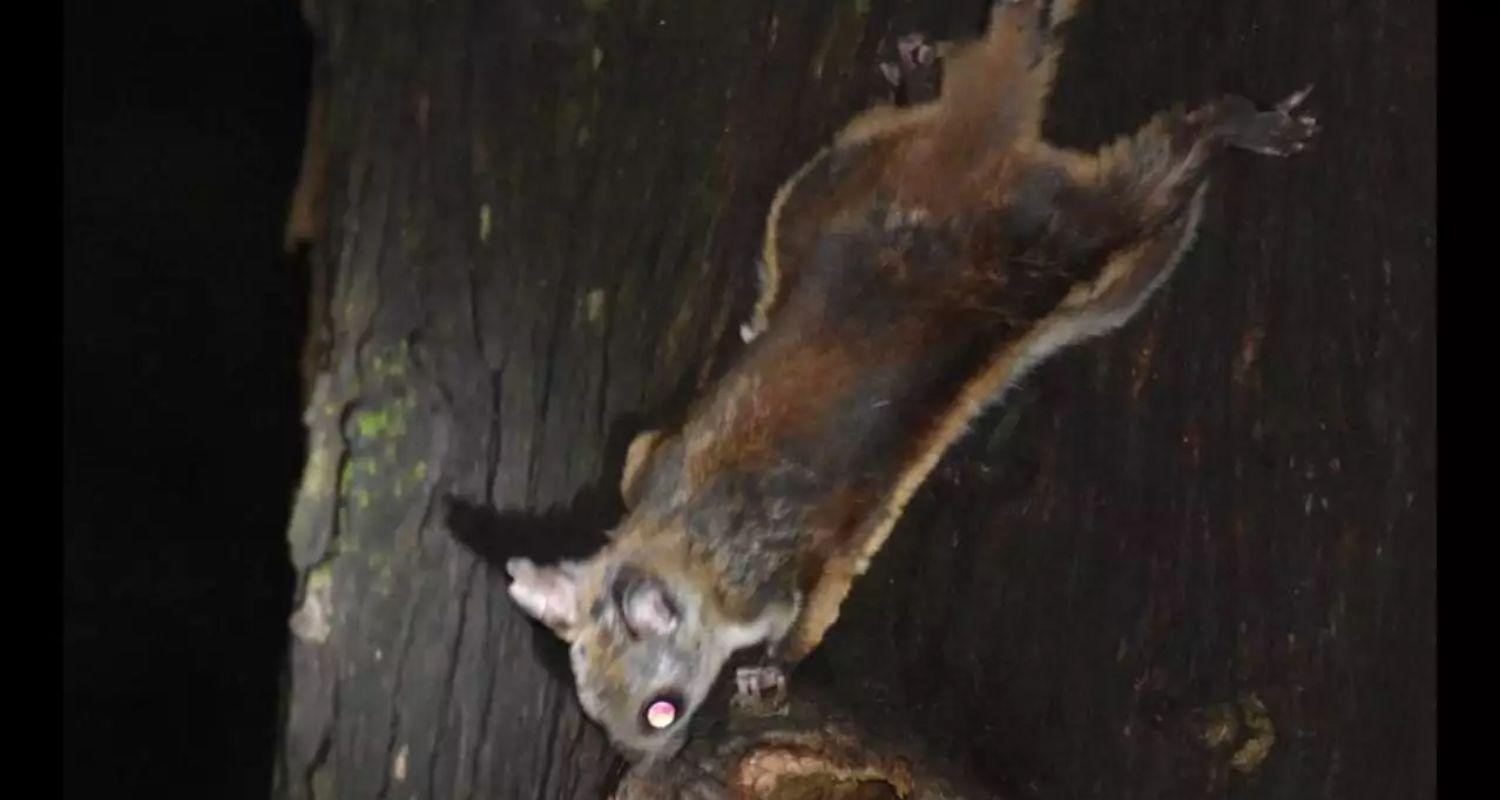
Himachal Pradesh Forest Department (HPFD) has captured the first-ever photographic evidence of the elusive Woolly Flying Squirrel at Miyar Valley in Lahaul and Spiti district.
Miyar Valley is located in the Western Himalayas and is a part of the Lahaul Range, located between Pir Panjal and Zanskar Range.
- Scientific Name - Eupetaurus cinereus.
- It is one of the rarest and least known mammals in Asia.
- It is also the largest flying squirrel, the longest squirrel and the heaviest of all gliding mammals.
- Endemic to - The north-western Himalayas.
- Habitat - Remote and uninhabited region of caves and crevices, found on steep cliffs in dry conifer forests.
- Distribution - Northern Pakistan and Northwestern India.
- Appearance - Similar to other species of flying squirrels, this animal features flexible membranes on either side of its body that link the front and back legs.
- Its body is adorned with a thick layer of straight, silky fur. The fur on its back is a blue-gray hue, while the underside is a lighter shade of gray.
- The throat and ears are covered in creamy white hairs, and the soles of its feet are lined with dense black fur, leaving only the bare, pinkish-brown toe pads exposed.
- Behaviour - This species is nocturnal and arboreal; due to its large size and blunt claws, this terrestrial mammal cannot climb trees.
- It was long believed to be extinct until it was rediscovered in 1994.
- Diet - These rodents are herbivores, they generally feed upon mosses, lichens, buds and cones.
- Conservation Status - IUCN – Endangered.
References
- Business Standard | Woolly Flying Squirrel
- News Arena Network | Woolly flying squirrel



