U.S.-India Business Council (USIBC)
A USIBC delegation, led by its Executive Vice Chairman, met with the Union Minister in Delhi to discuss various collaboration opportunities.
- Background - It was formed in 1975 at the request of the U.S. and Indian governments.
- About- It represents top global companies operating across the United States and India, creating connections between businesses and governments in both countries.
- Aim - The Council aims to create an inclusive trade environment between India and the US by representing industry, connecting businesses with governments, and supporting long-term partnerships.
- Membership - It has around 200 member companies of which 70% are from the United States and the remaining 30% are from India.
- Headquarters - Washington D.C.
- It has offices in Delhi, Mumbai, and Bengaluru.
- The USIBC is also part of the U.S. Chamber of Commerce.
Key Points of the meeting
- Green initiatives - Deployment of Greenfield renewable energy, battery storage, and emerging green technologies.
- Advanced technologies - Focus on quantum technology, artificial intelligence, critical metals, and semiconductors.
- Anusandhan NRF - Introduction of a research foundation in India similar to the US National Research Foundation.
- Biotech growth - In India, this industry has reached $140 billion with over 4,000 companies.
- Space collaboration - NISAR mission with NASA and ISRO highlights India's space sector prowess.
References
- PIB | U.S.-India Business Council (USIBC)
Upper Siang Hydroelectric project
The government authorities have detained two anti-dam activists protesting against the Upper Siang Hydroelectric project.
- The Upper Siang project is a significant hydropower project on the Siangriver in the Upper Siang district of Arunachal Pradesh.
- Type- Run-of-the-river hydroelectric project with a dam.
- Capacity- Initially proposed at around 10,000 MW, making it one of the largest hydroelectric projects in India
- Project Developer- NHPC (public sector Hydropower Company), North Eastern Electric Power.
- Components- Includes a large dam, underground powerhouses, and extensive tunnelling systems.
- Objectives- To boost India's hydroelectric capacity and providing a substantial amount of renewable energy.
- To foster economic development in the northeastern region of India, including improved infrastructure and job creation.
- Geographical Importance- The project is situated in a remote, mountainous region, known for its challenging terrain and rich biodiversity.
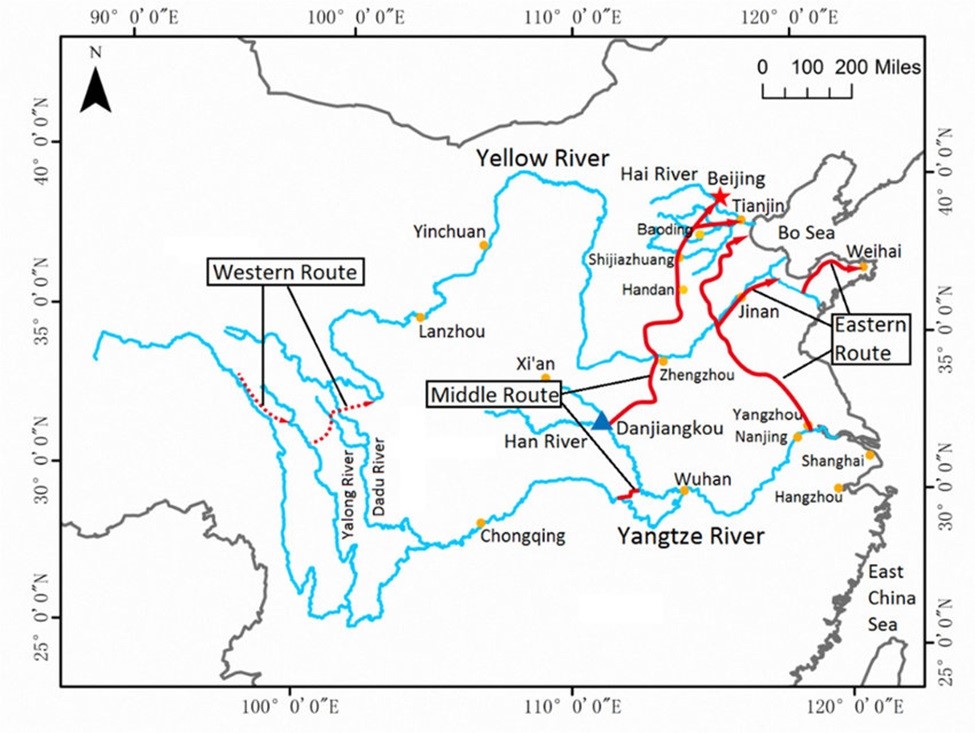
|
Siang River
|
- The Siang River, also known as the Dihang River, is a major river in the Indian state of Arunachal Pradesh.
- It is part of the Brahmaputra River system and plays a crucial role in the hydrology and ecology of the region.
- The Siang River originates in the glaciers of the Himalayas in Tibet, where it is known as the Yarlung Tsangpo.
|
Reference
Indian Express | Upper Siang Hydroelectric project
Equity mutual funds
According to the Association of Mutual Funds in India (AMFI), inflows into India's equity mutual funds hit a record high.
- About- Equity mutual funds are investment vehicles that pool money from multiple investors to invest primarily in stocks or equity securities of publicly traded companies.
- Objective- Equity mutual funds aim to provide capital appreciation over the long term by investing in stocks that are expected to grow in value.
|
Equity Mutual Funds
|
|
Types
|
Details
|
|
Small-cap Equity Funds
|
- These funds are considered to be riskier than mid- or large-cap equity funds but can offer the relatively higher returns.
- Their minimum exposure to such stocks is 65% of the total assets.
|
|
Mid-cap Equity Funds
|
- These funds are considered to be less risky than small-cap funds, but more than large-cap funds.
- Their minimum exposure to such stocks is 65% of the total assets.
|
|
Large-cap Equity Funds
|
- These funds are considered to be the least risky as far as equity fund-picking goes. Their minimum exposure to such stocks is 80% of the total assets.
|
|
Large- & Mid-cap Equity Funds
|
- These equity mutual funds equally divide the allocation between large- and mid-cap equity and related instruments and have the potential to offer high returns.
|
|
Multi-cap funds
|
- Multi-cap equity funds invest in stocks across large-, mid-, and, small-cap companies. Their minimum exposure to such stocks is 65% of the total assets.
|
Features of an Equity Mutual Fund
- Returns- Equity mutual funds focus on stocks, offering potentially high returns compared to other types of mutual funds due to their concentration on equities.
- Tax Benefits- The investor can gain tax benefits with the investments in these funds.
- Risk-The risk factor of equity funds is high.
- Expense Ratio-These funds also tend to have a higher expense ratio than their counterparts, given the requirement of constant management.
Expense ratio is the annual maintenance charge levied by mutual funds to finance its expenses.
- Long-Term Investments- These funds are suitable for long-term investors, given that they perform well in the long term
- Growth trend- India's equity mutual funds surged 17% sequentially to a record high of US$ 4.87 billion (Rs. 40,608 crore) in June.
- Equity mutual funds have seen net inflows aggregating to Rs 5.9 trillion from domestic investors since February 2021.
|
Association of Mutual Funds in India
|
- It is a non-profit industry body of the asset management companies (AMCs) of all Mutual Funds in India that are registered with Securities and Exchange Board of India (SEBI).
- AMFI was incorporated on 1995 under section 25 of the Companies Act, 1956.
- It sets ethical standards, promotes investor education, and collects industry data.
- AMFI represents all registered Mutual Funds in India, ensuring fair practices among distributors and advisors.
- It advocates for industry interests and spearheaded the 'Mutual Funds Sahi Hai' campaign since 2017 to boost awareness about Mutual Funds as a viable investment option.
- AMFI is also a member of the International Investment Funds Association (IIFA).
|
References
- Times of India| Equity mutual Fund
- Amfiindia | Know About AMFI
Biosphere Reserves
UNESCO has recently designated 11 new Biosphere Reserves across 11 countries.
|
New Additions to the UNESCO Biosphere Reserve List
|
|
Kempen-Broek Transboundary Biosphere Reserve
|
Belgium, Kingdom of the Netherlands
|
|
Darién Norte Chocoano Biosphere Reserve
|
Colombia
|
|
Madre de las Aguas Biosphere Reserve
|
Dominican Republic
|
|
Niumi Biosphere Reserve
|
Gambia
|
|
Colli Euganei Biosphere Reserve
|
Italy
|
|
Julian Alps Transboundary Biosphere Reserve
|
Italy, Slovenia
|
|
Khar Us Lake Biosphere Reserve
|
Mongolia
|
|
Apayaos Biosphere Reserve
|
Philippines
|
|
Changnyeong Biosphere Reserve
|
Republic of Korea
|
|
Val d'Aran Biosphere Reserve
|
Spain
|
|
Irati Biosphere Reserve
|
Spain
|
- Biosphere Reserve- A biosphere reserve is a protected area with defined boundaries that aims to conserve ecosystems and genetic diversity.
- They are designated by the United Nations Educational, Scientific and Cultural Organization (UNESCO) as part of its Man and the Biosphere (MAB) program.
- Criteria for designation of BR
- A site that must contain an effectively protected and minimally disturbed core area of value of nature conservation.
- The core area should be typical of a bio-geographical unit and large enough to sustain viable populations representing all trophic levels in the ecosystem.
- The management authority to ensure the involvement/cooperation of local communities to bring variety of knowledge and experiences to link biodiversity conservation and socio-economic development while managing and containing the conflicts.
- Areas potential for preservation of traditional tribal or rural modes of living for harmonious use of environment.
- Biosphere reserve zones
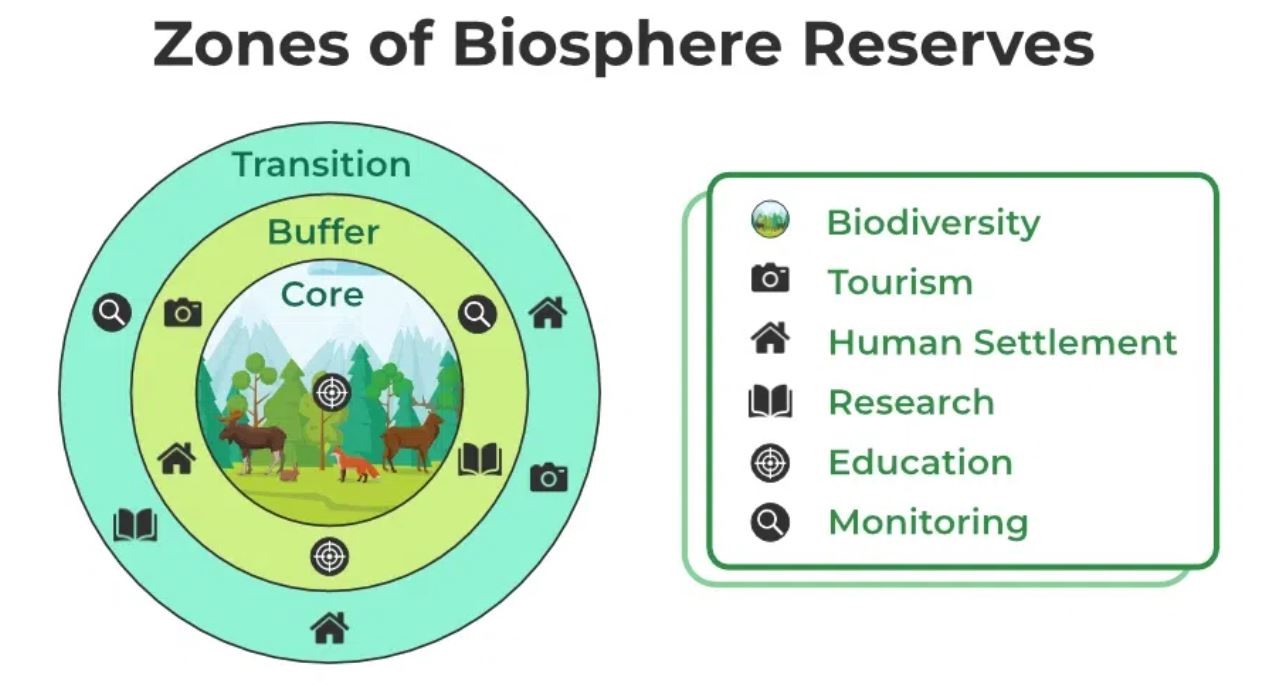
The World Network of Biosphere Reserves now totals 759 sites in 136 countries.
- Biosphere Reserves in India
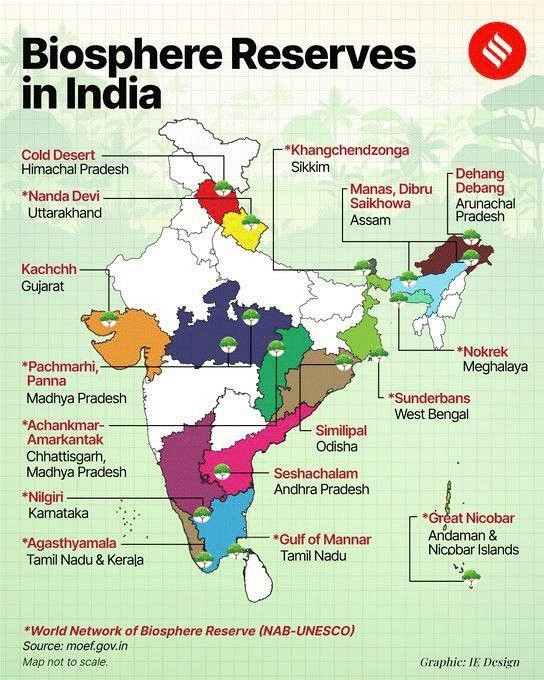
References
- UNESCO | new biosphere reserves
- UNESCO| What is UNESCO
South Asian Centre of Excellence for Sustainable Maritime Transport (SACE-SMarT)
Ministry of Ports, Shipping and Waterways recently participated in the 132nd session of the Council of the International Maritime Organization (IMO) in London.
- It is a regional hub aims to transform the maritime sector in India and South Asia into a technologically advanced, environmentally sustainable, and digitally proficient industry.
- It is dedicated to identifying and tackling seafarers' issues and the human element in maritime operations.
- The center will focus on reducing greenhouse gas emissions, fostering technical cooperation, capacity-building, and digital transition.
- Recently, India reiterated its proposal for the South Asian Centre of Excellence for Sustainable Maritime Transport (SACE-SMarT).
- Other proposed members include the Philippines, Thailand, Liberia, Panama, Greece, the US, and France.
References
- PIB | SACE-SMarT



