Animal Health Security Strengthening in India for Pandemic Preparedness and Response initiative
The central government recently launched a project called 'Animal Health Security Strengthening in India for Pandemic Preparedness and Response' initiative.
- Aim – The project aims to enhance the country’s capacity to “prevent, detect, and respond to animal health threats.”
- It is to better monitor animal health for prevention of future pandemics.
- Approved by - The Pandemic Fund, created by G20 countries under Indonesian presidency in 2022.
- The basic purpose of the fund is to assist low-and middle-income countries in strengthening their capacities to identify, report and contain future pandemics.
- Funding - In its first investment round, the fund mobilized $2 billion.
- From India, the proposal by the Union animal husbandry department made it to the final list to receive a funding of $25 million.
- Implementing Agencies - The project will work with the help of 3 implementing agencies
- Asian development bank (adb),
- The world bank, and
- The food and agriculture organisation (fao).
- Duration - It is expected to be completed by August 2026.
- Key outputs expected –
- Augmentation of laboratory systems and vaccine manufacturing facilities;
- Strengthening of surveillance and early warning systems;
- Development of human resources capacity and competency;
- Strengthening of data systems, analytics, risk analysis, and risk communication; and
- Addressing cross-cutting institutional capacity gaps at national and regional levels.
WHO has declared 6 public health emergencies of international concern and 5 of these have had animal origin. About two-thirds of infectious diseases affecting humans originate from animals.
- India, with 536 million livestock and other animals, requires measures to prevent and manage infection outbreaks.
Reference
Indian Express | Project on animal Health
Okinawicius Tekdi
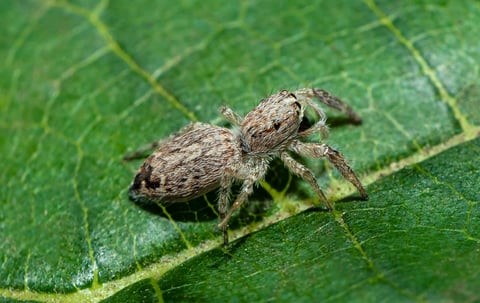
A post-graduate student from Maharashtra has discovered a new jumping spider species, Okinawicius tekdi from a hill located in the heart of Pune city.
- Genus - Okinawicius Proszynski, first described from India in 2016.
- Nomenclature - Tekdi in Marathi translates to ‘hill’ and the species was named as a tribute to the geographical origin of the animal.
- Appearance - The spider is distinguished by its morphological characteristics, especially in the female genitalia.
- A notable identification feature is the membranous coils of the copulatory ducts, which lie parallel to the surface.
- The male O. tekdi sp. nov. resembles O. tokarensis discovered in 1987.
- But it also shares similarities in male palp with species from the Afraflacilla genus, such as A. kurichiadensis and A. avadavathurensis, both described from India in 2022.
Male Palp is a pair of sensory appendages that arise from the mouthparts of crustaceans and insects.
- This similarity underscores the importance of examining the female counterparts of the Afraflacilla genus, as only one female has been described among the 6 known species from India.
- The species was later found on confluence of rivers Ram and Mula, near the Baner hills.
- It has been seen on plumeria, Ficus and Morinda trees, but its habitat is still unknown.
Reference
Down to Earth | Okinawicius tekdi
Snakebite Envenomation
The Tamil Nadu government has officially declared snakebite envenomation as a notifiable disease.
- It is a life-threatening medical condition caused by venomous snake bites.
- It can cause severe paralysis that may prevent breathing, cause bleeding disorders that can lead to fatal haemorrhage, irreversible kidney failure and severe local tissue destruction.
- The most effective treatment for snakebite envenomation is high-quality snake anti venom, which can prevent or reverse many of the toxic effects of the venom.
- Often preventable, it poses a risk to vulnerable populations, including agricultural workers, children, and those living in tropical and subtropical areas.
- It is a major health concern in rural and snake-endemic regions.
An estimated 5.4 million people worldwide are bitten by snakes each year with 1.8 to 2.7 million cases of envenomings.
- WHO response - World Health Organization has recognized snakebite as a global public health issue and launched a strategy to reduce snakebite-induced deaths and disabilities worldwide.
- In India - India has more than 310 species of snakes, mostly non-Venomous.
- However, there are 66 species that are labelled as venomous or mildly venomous and majority of the snakebites result from 4 species, collectively named as “Big 4” species namely
- Russell ’s viper (Daboia russelii),
- Spectacled cobra (Naja naja),
- Common krait (Bungarus caeruleus) and
- Saw-scaled viper (Echis carinatus).
- Action plan in India - National Action Plan for Prevention and Control of Snakebite Envenoming, which was published by the Ministry of Health and Family Welfare earlier this year.
- The plan aims to halve snakebite deaths by 2030 through a ‘One Health’ approach, integrating human, animal, and environmental health interventions.
- Tamil Nadu’s Plan - It is declared as a notifiable disease under the Tamil Nadu Public Health Act, 1939.
- To improve the collection of vital data, strengthen clinical infrastructure, and ensure the efficient distribution of anti-snake venom.
- This move is expected to lead to better prevention strategies, reduce mortality rates, and enhance treatment facilities across the state.
- Authorities have noted that there has been a significant underreporting of snakebite cases and deaths in existing data, and the new system is designed to bridge this gap.
- Under the new directive, both government and private hospitals are now required to report cases of snakebites and related fatalities to the government.
- This mandatory reporting system will be integrated with the State’s Integrated Health Information Platform under the Integrated Disease Surveillance Program.
Reference
The Hindu | Snakebite Envenoming
Helicobacter pylori (H. pylori)
More research is needed to combat the global prevalence of Helicobacter pylori, with India having an infection rate of over 50% of its population.
- It is a type of bacteria that can cause an infection in the stomach or duodenum (first part of the small intestine).
- People usually get it as children, and it can stay in the body for years without causing problems.
- Even though the stomach has strong acid, H. pylori survives by making a substance that weakens the acid.
- Over time, this bacteria can harm the stomach’s protective layer, leading to irritation and sometimes causing painful sores called ulcers.
- Symptoms - H. pylori don’t have symptoms, but when they do, these may include burning stomach pain, bloating, burping, nausea or vomiting. Some may also lose their appetite and experience weight loss.
- While many are infected in childhood without symptoms, in some cases, symptoms don’t appear until the late teens or adulthood, particularly if the infection causes ulcers or digestive problems.
- Transmission - H. Pylori from person to person, primarily through saliva, vomit or stool.
- It can also spread by contaminated food, water or poor hygiene especially in areas with crowded living conditions or limited access to clean water and sanitation.
- Treatment - Helicobacter pylori (H. pylori) infection is typically treated with a combination of antibiotics and medications to reduce stomach acid.
- Prevalence - It is almost 10 times more prevalent than diabetes in the country and is a major cause of chronic gastritis, peptic ulcers and even stomach cancer.
- Helicobacter pylori (H. pylori) infections affect an estimated 50% to 60% of the population in India and constitute a significant public health challenge.
- Nobel Prize - Dr. Barry Marshall, along with Robin Warren, was awarded the 2005 Nobel Prize in Physiology or Medicine for discovering that H. pylori was the main cause of peptic ulcers.
References
- The Hindu | Helicobacter pylori (H. pylori)
- Cleveland Clinic | H. pylori Infection
Caribbean Community (CARICOM)
The 2nd meeting of the India-CARICOM Joint Commission was held in virtual mode recently.
- The Caribbean Community (CARICOM) is the oldest surviving integration movement in the developing world.
- It is an official United Nations General Assembly observer.
- Head Quarters - Georgetown, Guyana.
- Established in - CARICOM came into being on 4 July 1973 with the signing of the Treaty of Chaguaramas.
- It is a grouping of 21 countries (15 member states and 6 Associate Members.
- Member States - Antigua and Barbuda, The Bahamas, Barbados, Belize, Dominica, Grenada, Guyana, Haiti, Jamaica, Montserrat, Saint Kitts and Nevis, Saint Lucia, Saint Vincent and the Grenadines, Suriname, and Trinidad and Tobago.
- Associate Members - Anguilla, Bermuda, the British Virgin Islands, the Cayman Islands, and the Turks and Caicos Islands.
- Observers - Aruba, Colombia, the Dominican Republic, Mexico, Puerto Rico, and Venezuela.
- Chairmanship – It is rotated every 6 months among the member countries’ heads.
- Pillars

- Caribbean Court of Justice (CCJ) - CARICOM had officially inaugurated the Caribbean Court of Justice (CCJ) in 2007, which replaced the Judicial Committee of the Privy Council in London.
- CCJ serves as the final court of appeal for CARICOM members and also handles regional trade disputes.
- It is home to approximately 16 million citizens, 60% of whom are under the age of 30, and from the main ethnic groups of Indigenous Peoples, Africans, Indians, Europeans, Chinese, Portuguese and Javanese.
- The Community is multi-lingual with English as the major language complemented by French and Dutch and variations of these, as well as African and Asian expressions.
References
- Ministry of External Affairs | India-CARICOM Joint Commission
- CARICOM | About



