Prelims: Current events of National and International Importance|Science
Why in News?
In late October 2026, NASA-funded researchers published a landmark study in the journal Science revealing that the rock formed at least 4.1 billion years ago, making it one of the oldest known pieces of Mars ever found on Earth.
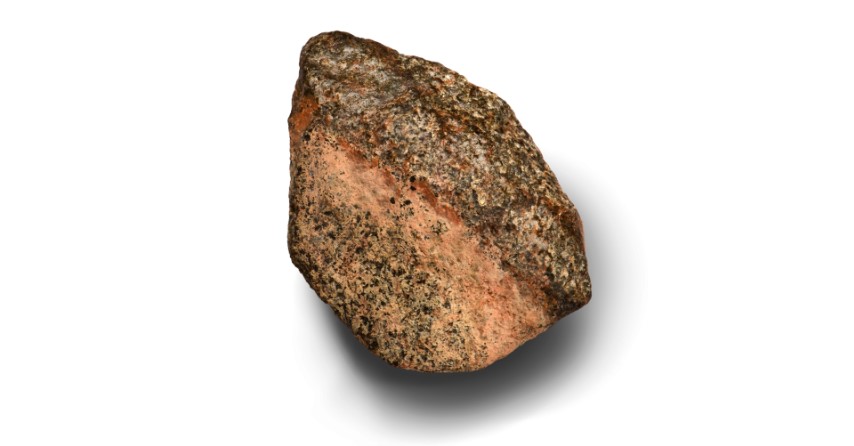
Teghaza 001 is a rare, rose-colored Martian meteorite weighing about 800 grams (roughly 2 pounds) that was discovered in 2022 in the Sahara Desert in Mali.
Key Discoveries About Ancient Water on Mars
- Age and Origin– Formed over 4.1 billion years ago from cooling magma, Teghaza 001 provides a rare sample of Mars' ancient crust from a time when the planet was in its planetary infancy (roughly contemporaneous with the formation of the solar system).
- Two Sources of Water– Analysis shows that water preserved in the meteorite came from two distinct origins–
- Mantle-derived– Water originally present in magma rising from the Martian mantle.
- Crustal/Atmospheric– Water from the surface and atmosphere that migrated down and interacted with the subterranean rock.
- Subsurface Water Interaction– The mineral composition (including zircon crystals) shows clear evidence of being chemically altered by subsurface liquid water around 4.1 billion years ago.
- Deuterium and Atmospheric Loss– Water molecules trapped in the rock contain a high concentration of deuterium (a heavier form of hydrogen), proving that Mars had already begun losing significant amounts of water and hydrogen from its early atmosphere into space.
- A Warmer, Wetter Past– Dr. Yang Liu of NASA's Jet Propulsion Laboratory—who led the study—describes Teghaza 001 as a "Rosetta Stone for Mars" that points to a dynamic, complex water cycle and a much warmer, wetter environment than the bone-dry Red Planet of today.
Reference
The Times of India| Teghaza 001



