Why in news?
A Recent study showed that the spring system in Himalayan region, especially in Himachal Pradesh sees drop due to climate change
- Springs – It occurs when water pressure causes a natural flow of groundwater onto the earth's surface.
- Mechanism – As rainwater enters or "recharges" the aquifer, pressure is placed on the water already present.
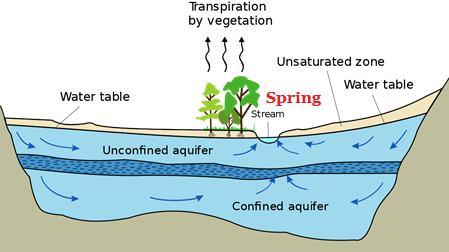
- This pressure moves water through the cracks and tunnels within the aquifer, and this water flows out naturally to the surface at places called springs.
- Hot springs Spring with water at temperatures substantially higher than the air temperature of the surrounding region.
- Causes of heating
- Volcanic activity – By shallow intrusion of magma
- Convective circulation – Percolation of groundwater deep reaching hotter rocks
- Hot springs of the Himalaya – They are located in the zones of deep faults that define tectonic boundaries
- Indus Tsangpo Suture – Between the Himalayan province and mainland Asia
- Main Central Thrust – Between the Great Himalaya and Lesser Himalaya
- Main Boundary Thrust – Between the Siwalik domain and the Lesser Himalaya
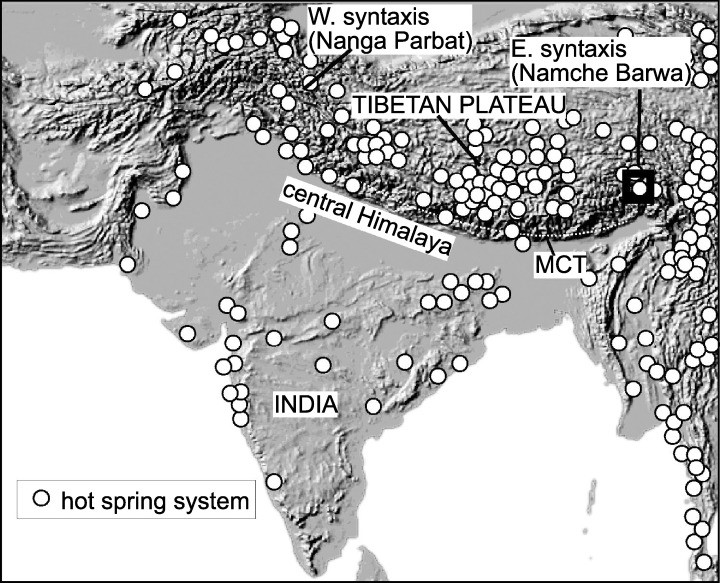
In the Eastern Himalayas Meghalaya has the most villages with springs, while Sikkim with the highest density. In the Western Himalayas, Jammu & Kashmir leads in both the number of villages and spring density.
- Importance of springs – Natural springs acts as a source of water for both drinking and irrigation.
- In Himalayan region – It serves 64% of the cultivable land for irrigation.
- Reduction in springs – In the western Himalayas, over 45% have completely dried up in the past 4 decades.
- Over 26% have become semi-active, transitioning from perennial springs which depend on the monsoon.
- Cause of decline of Spring
- Rising temperatures
- Altered precipitation patterns
- Decreasing snowfall and rainfall
- Impacts – The rural communities will face shortages in drinking water, agriculture, and daily household needs.
Reference
The New Indian express| Climatic Impacts on spring in the Himalayas



