Prelims: Current events of national and international importance | Environment
Why in News?
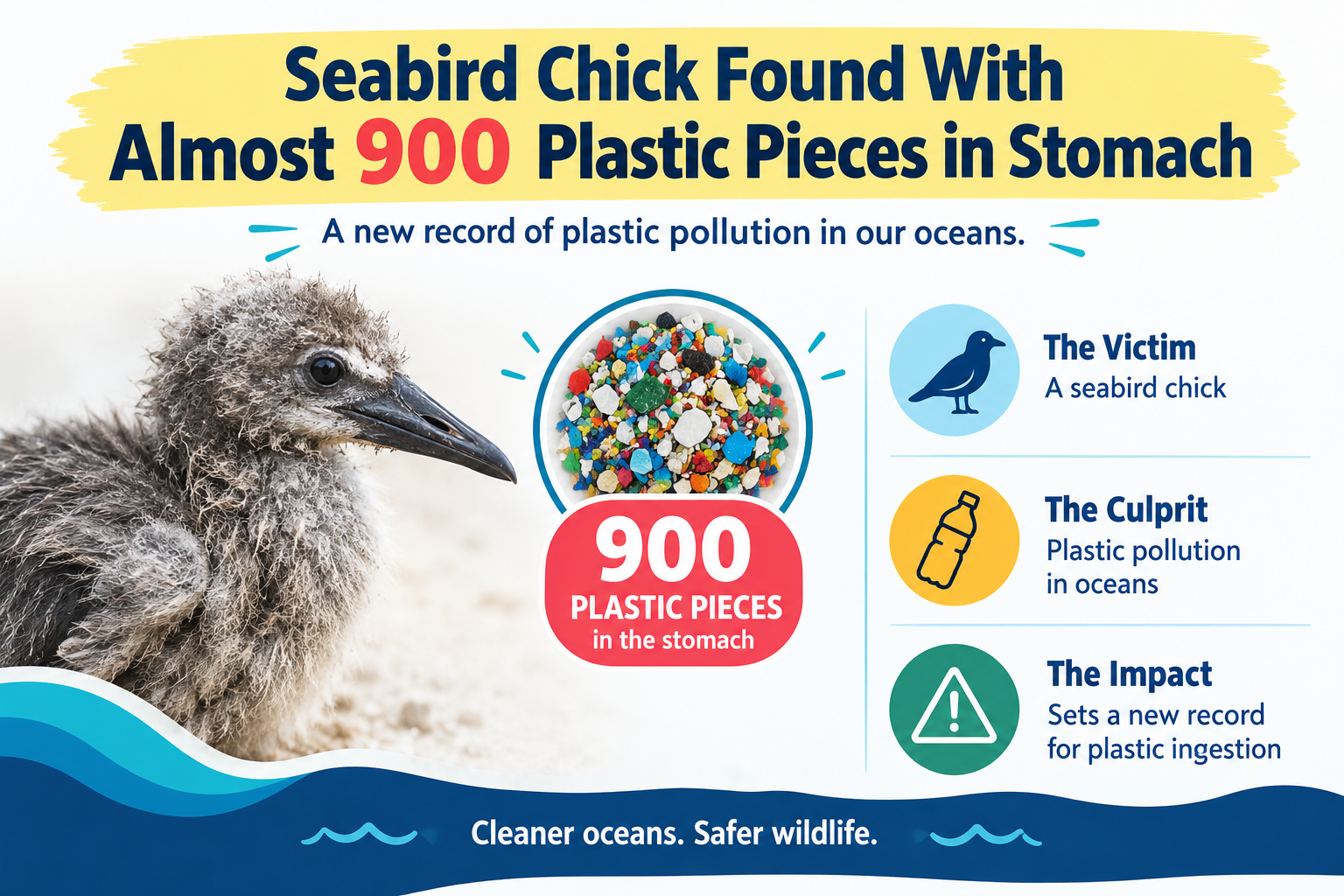
A 16-year longitudinal study (2010–2026) documented record-breaking levels of plastic pollution in Flesh-footed (Sable) Shearwater (Ardenna carneipes) chicks on UNESCO World Heritage-listed Lord Howe Island, Australia.
Key Highlights
- Researchers recorded a single fledgling with 894 plastic pieces weighing 64.21 grams in its stomach, setting a grim new global record for plastic ingestion in wildlife.
- Accelerating Record Spikes
- In 2011, the peak recorded plastic count per bird was 276 pieces (64.1 g).
- This was overtaken in 2023 (403 pieces), 2024 (407 pieces), 2025 (894 pieces), and maintained in 2026 (644 pieces / 67.4 g).
- Equivalency - The mass of plastic swallowed by these chicks is equivalent to a human adult carrying roughly 6-8kg of plastic debris in their stomach.
- Ingestion Prevalence - While the overall population prevalence of plastic ingestion remained relatively stable (75%-85%), the volume and mass per individual bird spiked dramatically over recent years.
- Dominant Plastic Types - Bottle caps, hard fragments, and industrial resin pellets (nurdles) constituted the vast majority of items recovered.
Ecological & Physiological Drivers
- Prey Depletion & Starvation - Overfishing and ocean warming across the Tasman Sea have reduced fish stocks, forcing adult shearwaters to travel further and become less selective, frequently mistaking floating ocean plastic for fish or squid.
- Direct Transgenerational Transfer - Starving adult shearwaters scoop up floating plastic debris during long foraging trips and regurgitate it directly into their chicks' stomachs during feeding.
- Decline in Body Condition- Fledglings on Lord Howe Island now weigh approximately 25% less than they did a decade ago due to chronic malnutrition.
Pathological Impacts
- Induction of Plasticosis - Chronic ingestion of sharp micro- and macro-plastics causes plasticosis.
Plasticosis is a unique fibrotic disease characterized by severe inflammation, persistent internal ulceration, and irreversible scarring of the digestive tract (proventriculus and gizzard).
- Multiple Organ Decline - Proteomic analysis reveals that microplastics leach toxic additives and heavy metals, causing
- Cell death in the liver, kidneys, and heart.
- Reduction (up to 50%) of Brain-Derived Neurotrophic Factor (BDNF), severely impairing brain development, flight readiness, and cognitive function.
- Stunted Wings - Obstructed digestive tracts prevent proper nutrient absorption, resulting in stunted wing growth and high pre-fledging mortality.
Reference
Down to Earth | Seabird found with almost 900 plastic pieces in stomach



