Mains: GS – III – Indian Economy and Issues relating to Planning, Mobilisation of Resources, & Economic Security.
Why in News?
Recently, the Reserve Bank of India has initiated a field trial of plastic currency notes after nearly 15 years of unsuccessful attempts.
What is Polymer (Plastic) Notes?
- Polymer banknotes – They are produced using a synthetic polymer substrate composed of biaxially oriented polypropylene (BOPP), rather than traditional cotton-based paper.
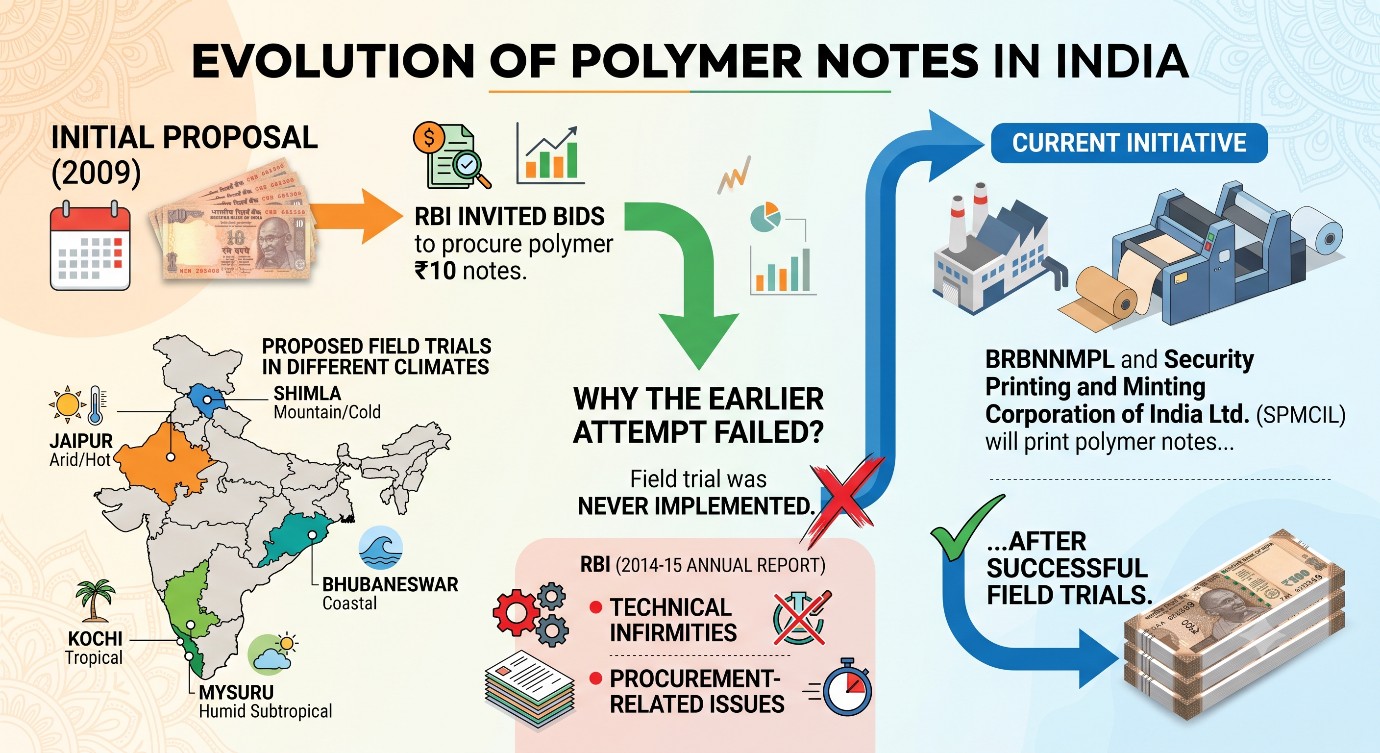
Polymer banknotes, first introduced by Australia in 1988, are currently utilised in over 50 countries.
What are the advantages of Polymer Notes?
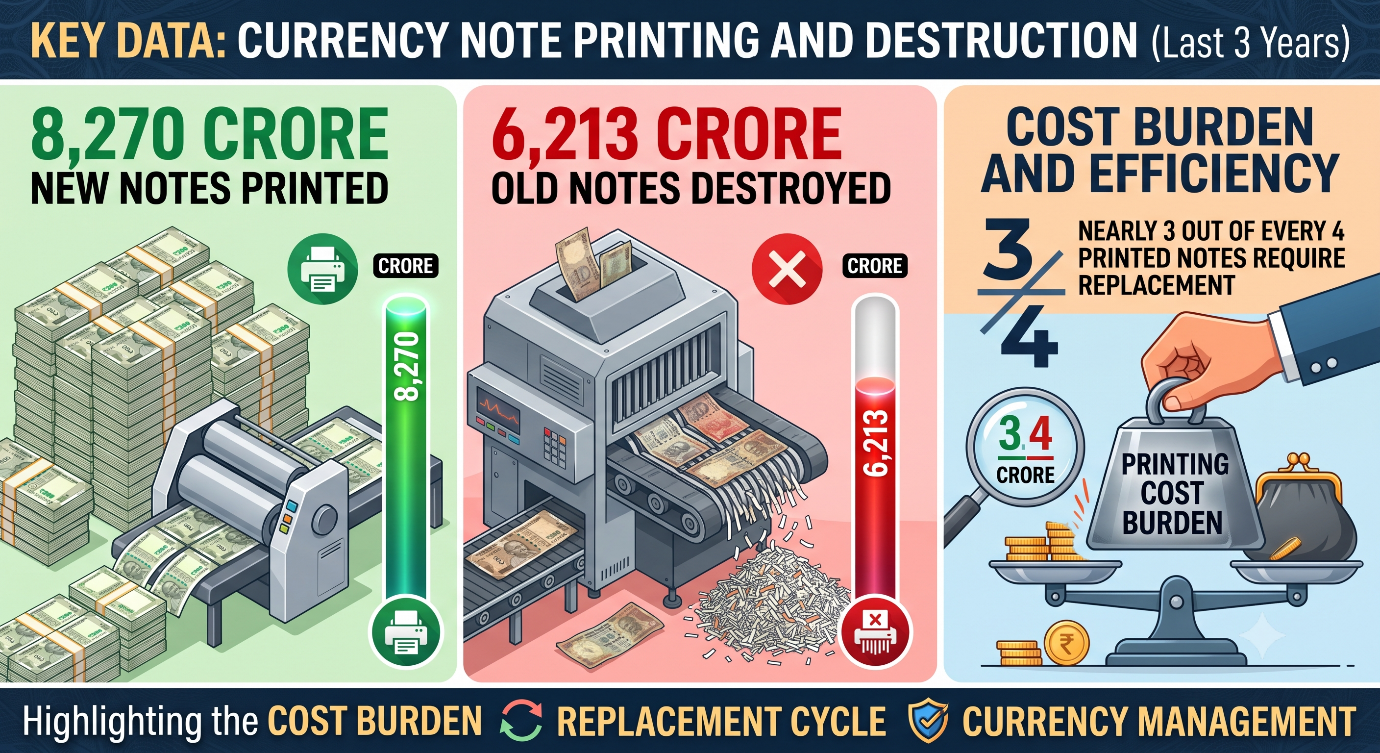
- Extended Lifespan – Polymer banknotes have a lifespan that is two to six times greater than that of cotton paper notes.
- This increased durability is particularly advantageous for lower denominations that are subject to frequent handling.
- Key Advantages
- Decreased frequency of note replacement
- Reduced demand for banknote printing
- Improved overall quality of notes in circulation
- Economic Advantages – Increased durability leads to the following outcomes:
- Decreased printing expenditures
- Reduced transportation expenses
- Lower storage expenses
- Reduced costs associated with destruction and replacement
- Environmental Benefits – The Reserve Bank of India (RBI) commissioned The Energy and Resources Institute (TERI) to conduct a comparative analysis of cotton and polymer banknotes.
- TERI Life Cycle Assessment’s Findings
- They exhibit lower lifetime carbon emissions.
- They require fewer replacements over their lifespan.
- They generate less waste compared to cotton notes.
- Polymer notes can be recycled into the following products:
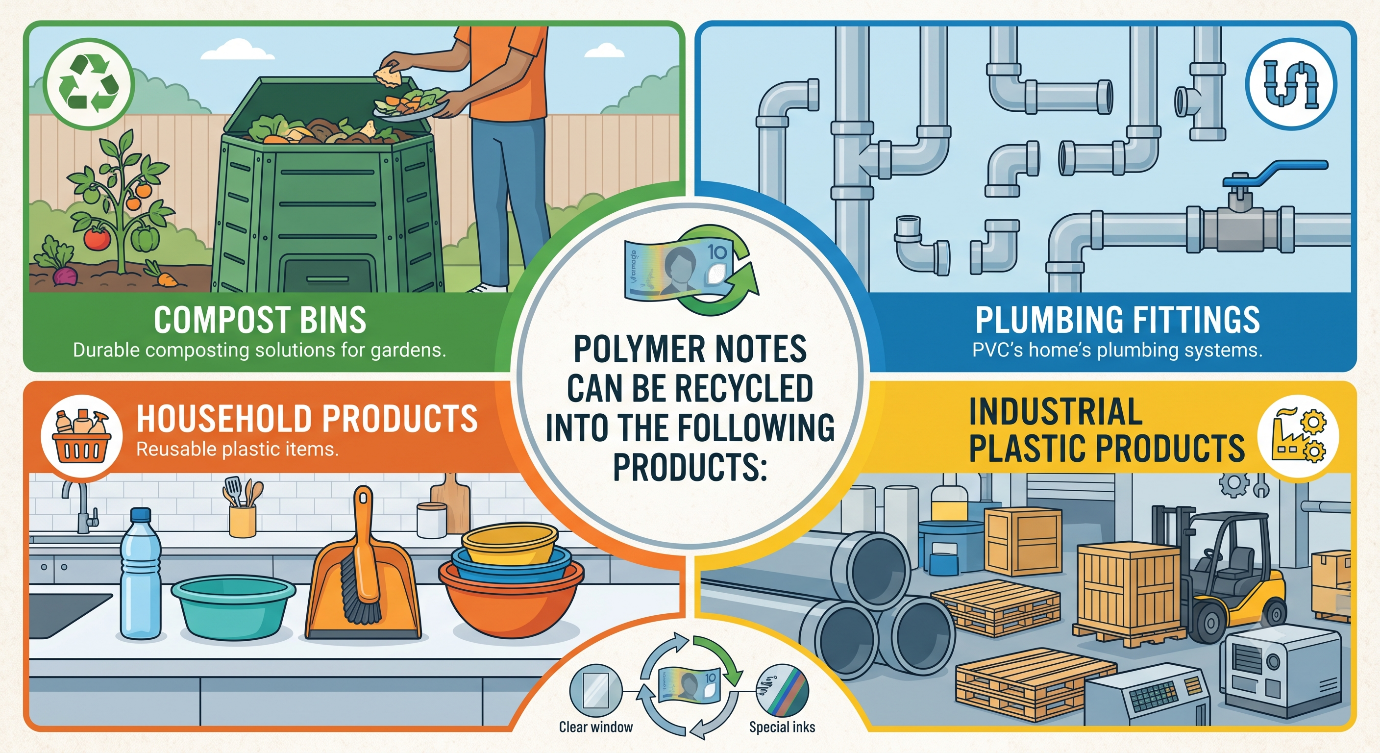
- Therefore, although polymer notes are produced from non-renewable materials, they can undergo multiple life cycles through recycling processes.
- Enhanced Security Features
- Transparent security windows are integrated to enhance verification.
- Advanced holographic elements provide additional layers of authentication.
- Enhanced printing technologies increase the complexity of replication.
- Polymer substrates offer increased resistance to tampering and physical alteration.
- Impact on Counterfeiting
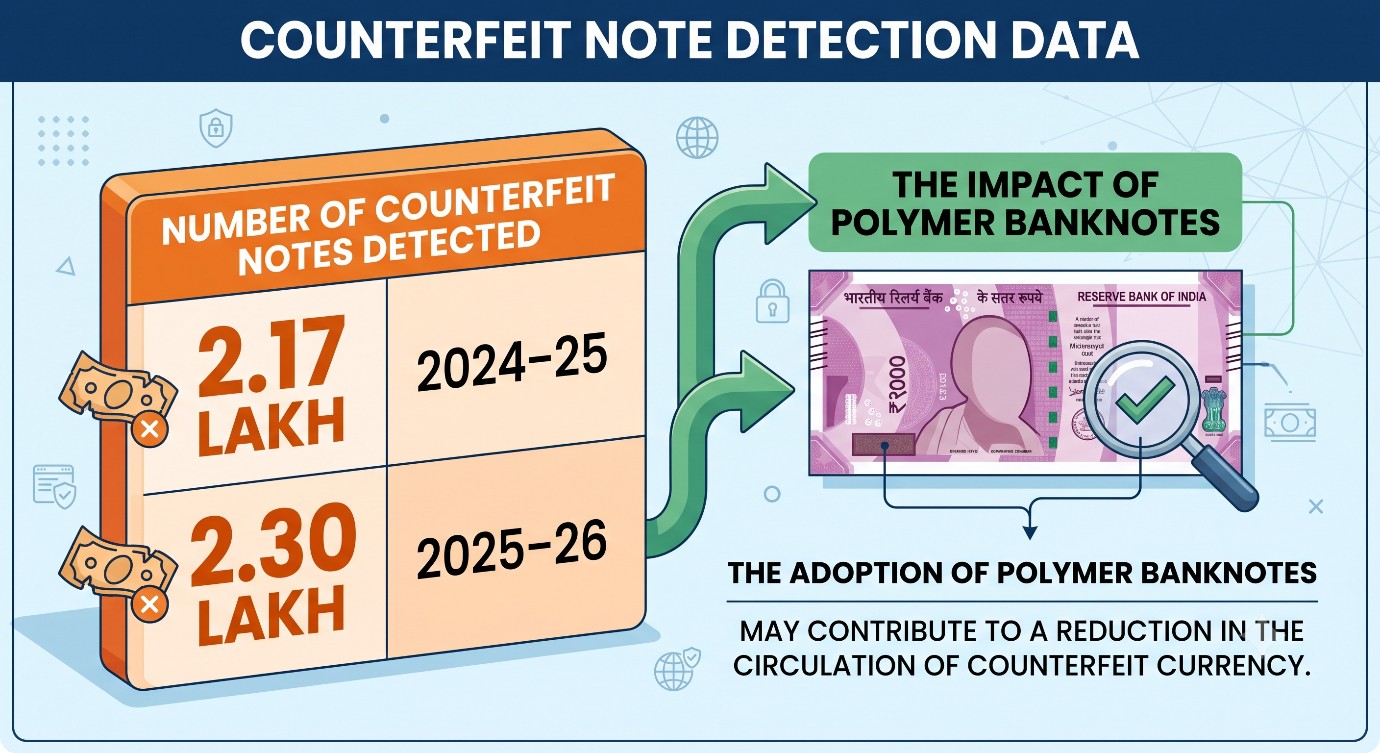
- Counterfeiters most commonly use paper substrates in the production of fraudulent notes.
- Polymer banknotes present significant technical challenges to unauthorised duplication.
- Improved Public Convenience – They are waterproof, resistant to dirt, tear-resistant, remain cleaner throughout circulation, and are more suitable for India's varied climatic conditions.
What are the Key Challenges Associated with the Introduction of Polymer Banknotes?
- Dependence on Imports – India will likely depend on imported polymer substrates during the initial stages of implementation.
- Strategic and Security Concerns – Potential vulnerabilities may arise within the supply chain.
- There are also significant national security concerns.
- Reliance on foreign manufacturers could further exacerbate these risks.
- The Reserve Bank of India (RBI) tender includes safeguards that limit procurement and operational relationships with foreign entities considered sensitive.
- Substantial Initial Capital Investment – The transition requires several key investments:
- Acquisition of advanced printing technology
- Modernisation of existing machinery
- Implementation of comprehensive employee training programs
- Procurement of polymer substrates
- Existing investments in paper-based note infrastructure should also be taken into account.
- Domestic Manufacturing Capacity – India demonstrates the following established manufacturing capabilities:
- Domestic production of banknote paper
- Indigenous manufacturing of security ink
- A rapid transition could result in the underutilization of these existing manufacturing facilities.
Why does cash remain dominant despite digital payments?
- Reserve Bank of India (RBI) surveys indicate a sustained preference for cash transactions among households and small retailers.
- As of March 2026, the total currency in circulation was:
- Rs.41.7 lakh crore.
- This represents a 12 % annual growth rate.
- These figures demonstrate that cash remains a vital component of India's payment ecosystem.
What lies ahead?
- Field Validation & Adaptability – Implement comprehensive field trials in diverse climatic zones to ensure effectiveness.
- Domestic Capability & Self‑Reliance – Establish domestic polymer substrate manufacturing capabilities in alignment with the Atmanirbhar Bharat initiative.
- Phased Introduction & Circulation Priority – Introduce polymer banknotes in a phased manner, prioritising denominations with the highest circulation.
- Balanced Payment Ecosystem – Balance the expansion of digital payment systems with robust cash management strategies.
Reference
The Indian Express | RBI to Trial Polymer Currency Notes



