Prelims – Current events of National and International importance| Science & Technology.
Why in News?
Recently, United States reported its first human case of the flesh-eating parasite, the New World screwworm.
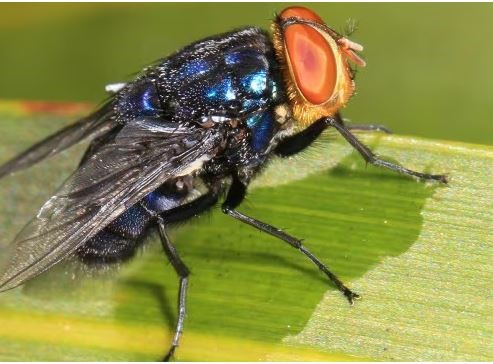
- New World Screwworm (NWS) is a species of parasitic flies that can cause myiasis and feed on live tissue.
- Screwworms are a type of blue-grey blowfly.
- Scientific name – Cochliomyia hominivorax.
- Family - It belongs in the subfamily Chrysomyinae of the family Calliphoridae of the order Diptera (true flies).
- Nomenclature – The parasites are named after the screwlike way they burrow into the tissue.
- It is literally means man-eater.
- Distribution – Endemic in Cuba, Haiti, the Dominican Republic, and countries in South America.
- Host organism – Females are attracted to and lay eggs on open wounds or another entry point like a nasal cavity in warm-blooded animals and rarely humans.
- Reproduction – One female can lay up to 300 eggs at a time and may lay up to 3,000 eggs during her 10- to 30-day lifespan.
- These eggs hatch into larvae (known as maggots), which burrow into the wound using their sharp mouth hooks to feed on the living flesh, leading to infestation.
- After feeding, the larvae fall into the ground, burrow into the soil and emerge as adult screwworm flies.
- Infestation – It can be extremely painful, especially in humans, with a high mortality rate if left untreated.
- Symptoms
- Wounds or sores that do not heal
- Bleeding from open sores
- Feeling larvae movement within a skin wound or sore
- A foul-smelling odour from the site of the infestation.
- Treatment - There are no vaccines or biological products available, except for the use of sterilised male flies in the sterile insect technique (SIT).
- Eradication - The US eradicated New World screwworms in 1966 by using a method called the sterile insect technique.
References
- Indian Express| New World screwworm.
- World organisation for Animal health| Cochliomyia hominivorax



