Prelims: Current events of national and international importance | Conservation
Why in News?
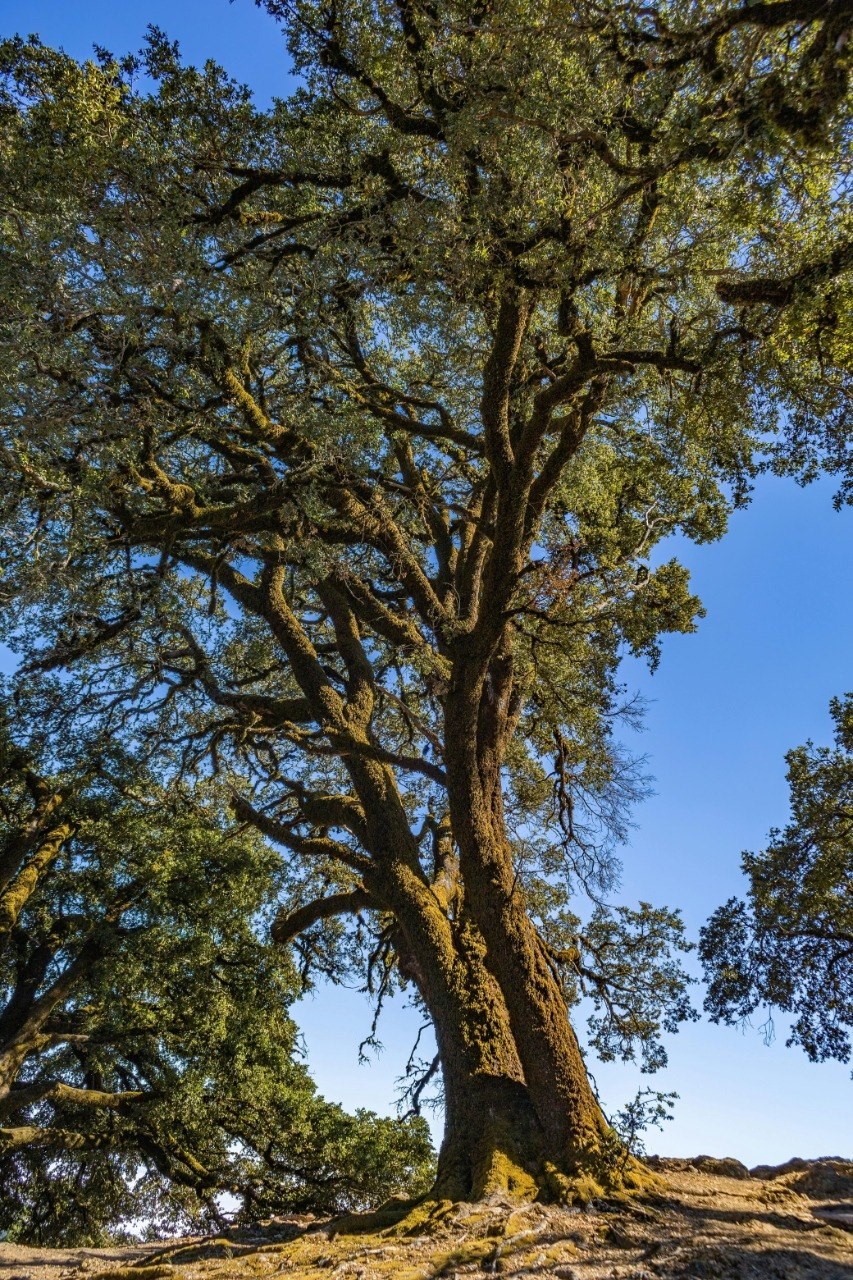
The Uttarakhand High Court has stayed the felling of oak trees in Mussoorie for construction by the Municipal Council.
- These are indigenous species found across the Himalayan region between 1,000–3,500 meters altitude, often found in the Western Himalayas and Arunachal Pradesh.
- Genus – Quercus.
- Family – Fagaceae.
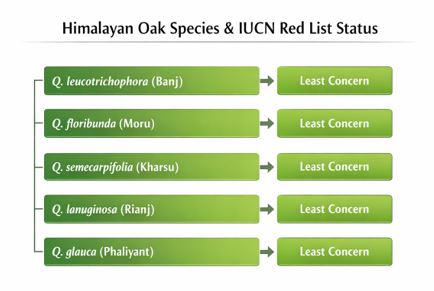
- Prominent Species - The 5 prominent evergreen Himalayan species
- Soil – Moist, well‑drained, loamy soils; rich in organic matter.
- Climate – Temperate to cool climates; thrive in areas with high rainfall and humidity.
- Land Type – Mountain slopes, valleys, and temperate forest belts.
Oaks are generally slow-growing trees, Himalayan Oaks can grow up to 10-35 metres.
- Habitats - They dominate moist temperate forests, often serving as the "climax species"—the final stage of ecological succession in their ecosystems.
- Distribution (India) - Approximately 20 species are in the Western Himalayas and 15 in the Eastern Himalayas (e.g., Arunachal Pradesh).
- Global distribution – Temperate deciduous, Mediterranean evergreen, montane oak forests (North America, Asia, Europe).
Mexico has the largest number of oak species globally.
- Uses – Fuelwood & Fodder, timber, and traditional uses.
- Ecological Importance
- Soil & water conservation.
- Assist watershed protection by promoting the recharge of springs.
- Biodiversity hubs.
- Provide carbon stock and regulate microclimate.
- Threats & Degradation –
- Rate of Degradation – 0.36 sq km/year.
- Chronic Disturbance – Grazing, lopping, litter removal.
- Invasive Species -Eupatorium adenophorum, Lantana camara, chir pine replacement.
- Forest Fires – Oaks highly susceptible; damaged stems prone to pathogens.
Reference
The Indian Express | Oak Trees



