Why in news?
A recent study estimated that 80% or more people experience hypnic jerks at some point in life.
- Hypnic Jerks – They are involuntary muscle twitches or spasms that occur as a person transition from wakefulness to sleep.
- They are not a medical disorder but a normal physiological response.
- Occurrence – Most commonly during the first or second stage of sleep.
- The brain interprets the body’s muscle relaxation as a sign of falling, triggering a sudden Contraction.
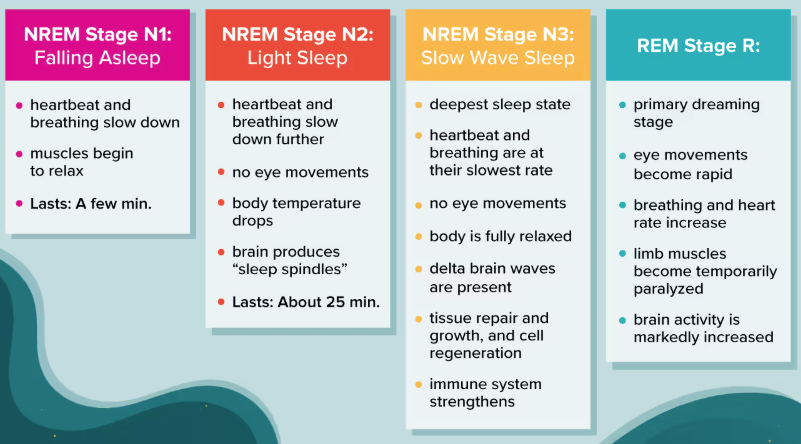
- Prevalence – Their frequency and intensity can vary from person to person and more than 80% experience it.
- Evolutionary origins – Theories suggests that hypnic jerks are evolutionary leftovers.
- Which means our ancestors who slept on trees may have benefited from these spasms as a safety check against falling.
- Body-Brain disconnect theory – During sleep transition, the brain slows down while muscles relax.
- Sometimes, mixed signals from the brain lead to muscle twitching as a false alarm.
- Common triggers – Stress and anxiety are significant contributors.
- Caffeine, sleep deprivation, and intense physical activity close to bedtime can also trigger jerks.
- Typical sensation experienced – Often feels like falling, tripping, or jerking awake suddenly.
- It can be accompanied by vivid dream-like imagery, like falling off a cliff or stumbling.
- Implications – No, hypnic jerks are harmless and normal.
- However, frequent or intense jerks might disrupt sleep quality or cause sleep anxiety in some individuals.
- Management – Stress management through meditation, yoga, deep breathing and avoid caffeine late in the day.
- Sleep hygiene – Maintain a regular sleep schedule and limit screen time before bed.
Reference
The Hindu| Hypnic Jerks