Prelims: Current events of national and international importance | Environmental Conservation
Why in News?
In June 2026, environmental authorities released 672 captive-bred Asian Houbara bustards into the wild landscapes of Karakalpakstan in western Uzbekistan.
- Location - Karakalpakstan (Autonomous Republic of Uzbekistan), Aral Sea / Aralkum Desert region.
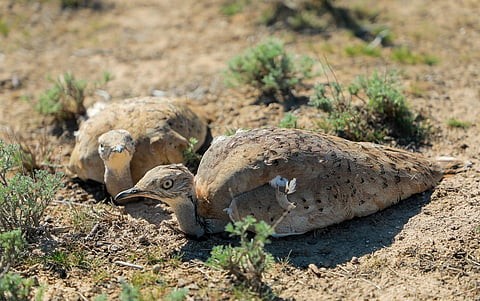
- Key Species - Asian Houbara Bustard (Chlamydotis macqueenii).
- Reintroduction Milestone - It forms part of a multi-nation, transboundary initiative aimed at restoring the severely degraded dryland ecosystems around the former Aral Sea (now largely the Aralkum Desert).
- Breeding & Technical Support - The birds were bred in a specialised facility run by the UAE (Sheikh Mansour bin Zayed Al Nahyan office) in Kazakhstan.
- It prepared through pre-release conditioning under the supervision of Uzbekistan's National Committee on Ecology and Climate Change and international CITES experts.
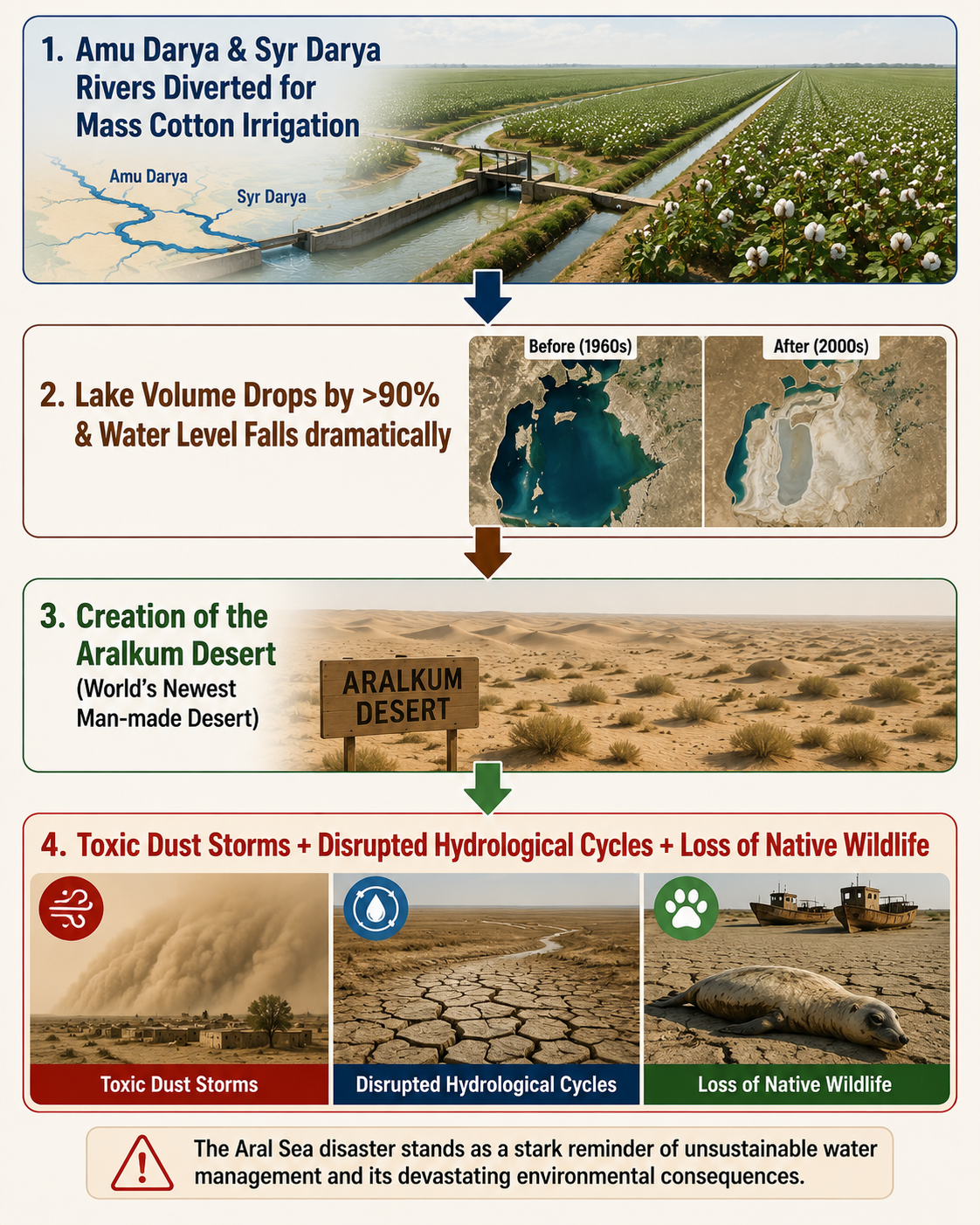
The Aral Sea Environmental Disaster
- The Aral Sea, once the world’s 4th-largest inland lake, was decimated by Soviet-era river diversion projects starting in the 1960s.
Species Profile- Asian Houbara Bustard (Chlamydotis macqueenii)
|
Attribute
|
Details
|
|
IUCN Status
|
|
|
International Protection
|
- Listed under CITES and Appendix I of the Convention on Migratory Species (CMS)
|
|
Habitat Range
|
- Arid plains and semi-deserts across Central Asia, the Middle East, and parts of South Asia
|
|
Primary Threats
|
- Historical habitat destruction (Aral desiccation), illegal poaching, and loss of migratory stopovers
|
Reference
Down to Earth | Houbara bustard Conservation



