Prelims: Current events of national and international importance | Art & Culture | History
Why in News?
The Archaeological Survey of India (ASI) has unearthed a 1,500‑year‑old stepped reservoir on Elephanta Island, off the Mumbai coast.
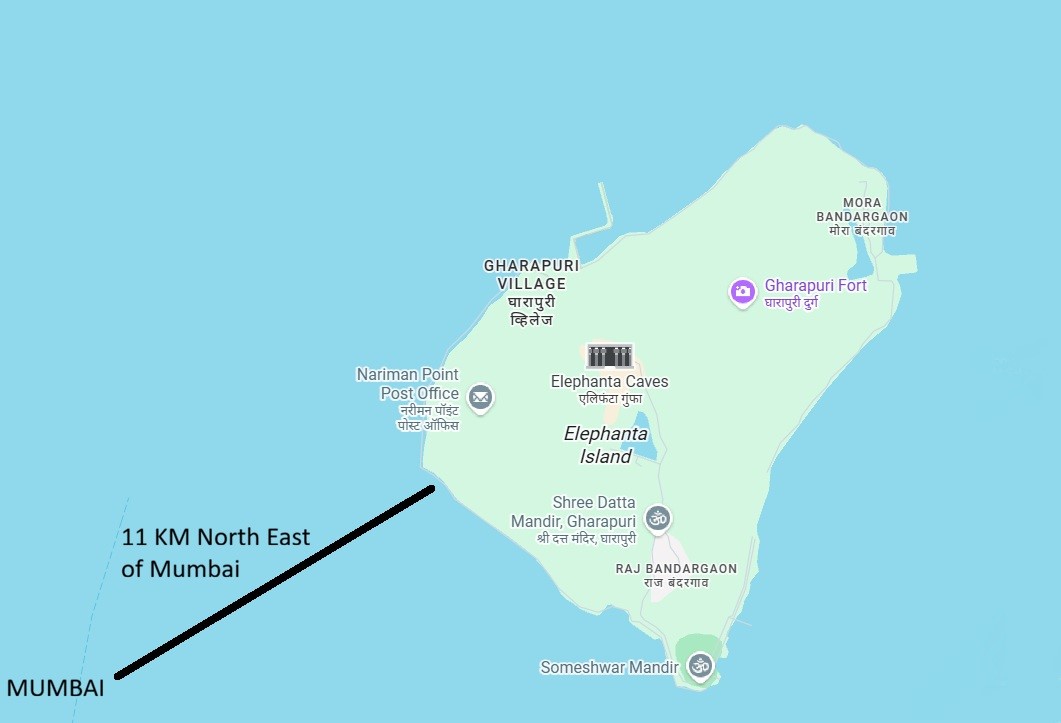
Elephanta Island
- Located in – Mumbai Harbour, Maharashtra.
- It is also known as Gharapuri ("City of Caves").
- UNESCO Heritage Site – Elephanta Caves (5th century) are located on Elephanta Island.
- It features massive rock-cut sculptures dedicated to Lord Shiva is designated as UNESCO World Heritage site.
- Historic Ports – Originally comprised 3 key maritime localities
- Morabandar,
- Rajbandar, and
- Shethbandar.
- Global Trade – It served as an ancient hub linking India to Rome and Mesopotamia as early as the 2nd century CE.
Key Findings of the recent discovery
- Stepped Reservoir – Reveal an advanced water management system essential for its role in maritime commerce.
- Estimated age – 1,500 years.
- Dimensions – 14.7 m long, 6.7 m & 10.8 m wide, T‑shaped.
- Built - Stone blocks ferried from the mainland.
- Depth excavated – 5 m, exposing 20 steps.
- Purpose – Water storage on rocky terrain with poor soil absorption.
- Other Excavated Artifacts –
- Brick structure (possibly a dyeing vat for textiles).
- Storage pot, terracotta figurines, glass & stone bangles.
- Beads of carnelian and quartz.
- Stone anchors indicating maritime activity.
- 3,000 amphorae sherds (Roman‑style jars) and torpedo jars from West Asia (Mesopotamia) – used for wine, oil, fish sauce.
- 60 silver, lead, and copper coins belonging to Krishnaraja (Kalachuri Dynasty).
- Coins of Krishnaraja – Kalachuri Dynasty (6th CE)
- Features - Obverse – Seated bull motif and Reverse – Temple symbol with legend “Sri Krishnaraja.”
- Confirms Kalachuri presence and influence in western India during this period.
Reference
The Hindu | Elephanta Islands



