Prelims: Current events of National and International Importance| Environment
Why in News?
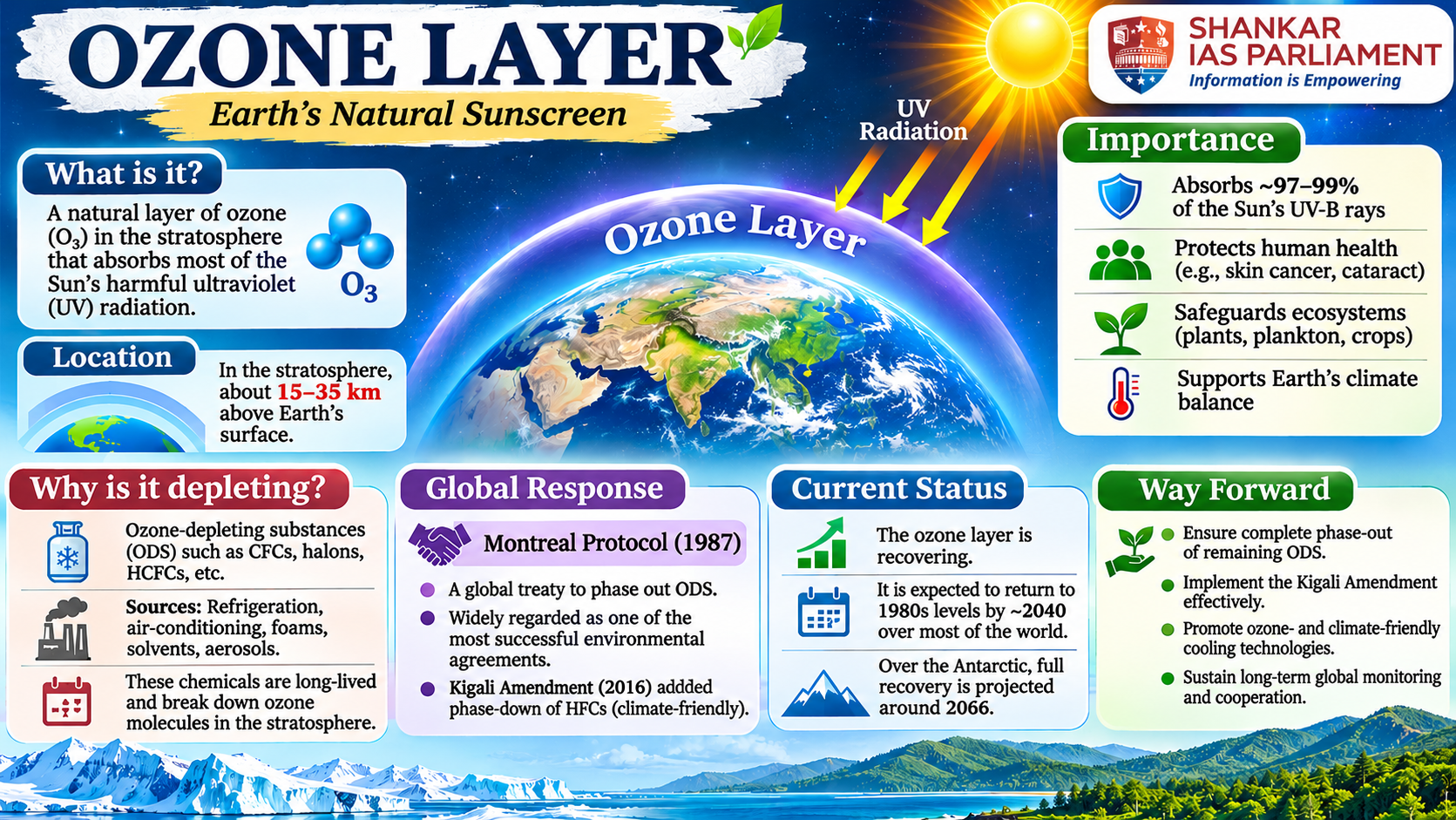
The Antarctic ozone hole expanded to its seventh-largest size in 48 years of observation in 2026, driven by an unusually strong polar vortex rather than a new spike in chemical pollution.
- Peak Size– On September 18, 2026, the hole reached its maximum one-day extent of 10.5 million square miles (27.1 million square kilometers)—larger than the entire continent of North America.
- Seasonal Average– Between September 7 and October 13, the average area covered roughly 9.6 million square miles (25 million square kilometers), more than twice the size of the United States.
- Ranking– It stands as the seventh-largest ozone hole recorded since monitoring began.
What Caused the Growth?
- Strong Polar Vortex – A powerful, high-speed belt of wind isolated cold air over Antarctica for a longer duration.
- Weak Weather Disturbances– Planetary-scale weather systems that normally rise from the lower atmosphere and break up the vortex were unusually quiet during August and September, letting the cold zone stretch and persist.
- Chemical Reactions– Inside the cold vortex, clouds accelerated chemical reactions involving residual chlorine and bromine.
Reference
Science Daily| Ozone Layer Depletion



