Mains: GS-III – Environment | GS-II – International Organisation
Why in news?
The next United Nations climate change conference, COP31, will be held in Antalya in Türkiye in November this year; the hosts, Australia and Türkiye, face the fossil-fuel question.
What about COP 31?
- UNFCCC – United Nations Framework Convention on Climate Change (UNFCCC) an international environmental treaty aimed at stabilizing greenhouse gas concentrations to prevent dangerous human interference with the climate system.
- Conference of the Parties (COP) – The supreme decision-making body, meeting annually to assess progress and negotiate new commitments.
- COP 31 Location & Date – Antalya EXPO Centre, Antalya, Türkiye, November 9–20, 2026.
- Host & Presidency – Hosted by Türkiye alongside Australia, overseeing the negotiations process.
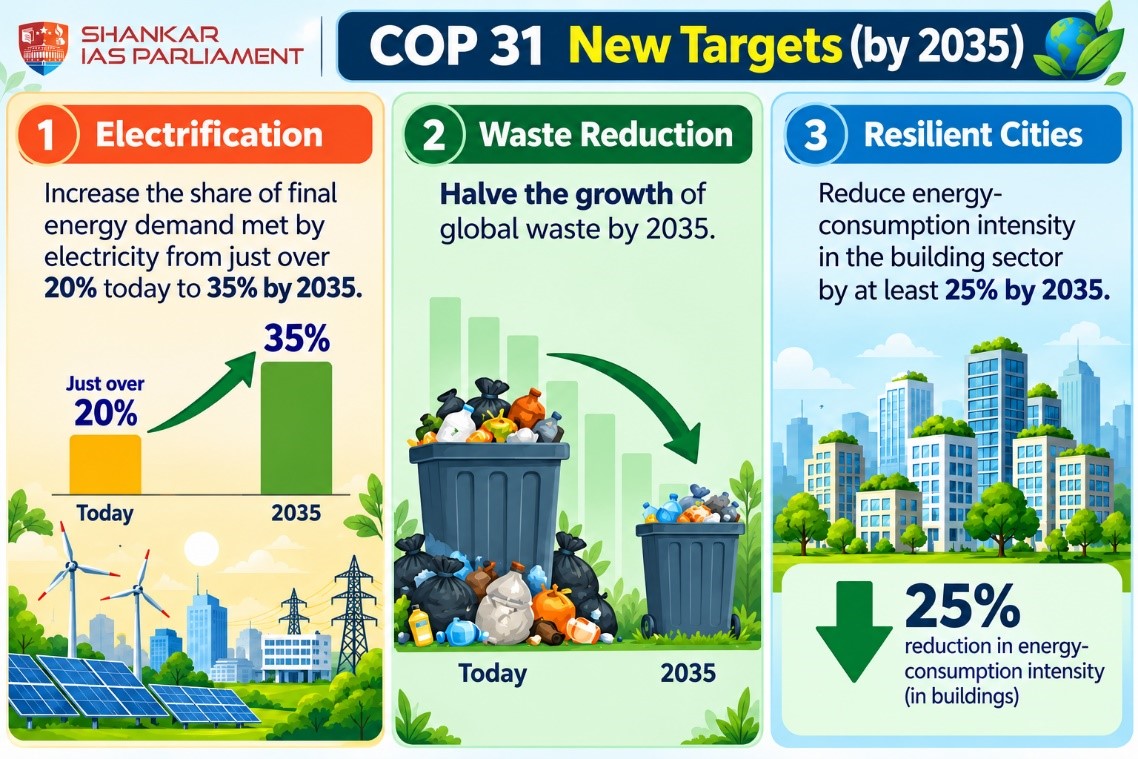
- Primary goal at COP31 – Target to electrify industry and vehicles and, in turn, “to raise the share of final energy demand met by electricity from just over 20% today to 35% by 2035”.
What about the domestic fuel resilience of Australia and Turkey?
- Dependency on fossil fuels – Both Türkiye and Australia are heavy users of fossil fuels.
- Australia is the world’s 3rd largest fossil fuels exporter, after Russia and the U.S.
- Domestically, fossil fuels such as coal, oil, and natural gas account for about
- 90% of Australia's energy needs
- 80% of Türkiye's energy needs
- Australia recently faced criticism from environmental groups for approving the expansion of a coal mine.
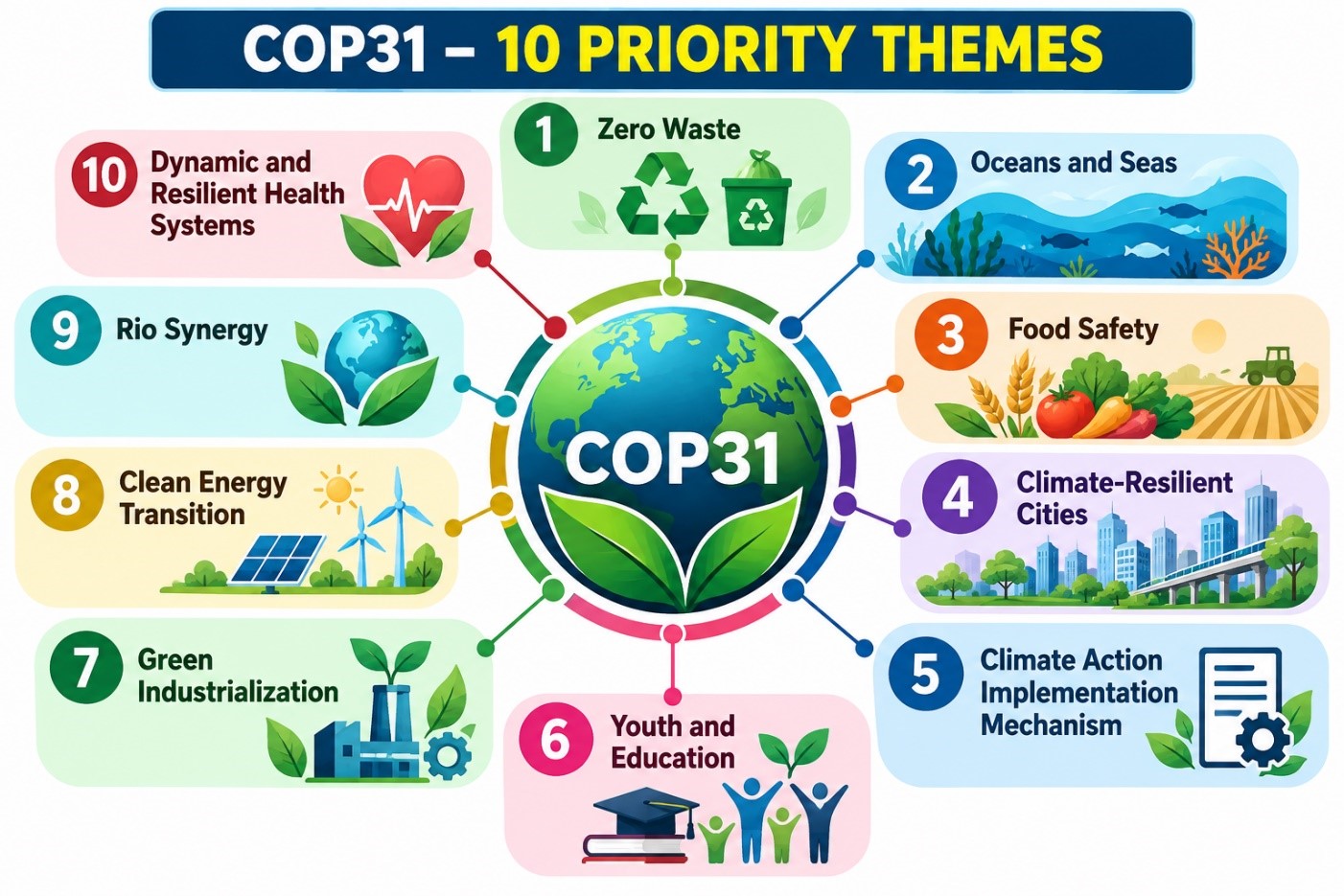
- Oceans and Seas – These are also a priority agenda item - Türkiye hosted a ‘Blue Dialogue’ on September 10-11 whose focus was on protecting marine resources.
- Missing out theme – Despite climate concerns, the official COP31 priorities do not explicitly mention a transition away from fossil fuels, which raised concerns among climate activists and observers.
- Australia’s Decarbonisation efforts – Various industries in Australia, including iron-ore mining, are trying to decarbonise by investing in hybrid or electric heavy machinery.
- Local governments are also pushing for electric vehicles (EVs), which recently overtook petrol car sales for the first time in Australia.
- Türkiye’s Efforts – It is working to augment recycling and so eventually reduce methane emissions.
- In fact, the country has listed ‘zero waste and a circular economy’ on the COP31 priority list.
- The fortunes of a local EV brand, Togg, have ballooned so much that the government hopes it will herald a new era in the automobiles market.
Why may COP31 face pressure?
- Given such momentum, there is likely to be pressure on the COP31 presidencies to include fossil fuel language as part of the agenda.
- Climate disaster adds urgency – The catastrophic floods in Nepal highlighted the increasing impacts of climate change.
- Such events strengthen demands for stronger mitigation measures, including the language surrounding fossil fuels at COP31, and for loss and damage financing.
- Missing Topics in the COP31 Agenda – Despite growing global concern
- No explicit mention of transitioning away from fossil fuels
- No dedicated focus on loss and damage financing
- Climate finance is also absent from the list of priority themes
- These omissions have attracted attention from climate observers and vulnerable countries.
What is the debate about loss and damage financing at COP 31?
- EU’s push for fossil fuel roadmap – At COP30 in Belém, Brazil, the EU pushed for a “fossil fuel roadmap” to help countries worldwide transition away from fossil fuels.
- Diverted the attention – While many countries supported the call, observers have said it took the focus away from developing countries’ calls to triple adaptation finance and developed countries’ resistance to that.
- Most countries involved in the UNFCCC did not oppose the call for the “fossil fuel roadmap” at COP30.
- India’s Position – India did not oppose the fossil fuel roadmap, but stressed two important conditions
- Common But Differentiated Responsibilities (CBDR) – Developed countries should take greater responsibility because of their historical emissions.
- Flexible Transition Pathways – Countries should not be forced to follow the uniform energy-transition model.
- Each nation must be allowed to pursue pathways suited to its economic and developmental needs.
- Global momentum – Beyond the UNFCCC framework as well, and partly because of the slow pace of negotiations at the COP summits, there have been calls for concrete action to transition away from fossil fuels.
- International Conferences – In April this year,
- 1st conference on ‘Transitioning Away from Fossil Fuels’ was held in Santa Marta in Colombia, co-hosted by Colombia and the Netherlands.
- 2nd conference is scheduled for 2027, to be co-hosted by Tuvalu and Ireland.
What lies ahead?
- Countries participating in COPs can propose new agenda items for consideration during negotiations.
- For example, the European Union introduced the “roadmap” in the formal negotiations agenda at the last minute at COP30.
- That said, it remains to be seen whether countries will do so at COP31, and if so, what the items will be — and ultimately how the event’s two fossil fuel-heavy stewards will navigate negotiations.
Reference
The Hindu | COP31 hosts Australia and Türkiye face the fossil-fuel question



