Why in News?
Recently, 179 people were killed when Jeju Air flight 7C2216 made a belly-landing and overran the runway, smashed into the perimeter fence and burst into flames at the Muan International Airport in South Korea.
- Belly-landing – It is also referred as gear-up landing.
- It occurs when the aircraft lands without its landing gear fully extended and using its underside or its belly as landing site.
- Conditions determining belly landings
- Landing gear fails to deploy.
- A stricken aircraft cannot make it to an airport and landing is done in a field.
- The pilot considers skidding the aircraft to a stop safer than touching down on wheels.
- Ditching, when it makes an emergency landing on water.
- Any other situation a pilot considers a belly-landing safer than landing on wheels.
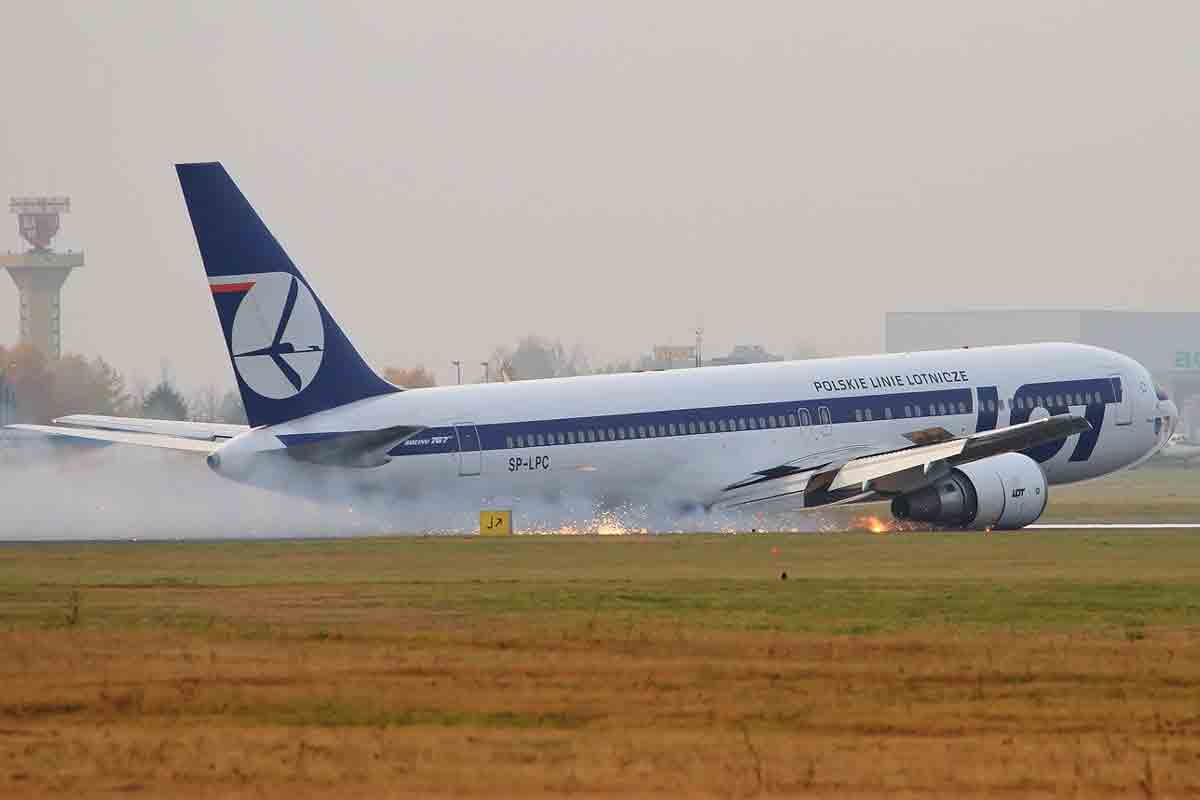
- It also occur when pilots simply forgot to deploy the landing gear and landed aircraft on their belly.
- Safety precautions during belly landings - Fire trucks and emergency services must be ready to respond to a possible fire or evacuate passengers and crew after the aircraft comes to a stop.
- Foaming the runway with a chemical before belly-landings to suppress sparks and fire, which was in practice decades ago, is no longer required.
- Damages to aircraft – Even if the landing goes well, it results in considerable damage to the plane, its engines and wings.
- Vulnerability of wings – Wings are very close to the ground when an aircraft touches down and thus they must be held absolutely ‘level’ (parallel to the ground).
- With even a slight left or right bank either by the pilot or a strong gust of wind, a wing could hit the ground, flip the jet, send it cartwheeling or break it apart.
- The friction generated by the aircraft skidding on the runway can also create sparks or result in a fire.
Important terminologies
- Landing long and fast – It means an aircraft touches down far beyond the designated touchdown zone on the runway, leaving the crew with less runway length to stop the aircraft, and at a speed far exceeding the recommended landing speed.
- Slats – It is a high-lift device located on the leading edge of an aircraft’s wing to increase the lift generated by the wing at low speeds, such as during take-off and landing.
- Flaps – It is located in the trailing edge of the wing that helps to increases lift by enhancing the wing’s camber and surface area.
- Stall – It is a condition when an aircraft stops flying forward and starts dropping from the sky like a stone.
Reference
The Indian Express| Belly Landing of Aircraft



