- About- The Sundarbans contain the world's largest mangrove forests and one of the most biologically productive of all natural ecosystems.
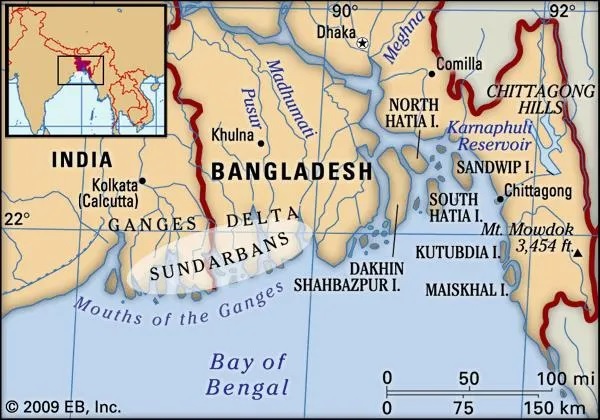
- Location- At the mouth of the Ganges and Brahmaputra Rivers between India and Bangladesh.
- Sundri- The ecosystem is named after the dominant mangrove tree species, Heritiera fomes, known as “sundri” in Bengali, the term “Sundarbans” itself literally means “beautiful forest” in Bengali.
- Sundarbans delta- The ecosystem is formed by the confluence of South Asia’s largest rivers, the Ganges, Hooghly, Padma, Brahmaputra and Meghna.
- UNESCO World Heritage Sites- Sundarbans West (Bangladesh), Sundarbans South (Bangladesh), Sundarbans East (Bangladesh) and Sundarbans National Park (India).
- Flora- The most abundant tree species are sundri (Heritiera fomes) and gewa (Excoecaria agallocha).
- Fauna- Mugger crocodile, salt-water crocodile, shark, Gangetic dolphin, tiger, water monitor lizard, pangolin etc.,
- Water monitor lizard- It can grow up to 9 feet in length and is the second largest lizard in the world.
- Mudskippers- It is an air-breathing fish that climbs out of the water into mudflats and even climbs trees.
|