Prelims: Current events of National and International Importance
Why in News?
A newly discovered 17- to 18-million-year-old fossil ape in Egypt is challenging long-held ideas about where the ancestors of humans and modern apes first evolved.
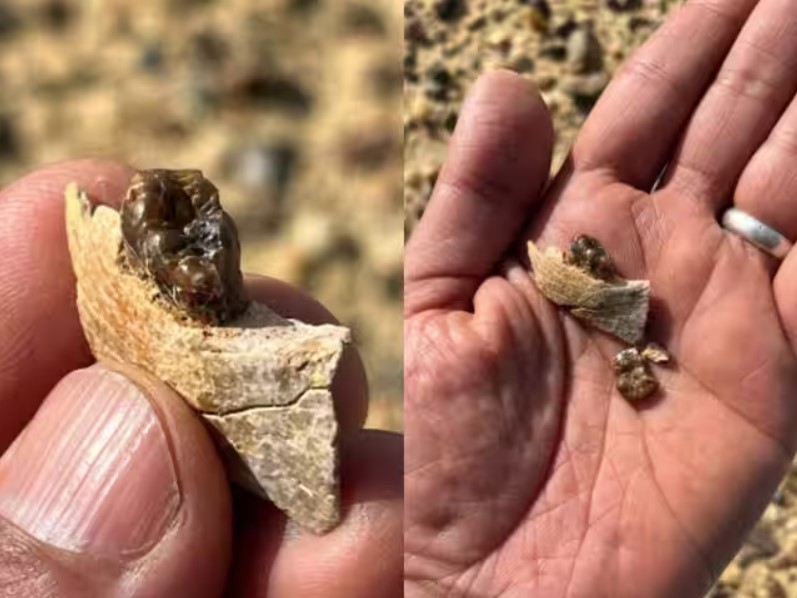
The Discovery– Masripithecus moghraensis
- What was found– Researchers uncovered fossilized jaw bones of a previously unknown primate species at Wadi Moghra in northern Egypt.
- Name meaning– Named Masripithecus moghraensis (combining Masr, the Arabic name for Egypt, with Greek and local site references).
- Age– Dated to the Early Miocene epoch (roughly 17 to 18 million years ago).
- Diet and features– Analysis of the lower jaw, large canines, and rounded molars shows it had a versatile, fruit- and hard-food-based diet.
Why It Rewrites the Story?
- Shifting from East Africa to the North– For decades, scientists believed the common ancestor of all living apes originated primarily in East Africa (such as Kenya and Ethiopia), where most early Miocene ape fossils were found.
- North Africa as a Cradle– Masripithecus is the first definitive fossil ape ever found in North Africa from this period.
- Closer to Living Apes– Phylogenetic and biogeographic analyses place Masripithecus closer to living apes than many older East African counterparts.
- This suggests that North Africa and the Middle East—rather than just East Africa—may have been the true crucible where modern ape lineages first diversified.
- Eurasian Connections– This northern geography also provides a clearer stepping stone or dispersal corridor explaining how early apes later moved into Eurasia as tectonic plates shifted.
Reference
The Economic Time| 17- to 18-million-year-old fossil ape



