Mains: GS II - Welfare Schemes for Vulnerable Sections of the population by the Centre and States and the Performance of these Schemes.
Why in News?
Recently, a student in Balasore, Odisha, died by self-immolation after her sexual harassment complaints against the head of her department were dismissed by the college’s Internal Complaints Committee (ICC).
What is the ICC?
- ICC – An Internal Complaints Committee (ICC) is a mandatory institutional redressal mechanism to address complaints of sexual harassment at the workplace.
- Created under – The Sexual Harassment of Women at Workplace (Prevention, Prohibition and Redressal) Act, 2013 (POSH Act).
- Background – Evolved from Vishaka Guidelines (1997) by the Supreme Court, after a petition by Bhanwari Devi.
Bhanwari Devi, a social worker in Rajasthan, was gang-raped when she tried to stop a child marriage in 1992.
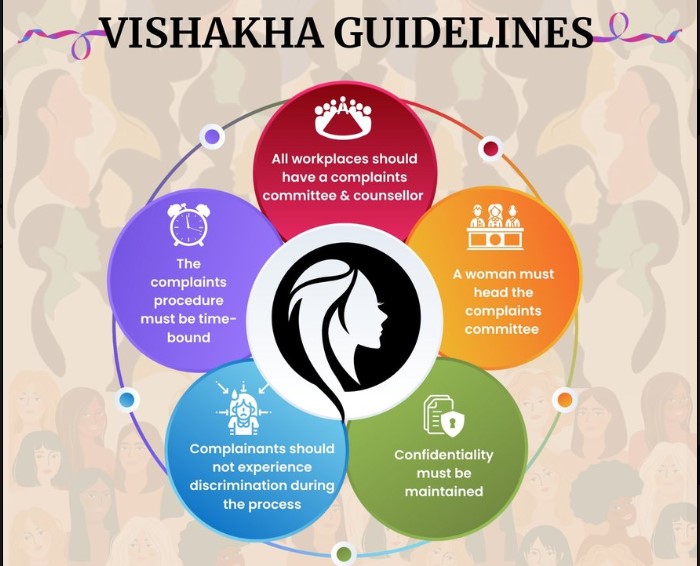
- Legal basis – After Nirbhaya killing in Delhi in December 2012 the provisions were actually written into law.
- Establishment – Mandatory at all workplaces which employed more than 10 people.
- Women working in smaller enterprises in the informal sector could complain to Local Committees to be set up by district authorities.
What is the composition of ICC?
- Headed by – Presiding Officer, who is to be a woman employed at a senior level at the workplace.
- Members – At least 2 members should be employees preferably committed to the cause of women or who have had experience in social work or have legal knowledge.
- Another member should be from an NGO devoted to women’s rights or a person familiar with sexual harassment issues.
- Women’s ratio – At least half of the members should be women.
- Complaint – Any aggrieved woman can complain in writing within 3 months of the date of the harassment incident or series of incidents.
What are the powers and functions of ICC?
- Powers – ICC has the same powers as are vested in a civil court under the Code of Civil Procedure.
- Time limit for inquiry – To be completed within 90 days.
- Actions – The committee can help to settle the matter at the request of the woman or begin an inquiry into the complaint.
- If the complaint is proved, the ICC must recommend the action to be taken against the accused.
- The employer is also required to aid the victim if she wishes to file a criminal complaint.
- Concealment clause – The law mandates confidentiality regarding
- The contents of the complaint
- The identity and addresses of the aggrieved woman
- The respondent and witnesses
- Any information relating to conciliation
- Inquiry proceedings
- The recommendations of the ICC.
What are the challenges faced by ICC?
- Irregular execution – The implementation of Internal Complaints Committees (ICCs) remains patchy and inadequate across institutions.
- Ineffective functioning – They often lack training, maintain no confidentiality, and fail to address workplace power imbalances.
- Lack of coordination – Women and Child Development Ministry oversees the Act, but actual employers fall under the Labour and Industries Ministries.
- This gap between ministries creates a responsibility crisis.
- Lack of monitoring – Absence of analysis of the law’s functioning, leaves a black hole in accountability and data.
- Supreme Court’s Apprehension – The Supreme Court expressed concern over the serious lapses in enforcement.
- It called the state of affairs disquieting and ordered immediate compliance across both public and private sectors.
What lies ahead?
- The government could push for quicker setting up of ICC in every public and private organisations.
- The actions taken by the ICC could be periodically monitored and analysed.
Reference
The Hindu| Internal Complaints Committee



