Prelims: Current events of national and international importance | Environment
Why in News?
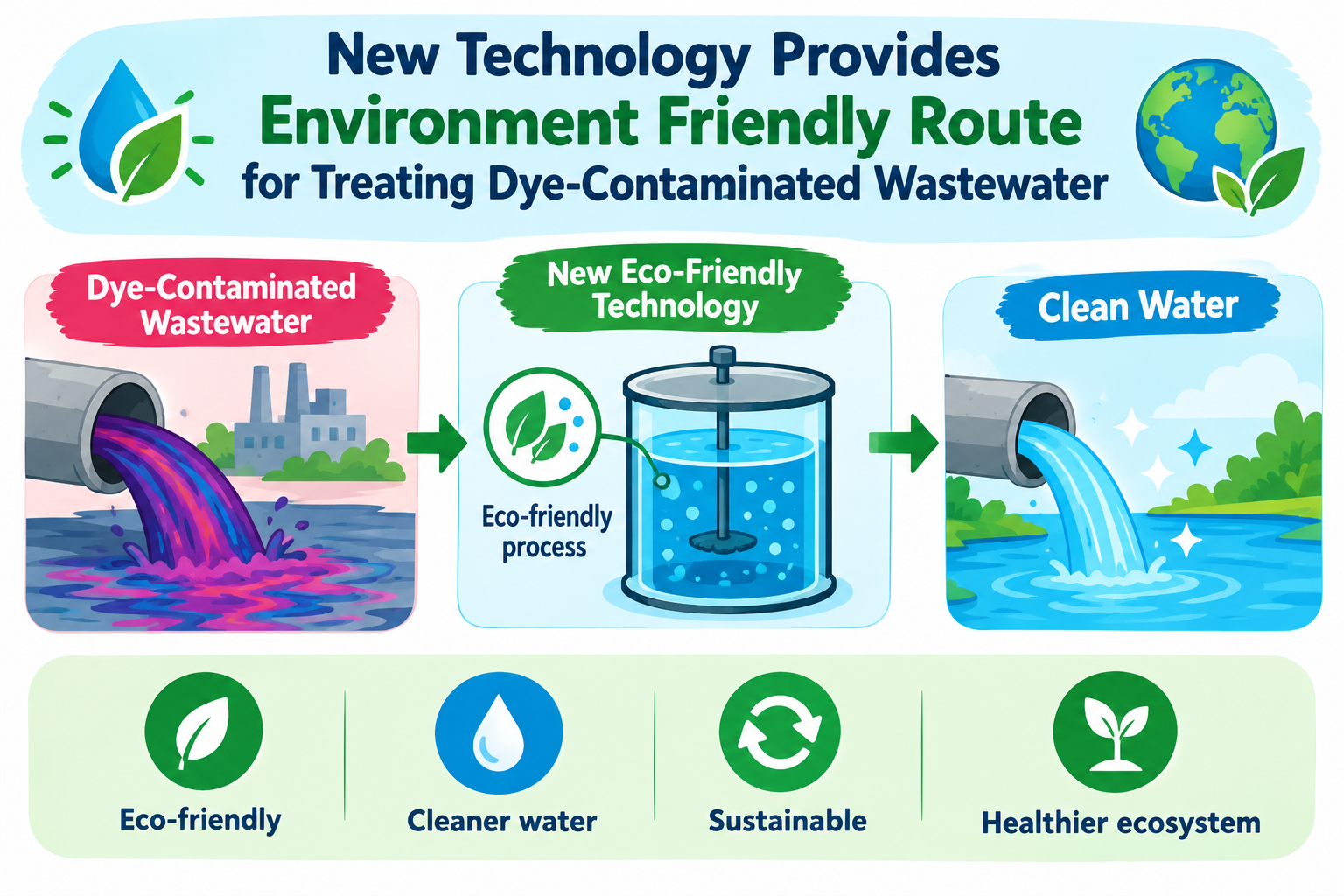
Recently, a study highlighted a breakthrough green technology developed by Indian researchers for the eco-friendly remediation and treatment of dye-contaminated wastewater.
Key Highlights
- It targets the toxic effluents generated by textile, dyeing, and printing industries.
- The new catalytic/adsorptive treatment technology provides a sustainable alternative to conventional energy-intensive chemical and biological oxidation methods, offering a zero-hazardous-sludge pathway for industrial effluent management.
- Core Mechanism
- The technology utilizes advanced, reusable nano-catalytic and bio-adsorptive composites derived from agro-waste or eco-friendly precursors to break down recalcitrant, synthetic azo dyes.
- Unlike traditional chlorination or coagulant treatments that generate massive quantities of toxic secondary sludge, this process mineralizes organic dye molecules into harmless byproducts (such as carbon dioxide, water, and inorganic ions).
- High Efficiency & Reusability
- Demonstrates rapid decolorization and high chemical oxygen demand (COD) reduction rates even at high pH and salinity levels typical of textile dyeing units.
- The catalysts can be magnetically or gravitationally recovered and reused across multiple reaction cycles, drastically lowering operational costs.
Significance for India
- India’s major textile hubs (such as Tiruppur in Tamil Nadu, Surat and Ahmedabad in Gujarat, and Panipat in Haryana) discharge millions of liters of colored effluent containing persistent synthetic dyes and heavy metals.
- Untreated or poorly treated dye effluents increase water turbidity, block sunlight penetration, halt aquatic photosynthesis, and introduce carcinogenic aromatic amines into groundwater aquifers.
- Supports the Central Pollution Control Board (CPCB) and Ministry of Jal Shakti guidelines enforcing Zero Liquid Discharge (ZLD) and stricter effluent standards across Indian industrial corridors.
- By utilizing low-cost, sustainable materials and preventing secondary sludge generation, the technology fits within circular economy frameworks, turning industrial waste management into a resource-efficient process.
Reference
PIB | Treating dye-contaminated wastewater



