Why in News?
The U.S.-Colombia economic and diplomatic impasse arises from forced deportations and Trump's confrontational tactics, rather promoting a more diplomatic strategy for addressing migration.
What is Trump's Deportation Policies?
- Mass Deportations - Targeting undocumented migrants, especially from Latin America, under strict immigration policies.
- Use of Military Planes - Deportations often involved military aircraft, leading to diplomatic tensions with countries like Colombia and Brazil.
- Strict Border Controls- Policies such as "Remain in Mexico" and increased border wall construction implemented to curb illegal migration.
- Family Separation Policy- Led to the separation of migrant children from their parents, drawing criticism from human rights organizations.
- Sanctions and Pressure on Other Nations - Countries refusing to accept deported migrants faced economic and diplomatic pressure, including tariffs and aid cuts.
What are Global Impact of Deportation Policy?
- Strained Diplomatic Relations – Countries like Colombia and Mexico opposed Trump’s deportation methods, leading to diplomatic conflicts.
- Economic Fallout - High tariffs and trade restrictions on nations resisting deportations disrupted global trade, affecting businesses in both the U.S. and partner countries.
- Human Rights Concerns - Reports of mistreatment of deported migrants, including handcuffing and lack of basic amenities, led to criticism from international human rights organizations.
- Impact on Refugee Policies - Countries revisited their own immigration policies, with some tightening restrictions due to U.S. pressure.
- Rise in Illegal Crossings - Stricter deportation measures did not entirely deter migration; instead, they fueled more dangerous illegal crossings.
What are the Policy Impact on India?
- Among the illegal migrants in U.S, 1.Mexico 2.El Salvador & India ranks 3rd .
- Visa Restrictions on Indian Migrants - May affected Indian workers and students seeking U.S. visas.
- Impact on Indian IT Sector -The H-1B visa restrictions and deportations disrupted the IT industry, affecting Indian professionals.
- Repatriation of Indians - Undocumented Indian migrants faced deportation, raising concerns over their safety and reintegration.
- Trade Relations with the U.S. - Tariffs and immigration tensions impacted India-U.S. trade negotiations, especially in technology and services sectors.
- Policy Influence on India: The U.S. approach influenced India's immigration policies, leading to stricter monitoring of illegal migration.
What is the Difference between Migrants & Refugees?
- Migrant - According to International Organization for Migration
- A migrant is any person who moves across an international border or within a state away from their habitual place of residence, regardless of
- The person’s legal status;
- The voluntary or involuntary nature of movement;
- The causes of movement; or
- The length of stay."
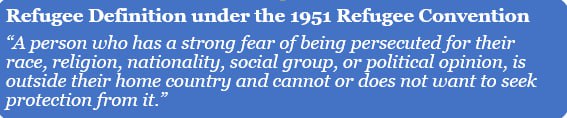
What are the Agreements to Protect Refugees?
1951 Refugee Convention
- Establish rights of refugees and obligations of host countries for protection.
- Established – in 1951, under the UN framework.
- Defines who is a refugee and their legal rights.
- Establishes non refoulement principle (no forced return to danger).
- Outlines refugees' rights to work, education, and legal protection.
- Requires states to cooperate with the UNHCR.
- Initially limited to post WWII refugees in Europe, later expanded by the 1967 Protocol.
India is not a signatory but provides asylum to many refugee groups under national policies.
1967 Protocol on Refugee Status
- It seeks to remove geographical and time limits from the 1951 Refugee Convention, providing protections to refugees outside Europe and from after WWII.
- It eliminates the original time limit and requires signatory states to ensure refugee rights. India is not a signatory but addresses refugee protection individually.
What are the Global Compact on Refugees (2018)?
- Aims to provide a non-binding framework for equitable refugee protection.
- Formed in 2018, adopted by UN.
- Focuses on supporting host countries through shared international responsibility.
- Encourages economic and social inclusion of refugees.
- Enhances refugee self-reliance through education and employment.
- Strengthens international cooperation and funding for refugee crises.
- Aims to create conditions for voluntary return and resettlement in safety.
What lies ahead?
- It's crucial to understand legal immigration pathways and the risks of irregular migration as U. S. policies change. Indian nationals should stay informed and cautious.
|
UN High Commissioner for Refugees
|
- Aim - To protect and assist refugees and stateless persons globally.
- Formed - 1950
- Features - Provides legal and humanitarian aid to refugees.
- Works with governments to establish asylum policies.
- Monitors compliance with international refugee laws.
- Helps in voluntary repatriation, local integration, or resettlement.
- Responds to emergency refugee crises worldwide.
- India cooperates with UNHCR but does not grant refugees official legal status under national law.
|
Reference
The Hindu | Deportation policy of USA



