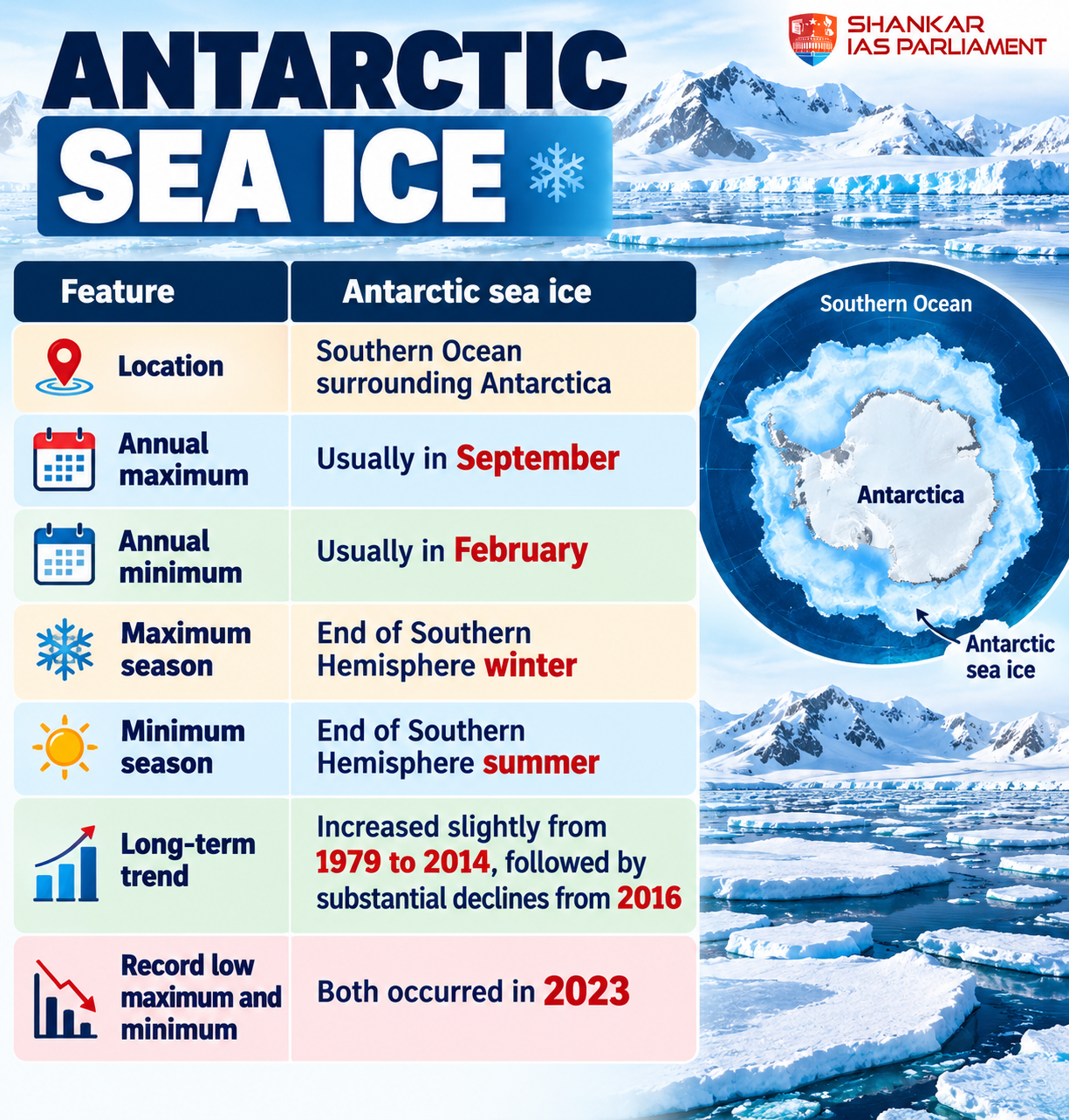
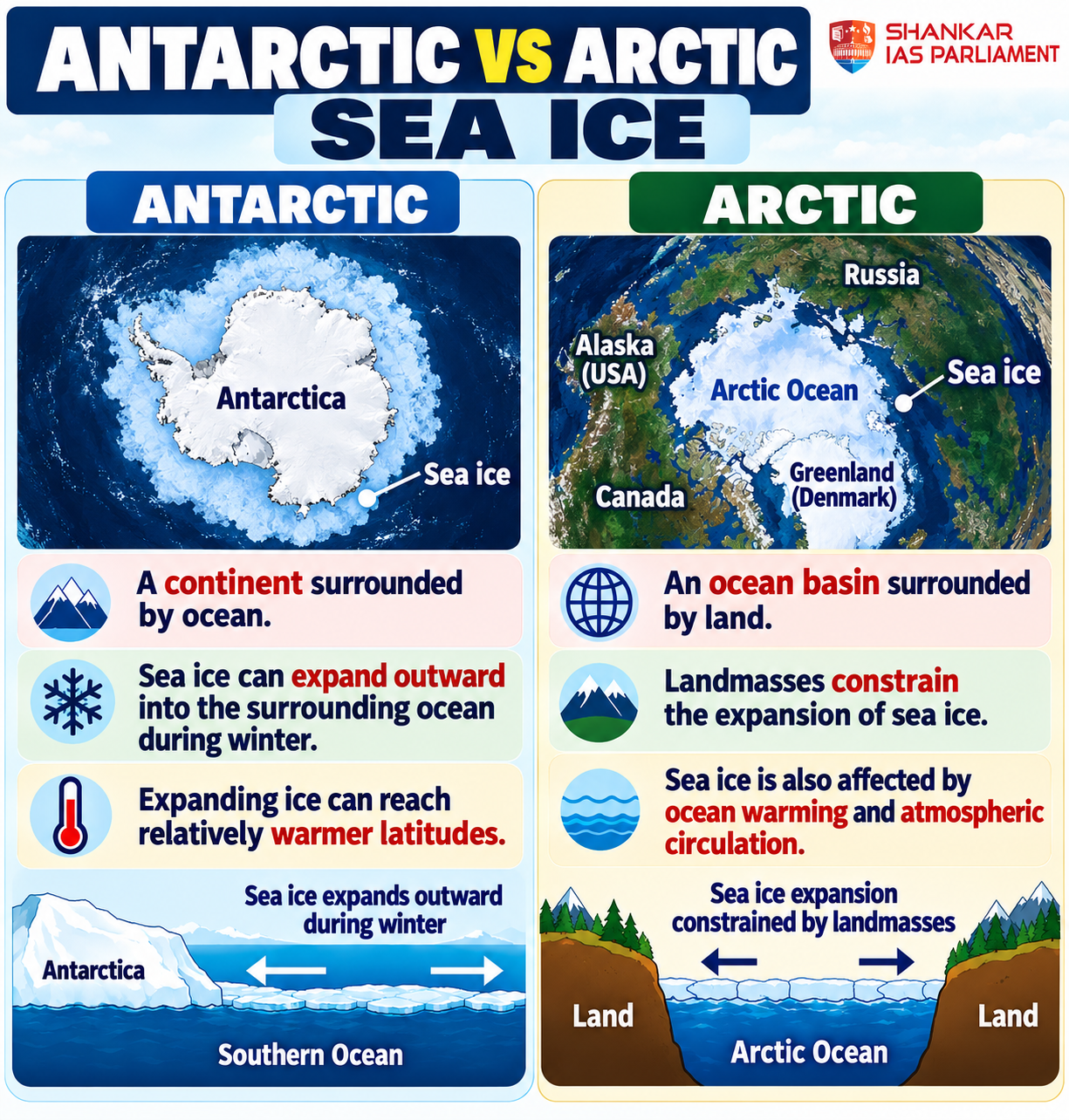
- Sea ice consists of frozen seawater that forms, grows, and melts within the ocean environment.
- Sea ice differs from ice sheets and glaciers, which originate primarily from accumulated snowfall on land.
- Sea ice remains afloat on the ocean surface and undergoes seasonal expansion and retreat.
- Significance
- Marine Ecosystem Support – It provides critical habitat and sustains Antarctic food webs, especially krill-dependent ecosystems.
- Albedo Regulation – It reflects solar radiation, limiting ocean heat absorption and moderating warming.
- Climate and Ocean Circulation – It controls ocean-atmosphere heat exchange and influences salinity-driven deep-water formation.
Note – Melting of floating sea ice does not significantly contribute to sea level rise, in contrast to the melting of land-based glaciers and ice sheets.
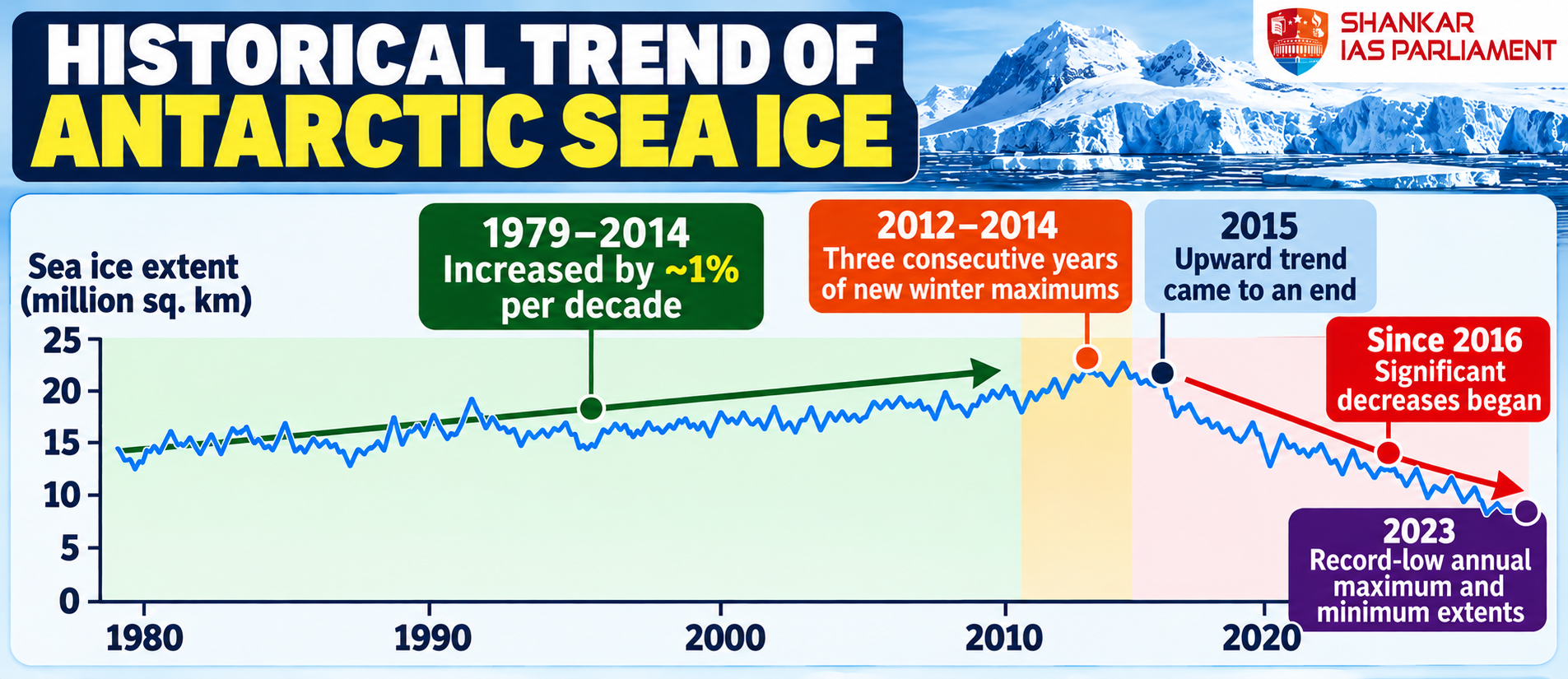
Historical Trend
- In recent years, repeated low winter maximums have raised concerns regarding a potential shift in the Antarctic sea ice system.
|