|
One Liners 01-12-2025
|
|
Environment
|
|
Climate Vulnerability Assessment in Meghalaya
- Conducted by – Meghalaya Climate Change Centre (MCCC), under the National Mission for Sustaining the Himalayan Ecosystem (NMSHE) under the National Action Plan for Climate Change (NAPCC).
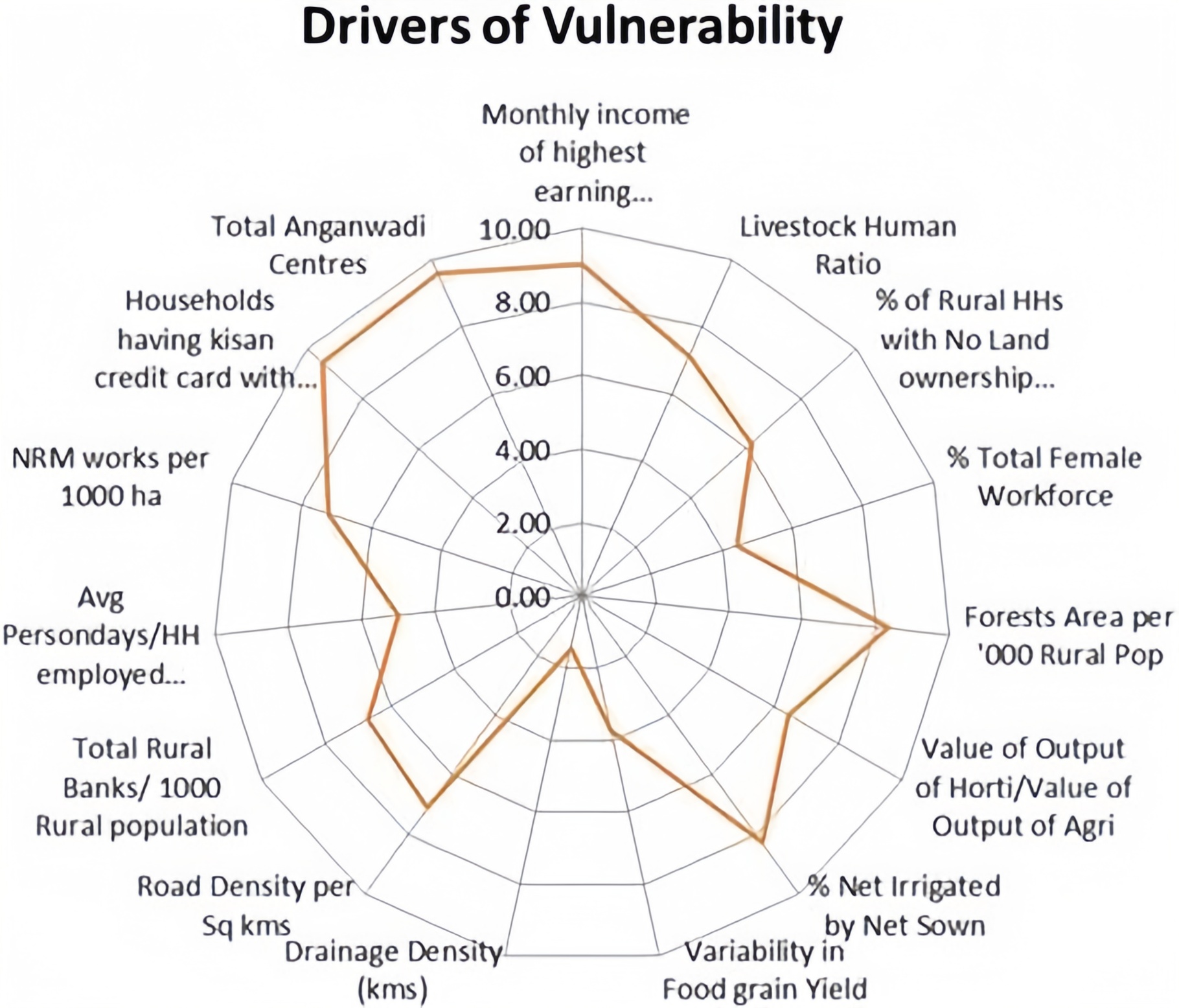
- Factors – Limited access to institutional credit, low household incomes, inadequate public health and nutrition infrastructure, such as Anganwadi Centres and scarce forest resources and low irrigation coverage.
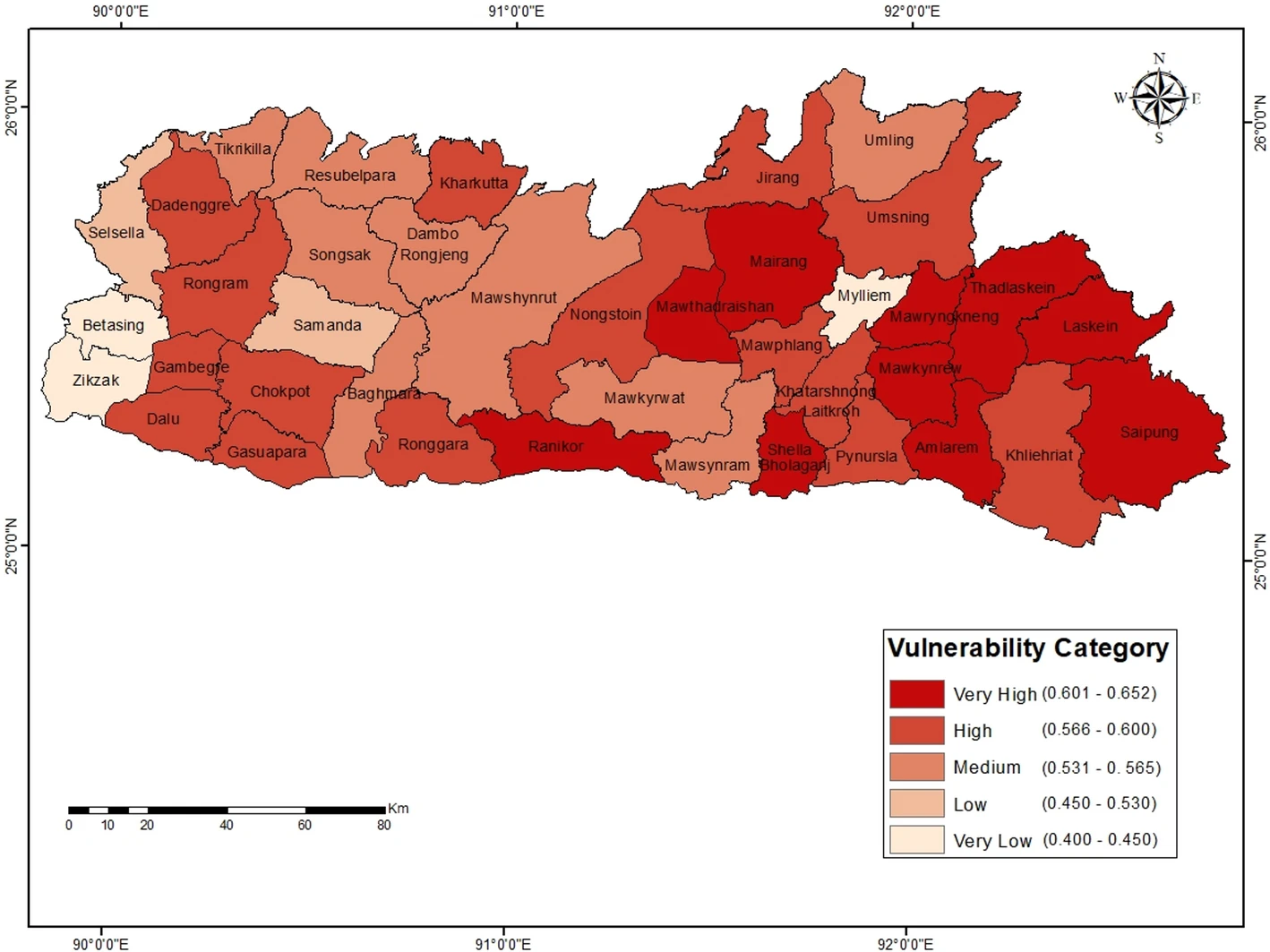
- Highlights – 25 out of 39 Community & Rural Development (C&RD) Blocks in Meghalaya fall under the high or very high climate vulnerability categories.
|
|
Security
|
|
Hansa-3(NG)
Recently, Union Minister of State for Science and Technology launched the production version of Hansa-3 NG.
- It is an indigenously developed all-composite airframe (as opposed to purely metal).
- 1st designed and developed by – CSIR-NAL.
- Aim – To meet the expanding demand for PPL (Private Pilot License) and CPL (Commercial Pilot License) training.
- Features –
- Advanced Glass Cockpit for enhanced situational awareness.
- Rotax 912 iSc3 Sport Engine for fuel-efficiency.
- Bubble Canopy for panoramic visibility and improved pilot comfort.
|
|
Council of Scientific and Industrial Research - National Aerospace Laboratories (CSIR-NAL)
- It is an India’s only government aerospace R&D lab.
- Founded – 1959 (as National Aeronautical Research Laboratory, renamed NAL in 1993).
- Headquarters – Bengaluru, Karnataka.
- Nodal ministry – Ministry of Science and Technology.
- Objectives –
- To design and develop indigenous aircraft and aerospace technologies.
- To support national aerospace missions and collaborate with industry for commercialisation.
- To create aeronautical components, testing, simulation, and manufacturing systems.
|
|
Iron Bird Facility for SARAS Mk-2
- It as a crucial platform for full-system integration, ground testing, and validation of major aircraft subsystems.
- Facilities – It significantly reduce flight-testing risks and accelerate development timelines, enabling engineers to identify and resolve design and software issues early.
|
|
Manufacturing Facility for High Altitude Platforms (HAPs)
- India’s initiative to join the select league of nations developing solar-powered unmanned aircraft capable of flying above 20 km altitude for long-endurance missions.
- Similar technologies – US, UK, Germany, South Korea, New Zealand and Japan.
- Existing facility – Achieved 7.5 km altitude and over 10 hours endurance, and the first full-scale flight to 20 km is targeted for 2027.
- Advantages – It offers a cost-effective alternative to satellites for surveillance, telecommunication, and environmental monitoring, opening a new frontier for India’s aerospace sector.
|
|
High Altitude Platforms (HAPs)
- HAPs – These are aircraft or airships situated in the stratosphere (from 17 to 22 km above the ground).
- Used for – The delivery of wireless communications and other applications.
- Aim – To serve a large number of users, either in dense urban areas or over a wide geographical area.
- Alternative infrastructure – Between terrestrial systems and satellites, and can offer:
- Line-of-sight links over a wide area.
- Shorter link lengths than satellite systems.
- High capacities.
- Very rapid deployment.
- Accessible for maintenance.
- Easily reconfigurable to cover short-term fluctuations in usage.
|
|
NAviMet system at HAL Airport
- It is a comprehensive weather monitoring system aids in measuring crucial weather parameters such as visibility, humidity, and wind speed, among others.
- Developed by – CSIR-NAL.
- Combination of NAL’s 2 indigenous innovations — Drishti and AWOS, which are currently operational in over 170 Indian airports.
- Aim – To aid safe landing and take-off operations at airports.
- Significance – It reflects another successful example of Indigenous Technology in public–private collaboration.
|
|
Science
|
|
SIM-Binding" for Messaging Platforms
The government has issued directions for "SIM binding" for messaging platforms like WhatsApp, Telegram, and Signal to combat cyberfraud.
- Directive issued by – Department of Telecommunications (DoT).
- Legal status – Telecommunication Cybersecurity Amendment Rules, 2025, to introduce the concept of Telecommunication Identifier User Entity (TIUE) under the scope of telecom regulations.
- Implementation – As per the rules, a TIUE (who is not a licensee like telecom operators) uses telecommunication identifiers — such as mobile numbers — to identify its users.
- Platforms will have to send to the DoT a compliance report within the next 4 months.
- Aim – To curb or combat cyber threats and fraud.
|
|
SIM-Binding
- It is a process where a messaging app verifies that the registered SIM card remains active in your device.
- If the SIM is removed, replaced, or deactivated, the app will stop functioning.
- Change for web users – Web versions like WhatsApp Web will log out automatically every 6 hours.
- Users will need to re-scan the QR code to continue using the service.
|
|
Miscellaneous
|
|
SportEdge Meerut
- SportEdge Meerut – Sports and Entrepreneurship Development for Growth & Excellence.
- Launched by – Ministry of Skill Development and Entrepreneurship.
- Collaboration with – Sports, Physical Education, Fitness & Leisure Skills Council (SPEFL-SC), British Asian India Foundation (BAIF) and NEST will develop evidence-based learning and improve operations management for the cluster.
- Aim – To accelerate India’s rise as a global leader in sports manufacturing, innovation, and enterprise, and transform Meerut into an internationally recognized Sports Hub.
- Strategic pillars –
- Industry & Market Assessment.
- Sustainable Livelihoods & Entrepreneurship.
- Developing Local Sporting Talent.
- Gender Equity at the Core.
|